Posts Tagged With: outdoor school

The Perfect Horse

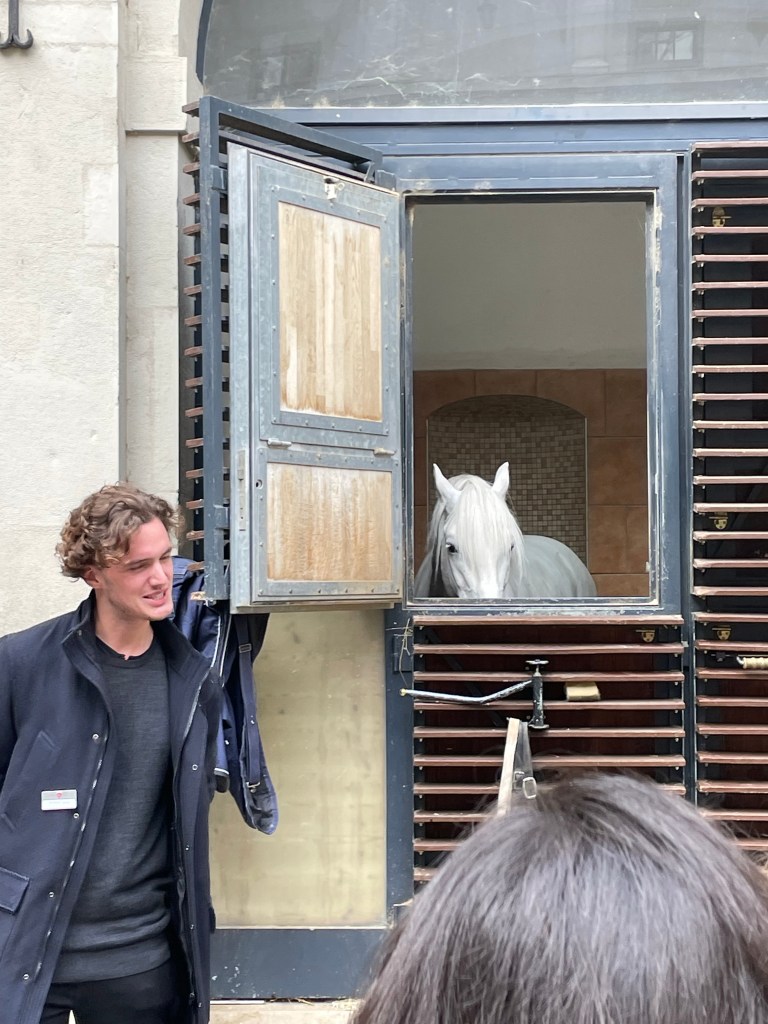
We toured the Spanish Riding School in Vienna. The guide was knowledgeable and patiently answered all of our questions. Sarah started reading Elizabeth Letts’ book and quickly became engrossed in the history of the Lipizzan (alt. Lipizzaner) during the 20th century.

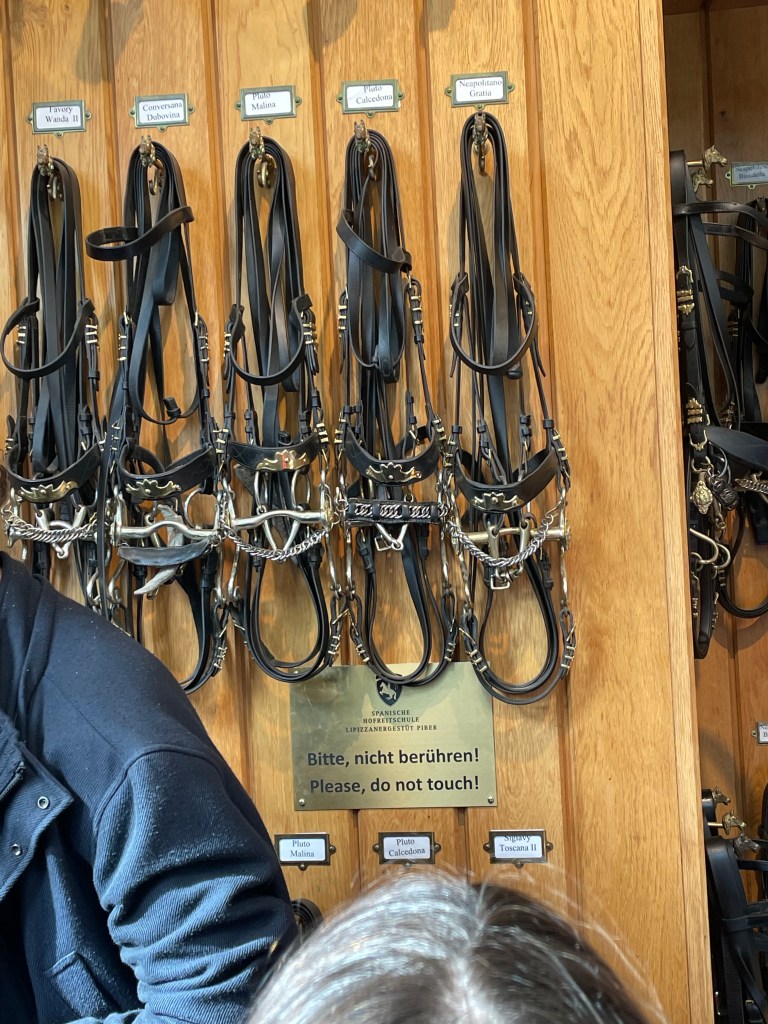
Having read Jojo Moyes’ novel, “The Horse Dancer” a few years ago, it was captivating to tour these stables. Photos were not permitted inside the stables, because previous tourists have posted irresponsible pictures on social media. These animals are under the best care, with regular rotations between training, countryside vacations, and performing.

Stallions arrive to the school from their country stable around the age of four. That’s right – the first FOUR years of their lives are spent frolicking in fields, simply being horses! They gain natural strength from living free in herds doing natural horse stuff. They make friends with other horses. They spend time as foals with their mamas.

If selected to train in Vienna, they are assigned to a rider who then spends the rest of their life devoted to the care of that specific horse. Each rider has 4-5 horses in their care. Sequential training takes 6-8 years (!) before a horse is ready to perform. And horses then retire from performance between 18-24 years of age. They live out retirement back on the farm, enjoying a pampered life.

The bond between rider and horse is exceptional. No coercion is used. The stallion must want to work with the rider. The rider is there to invite the horse to perform and to ensure the health and care of the horse.

Categories: agritourism, central europe, responsible tourism, retirement travel, Vienna | Tags: , , , , , , , , | 1 Comment

“There is more to life than increasing its speed.” -Mahatma Ghandi

We arrived after sunset; awoke to rain; and by lunchtime we were drenched in sunshine.

Kathryn Abbey Hanna Park includes 1.5 miles of undeveloped sandy beach and hundreds of acres of woodland acquired by the City of Jacksonville, Florida in the 1960s and ‘70s. According to Wikipedia, part of Hanna Park used to be known as Manhattan Beach for the first four decades of the 20th century, Florida’s first beach community for African Americans working on the Florida East Coast Railway. At its height this Manhattan Beach included amenities such as picnic pavilions, cottages, and an amusement park. See also the history of Manhattan Beach in California – interesting parallels to Bruce’s Beach can be traced.

Today, with 300 campsites for RVs and tents, there is not much space between each site, but the jungle vegetation provides a screen of privacy and the design of the campground includes twists and turns which cleverly provide a unique layout at each spot.

Exploring enchanted hiking trails through the jungle, we met a small group of children attending their outdoor school. Joe remarked that Sarah would make a great pandemic teacher for small children as she also sings her way down pathways and finds joy in the natural arrangement of leaves and twigs and sunshine! We noted that the bike trails are designated one-way by the day of the week, reducing head-on accidents in the woods, presumably. It did not take long for us to hike out to another huge, empty, beautiful beach.

GEOQUIZ: What is the term for a forest that grows as an ecological island in contrast to surrounding wetlands?

Categories: beach walking, epic road trip, fulltime RV life, geoquiz, nomads, retirement travel, RV living | Tags: , , , , | 3 Comments

Blog at WordPress.com.