
“It’s because being American is more than a pride we inherit,
– excerpt from Amanda Gorman’s poem, “The Hill We Climb”
it’s the past we step into
and how we repair it.“
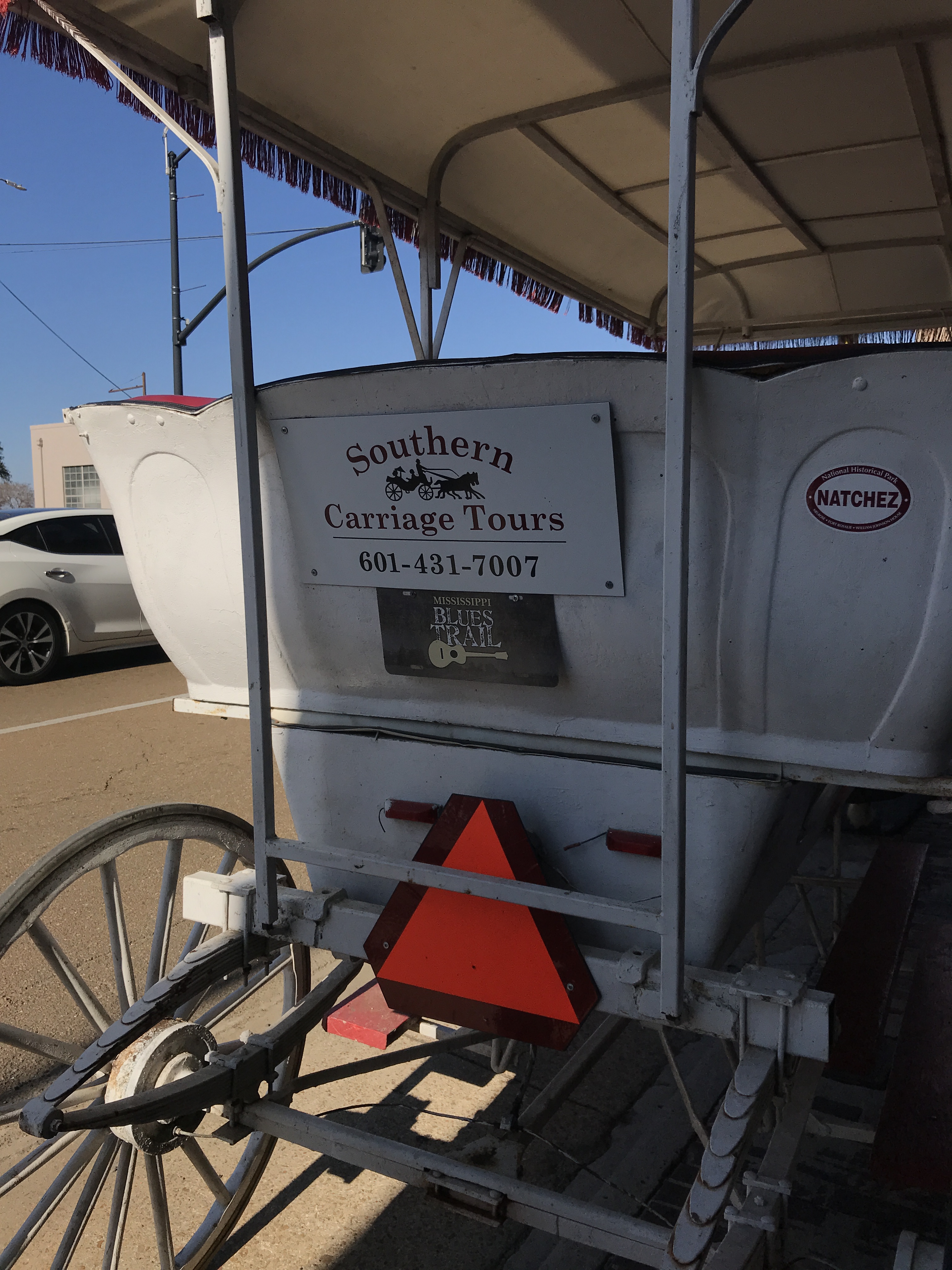
As we approached Natchez, Mississippi, we talked about our discomfort in touring antebellum homes with a history of glossing over the realities of the enslaved people who were forced to build and maintain through harsh work the lush lifestyles of the white slave owners. With some trepidation, we embarked on a horse-driven carriage ride tour of downtown historical Natchez.
Before we boarded the carriage, our tour driver let us know that he would not simply be pointing out pretty gardens and colorful homes. We were going to hear a historically accurate narrative about the people of this region, beginning with “our amazing Indigenous people who have lived here for thousands of years.” Randy went on to tell us that if we were sensitive or disinterested in a frank discussion about the history of colonialism and slavery and the contemporary challenges of systemic racism that continue in this country, this tour would not be for us.
This is a relatively new approach to responsible tourism in this country. We were grateful that a knowledgeable local guide was willing to delve deeper into the narrative of enslaved people and help us reckon with the fuller story of North American colonialism and the Atlantic slave trade. Many of us learned in school that slavery was mostly in the South and mostly in the agriculture industry (e.g. “Gone With The Wind” and other stereotypes of plantation living) but on this trip to Natchez we were reminded that slavery underpins the entire capitalist system, through French, British, Spanish, and eventually American rule of this area. Wealthy merchants in town used slave labor to build their mansions, and the privileged caste lived in these highly decorated homes that were meant to keep the classes separated. For the enslaved people, these “beautiful prisons” were designed to let the owners see and control them; there was no privacy for enslaved people.
History is incomplete without a discussion of the roots of colonialism and slavery. As painful as it is, we must acknowledge the complicated, fractured past of the American story. What texts written by Black and Indigenous authors are we reading about history? What sources are we learning from when we travel and explore historical sites? What non-white media are we consuming? How can we be a better ally for the BIPOC community?
A colleague of Sarah’s recommends signing up for 28 Days of Black History: https://28daysofblackhistory.us19.list-
 Where in the world are the Gills?