Posts Tagged With: family farming

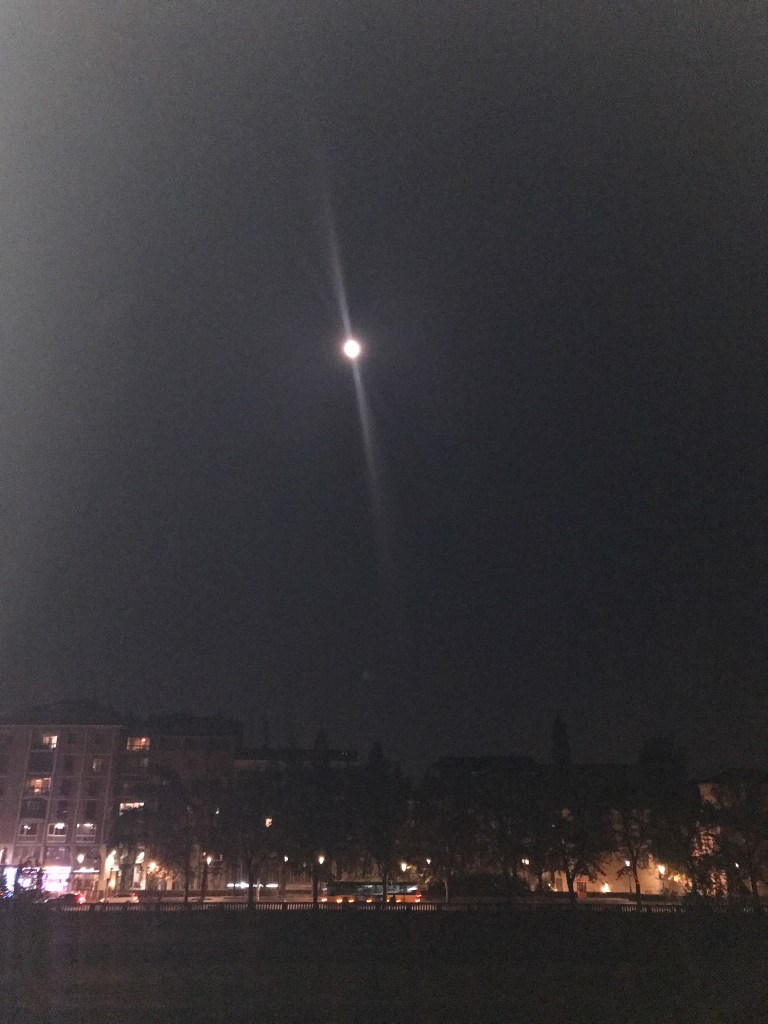
Moon over Parma

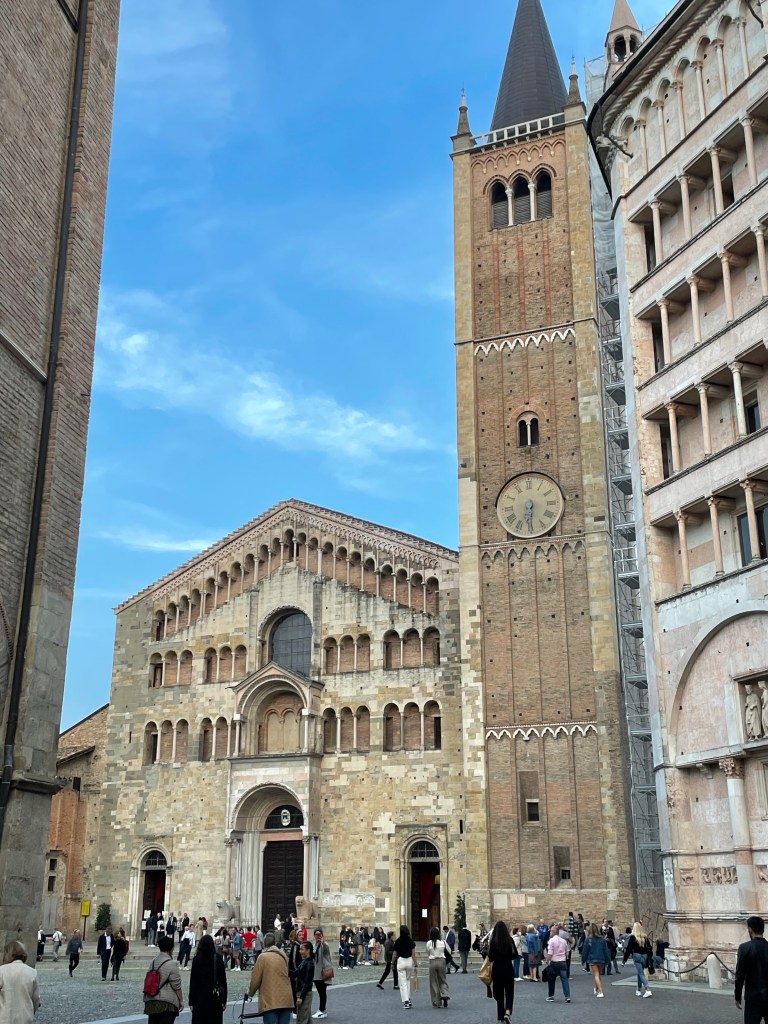
We spent five lovely nights in Parma, in a studio apartment on the fourth floor of a building with a bakery on the ground level. Our noses woke us up briefly most mornings around 3:15 a.m. as the ovens cranked up and the most delicious smells of bread and cinnamon wafted up to our abode. Four or five hours later, Joe would venture downstairs to choose something yummy for our breakfast!

The very old building has a very narrow stairwell. A rope and pulley system is used to bring parcels, luggage, and other bulky stuff up and down. Here you can see Sarah hoisting up Joe’s suitcase.

On our first night, we were delighted to stumble across a free outdoor concert in Piazzale della Pace (Peace Square) near the Verdi Monument. Parma hosts a month-long festival each year dedicated to the 19th century composer and dozens of free events are co-currently running during the festival under the flag “Verdi Off.” We danced to this jazz-rock-opera ensemble as they interpreted operas, arias, movie themes, rhumbas, blues, and tangos. La Toscanini Next is comprised of nine musicians and they not only played together well, but they all looked like they were having fun, too!

Astor Piazzolla’s “Libertango”

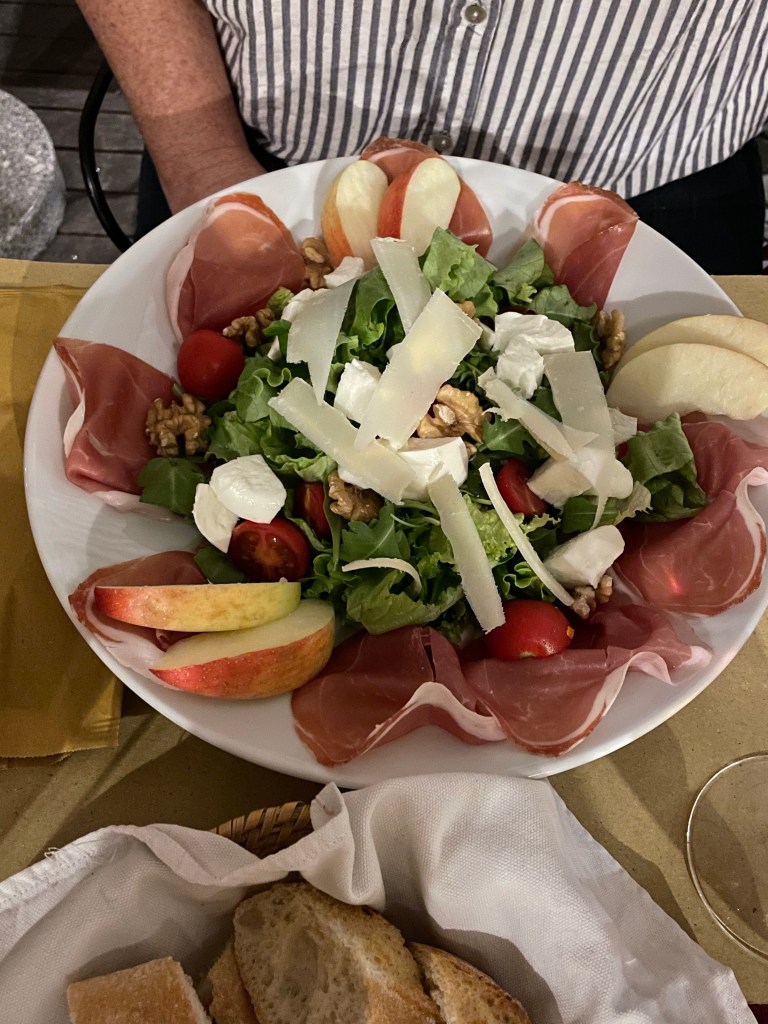
After the concert, we roamed around, peeking in old buildings, shops, and restaurants. Eventually, we chose an outdoor cafe for a sumptuous dinner, before walking back across the river to our side of town.

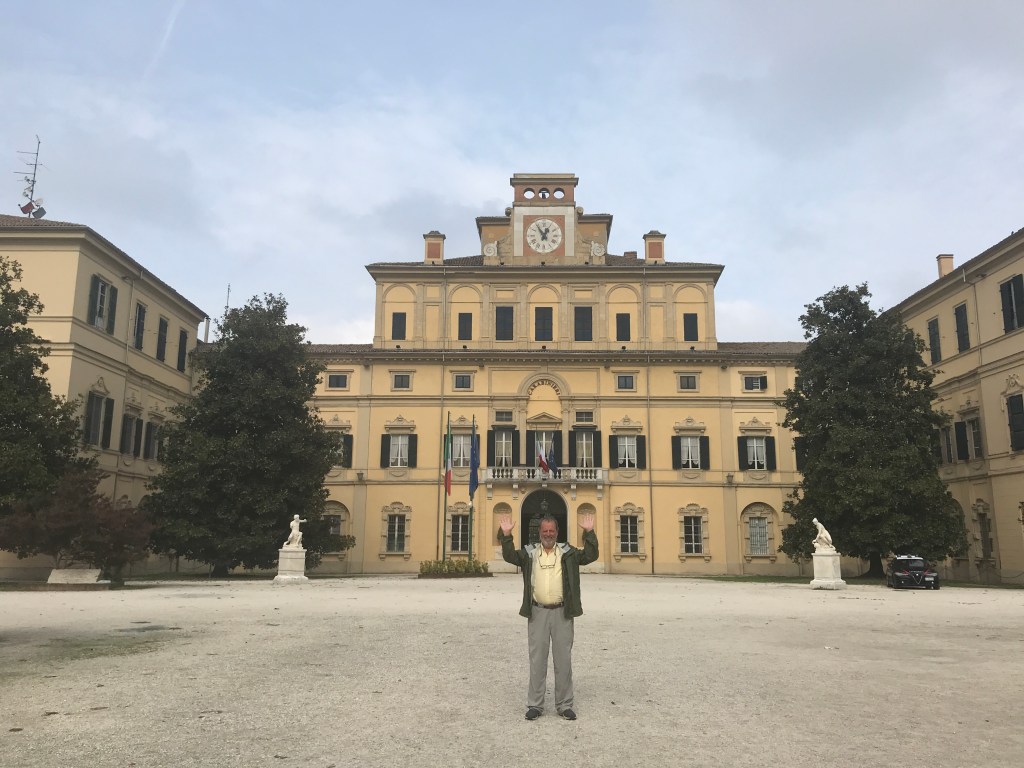
On Sunday, we went to Mass at Chiesa di Santa Croce and then walked through the gardens of Palazzo Ducale. We took a spritz break at the small cafe in the park, before wandering on our way.
View of our apartment from the river path. Our balcony is top row, second from the left (pale blue/green building).

View from our balcony.

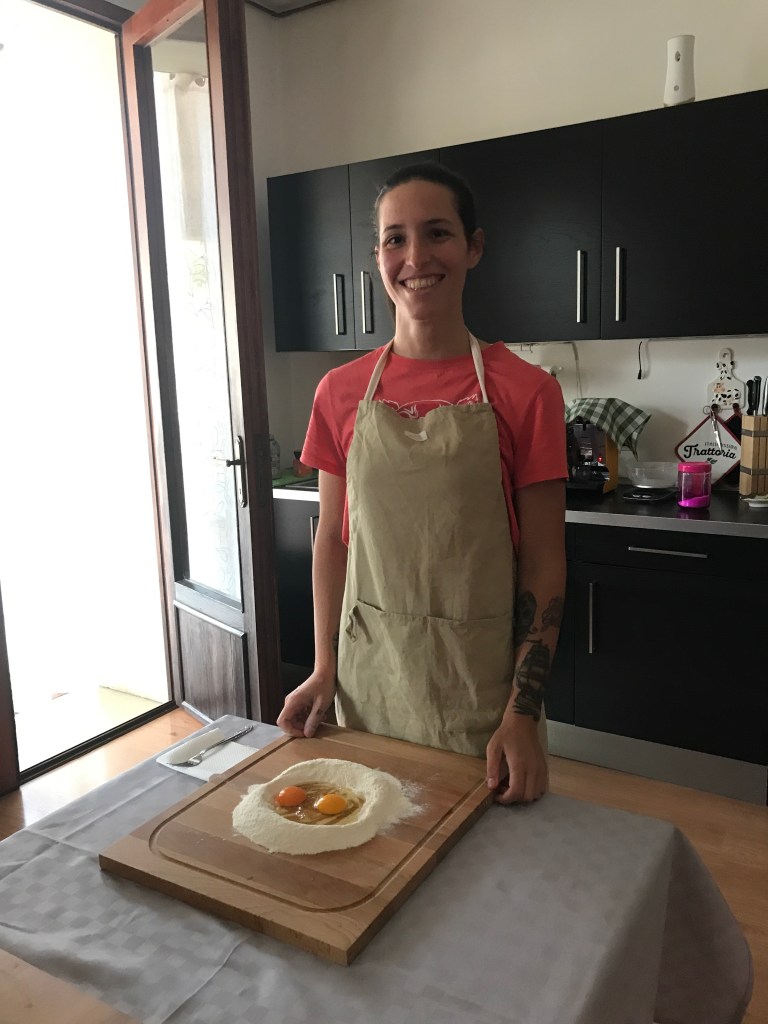
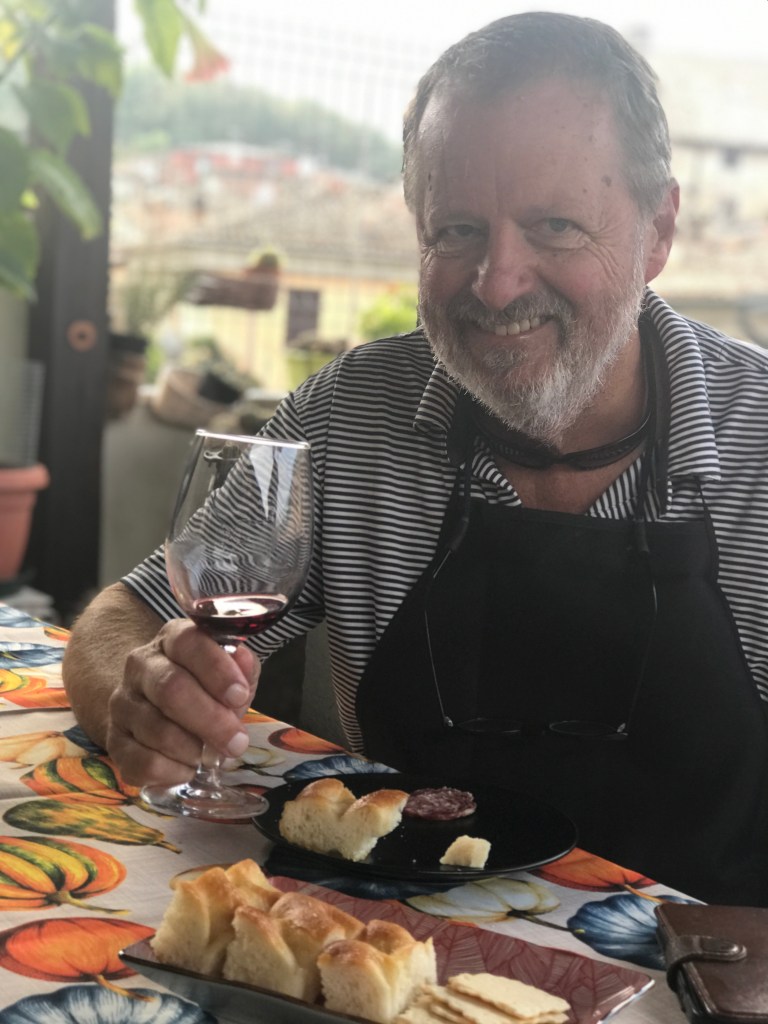
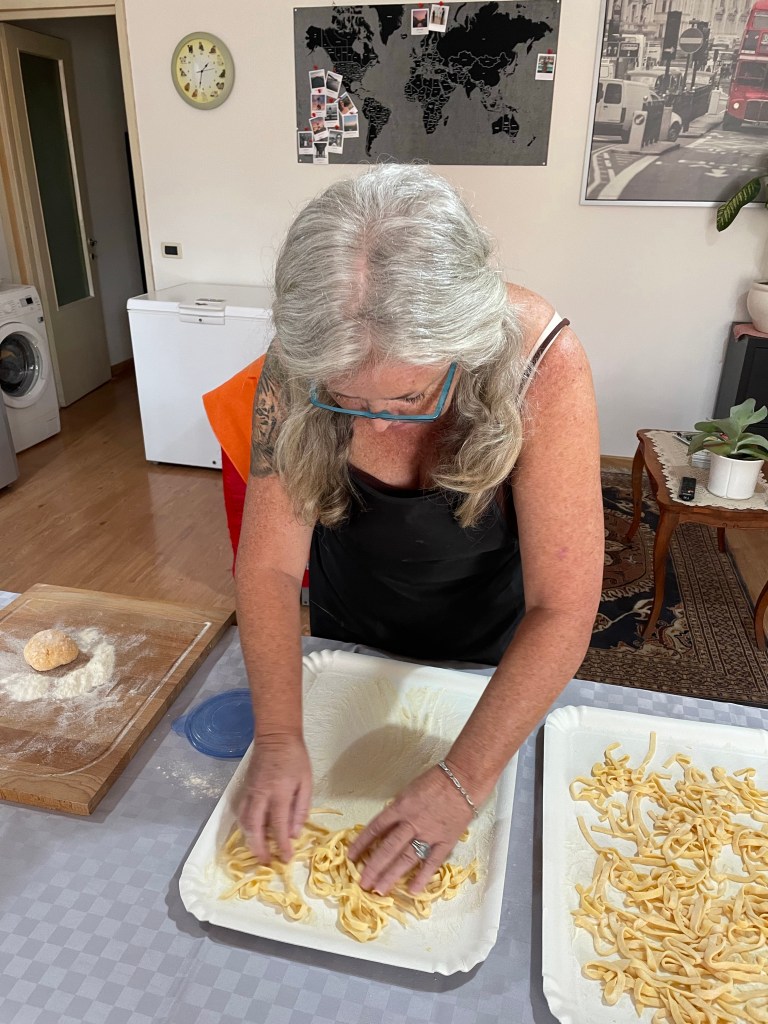
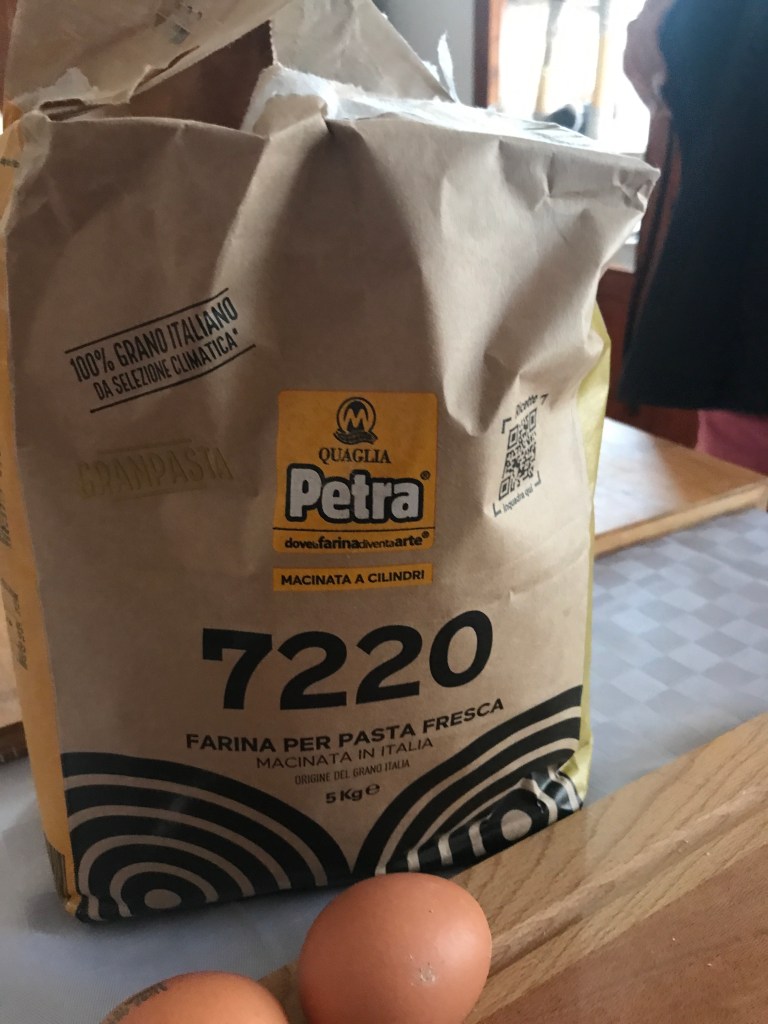
On Monday, we walked the city on a food tour and on Tuesday, we took an excursion with Virginia to her village (population 800) where we learned to make tagliatelle using her granny’s recipe and techniques. We lunched together on their balcony before she drove us back to the city.
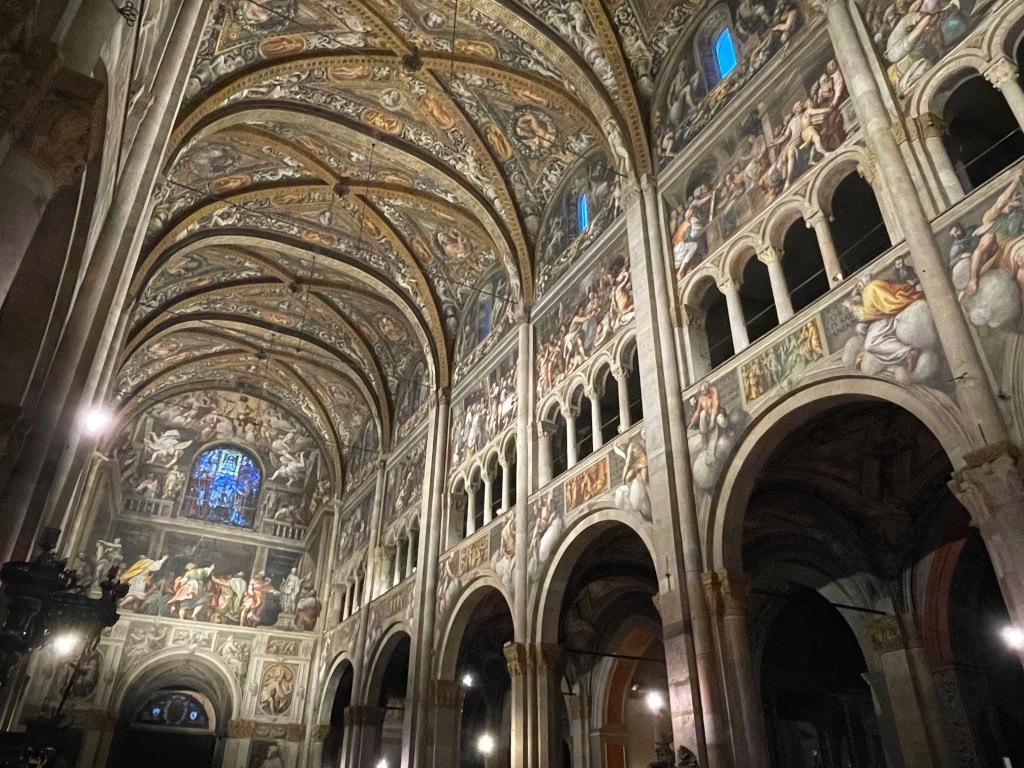
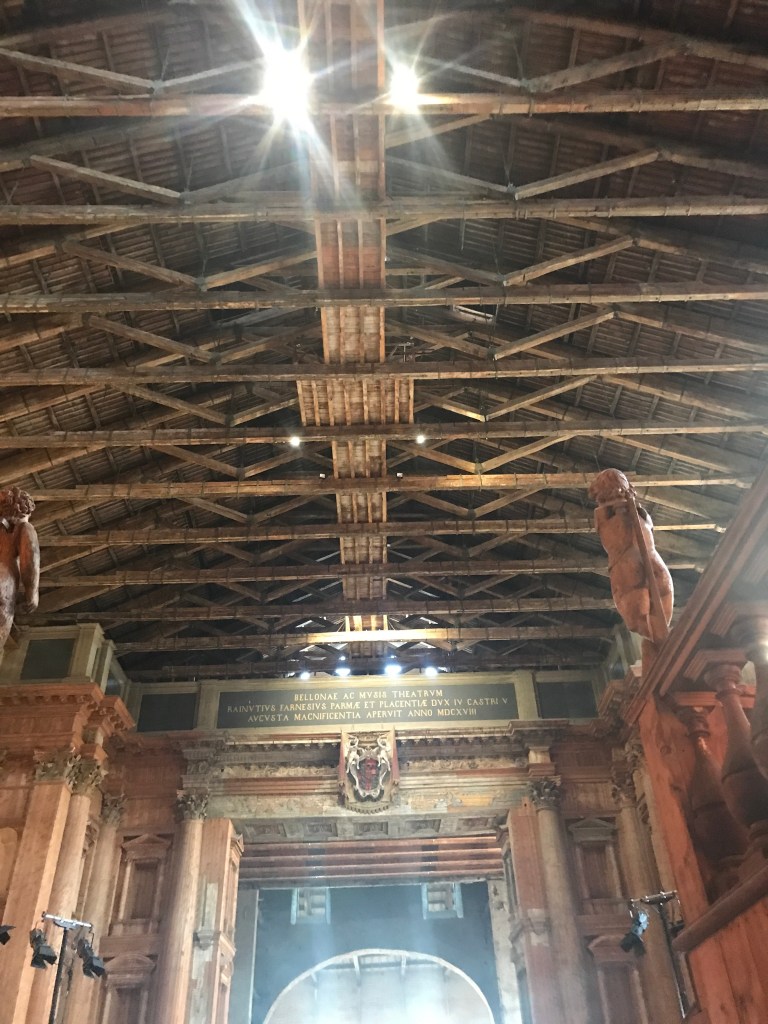
On our last full day in Parma, we visited Teatro Farnese, Galleria nazionale di Parma and Biblioteca Palatina, all located in Palazzo della Pilotta. Unfortunately, the Bodoni exhibition was closed.
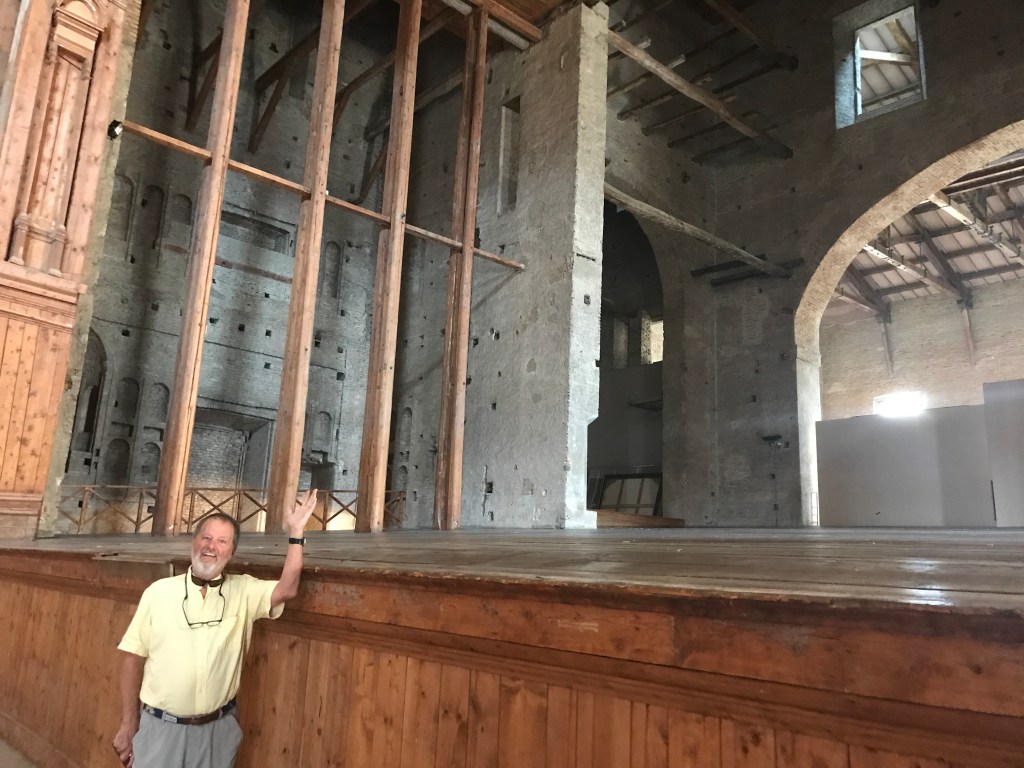
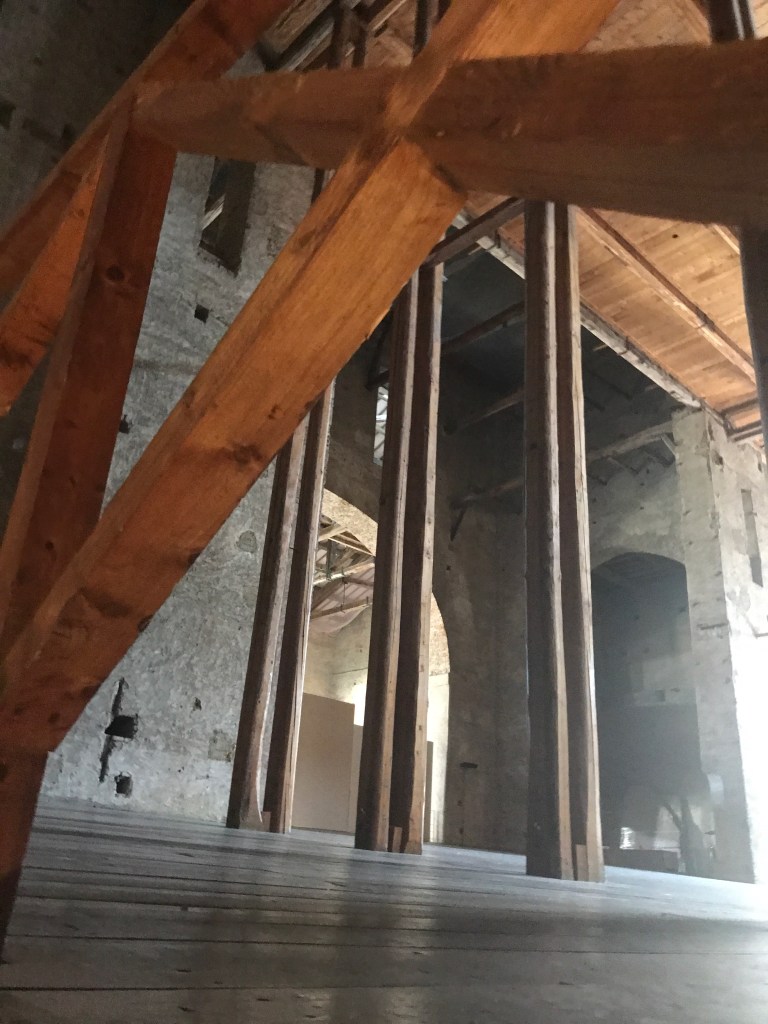
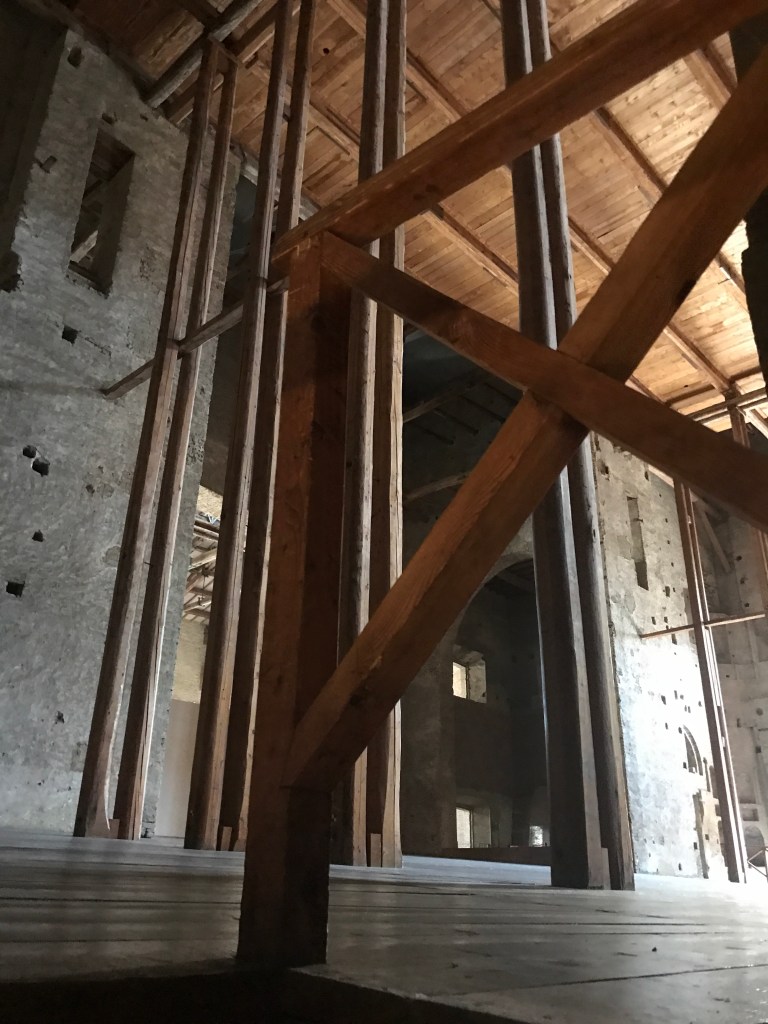
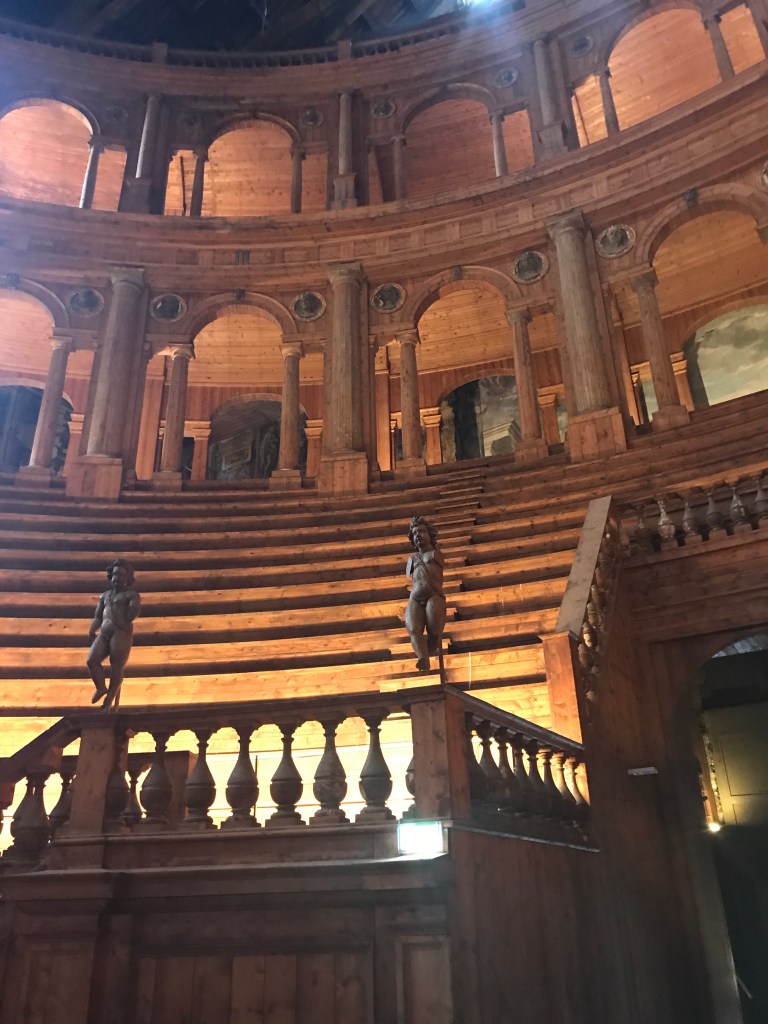
Teatro Farnese is an incredible wooden theatre built originally in the early 17th century. Our guide told us only nine productions took place over the course of its first one hundred years, due to the complexities of 600 stagehands needed for each epic show.

Theatre major Sarah has never seen such a steeply sloped stage in person. OSHA regulations prevent this sharp of an incline on modern stages. Hard to convey in my amateur photo!
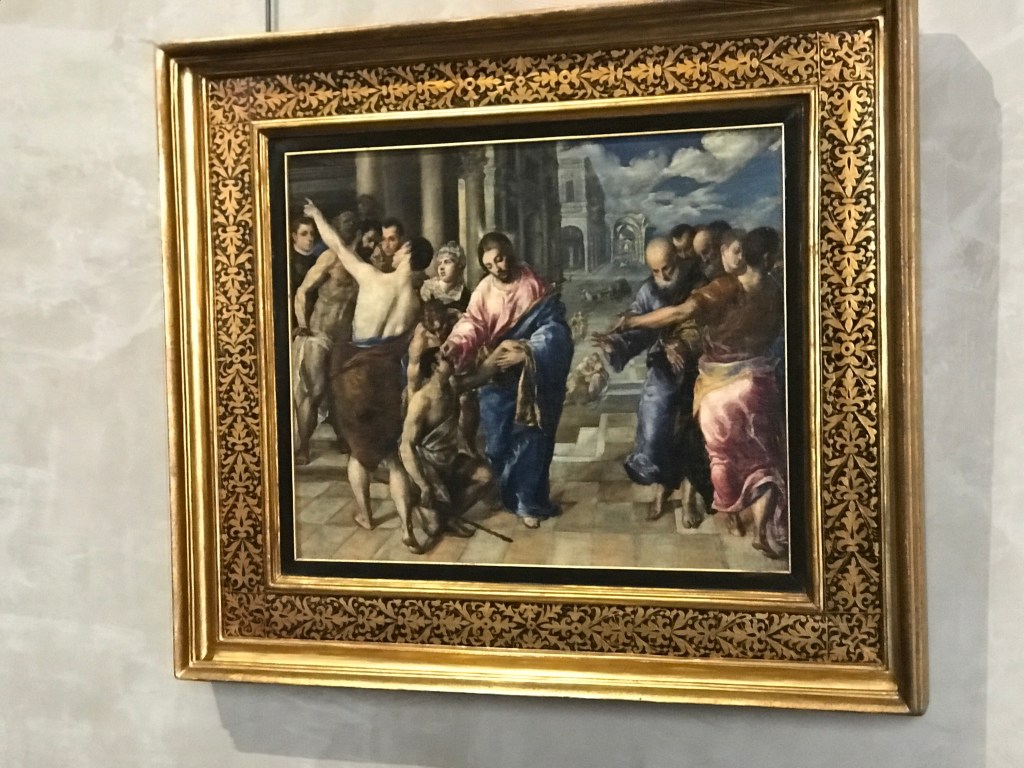
Healing of the Blind Man by El Greco
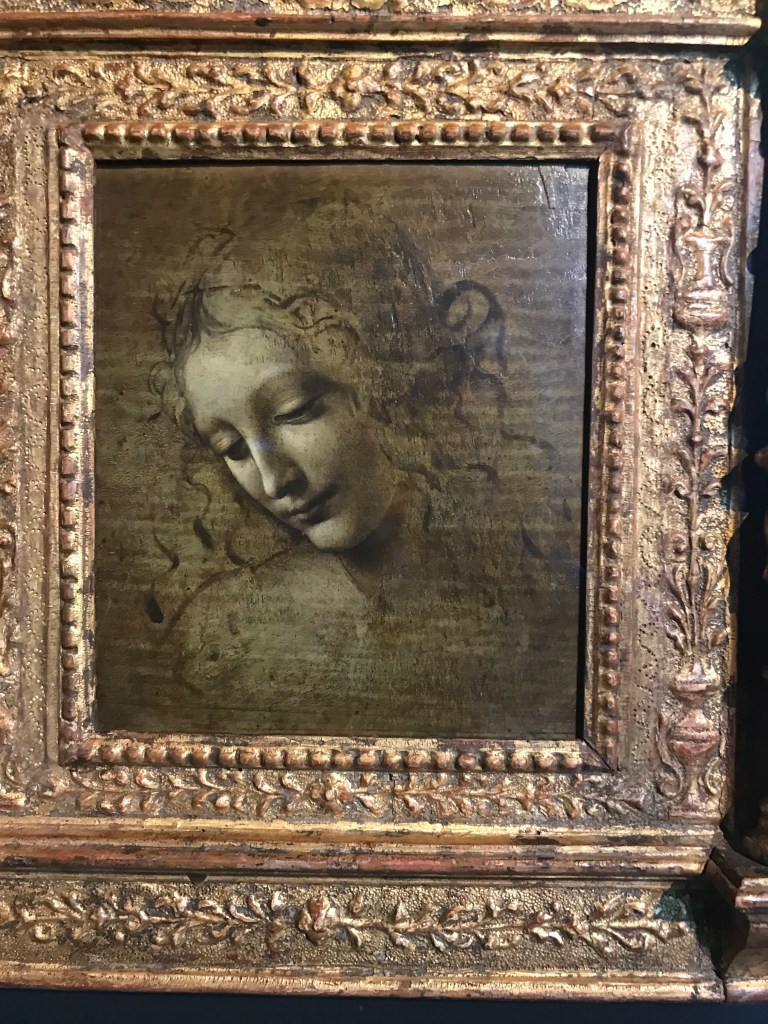
La Scapigliata by Da Vinci

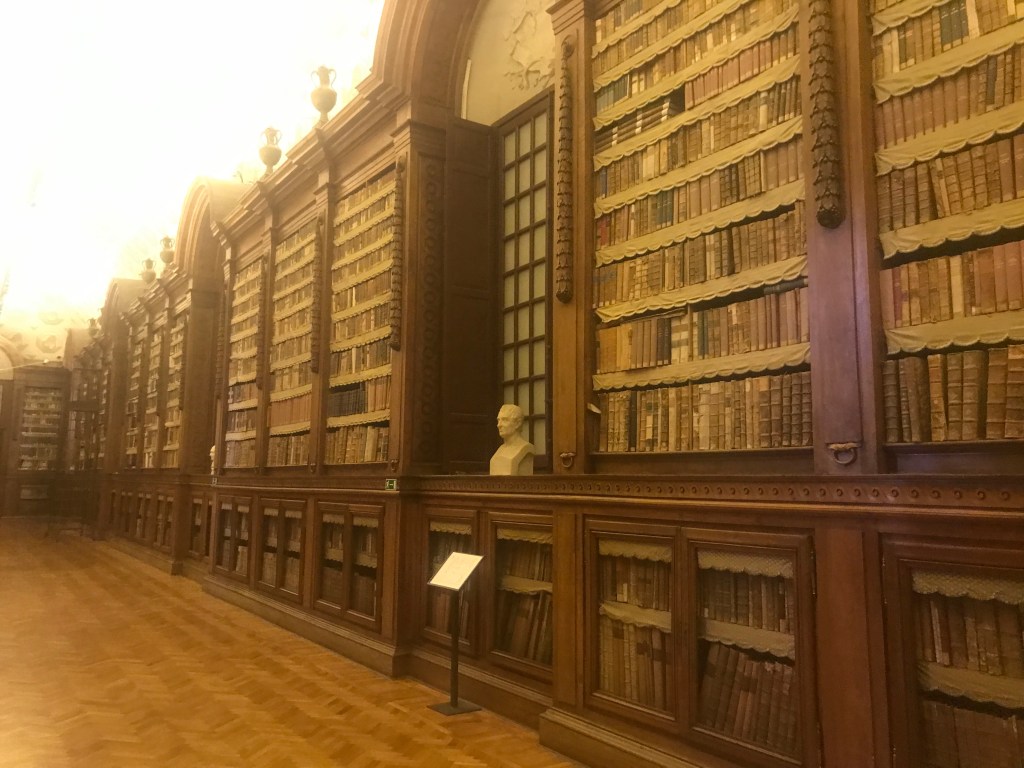
Have you ever seen 800,000 volumes gathered in one private library hall? The silence and the scent of books was unlike anything Sarah had previously experienced. The collection was commissioned in 1761, and includes a greek Codex written on 220 tiny pages of parchment in 1009 A.D.

On our final night in Parma, we dined on saffron risotto with veal ossobuco alla Beppe. For twenty-five years, the owner of Hosteria da Beppe has been cooking typical Emilian fare with local ingredients. Beppe also hosts, bartends, takes orders, serves, and busses. We assume he does the dishes, too. As far as we could learn, he is a one-man show. And cooks ah-mazing food! And he gets great reviews from everyone! We were super impressed with his friendly and efficient service and we highly recommend all visitors to Parma to eat at Beppe’s restaurant.

Categories: botanical gardens, Parma, responsible tourism, retirement travel | Tags: , , , , , , , , , , , , , , , , , , | 4 Comments

A land flowing with milk and …dates?

Medjool date palms

Historians and biblical scholars now believe that the honey referenced in the Book of Exodus refers not to bees’ honey but to the syrup prepared from dates. Turns out that the best way to preserve this highly nutritious fruit is to soak, cook, extract and reduce its syrup. As one of the oldest foods cultivated in the Mediterranean region, it makes complete sense that a reference to abundance would include good date production.

Medjool (Arabic majhūl) dates are known as the king’s fruit, once reserved only for royalty. These dates are large and sweet. Almost a century ago, California growers imported eleven medjool date palms from Morocco and nine survived, spawning the spread of date farming in the southwest United States.

Why are dates so expensive? It is a labor-intensive commercial crop, with farmers devoting most of their land to female date palms (which produce the edible fruit) and keeping just a few males or even purchasing the pollen when it is time to pollinate the female flowers. After the fruit buds form, each strand is thinned to allow better air circulation and bigger fruit. By August, the fruit bundles are bagged to protect from birds, insects, and dust. Dates are harvested by hand in the fall, sorted, graded, and sent to cold storage.

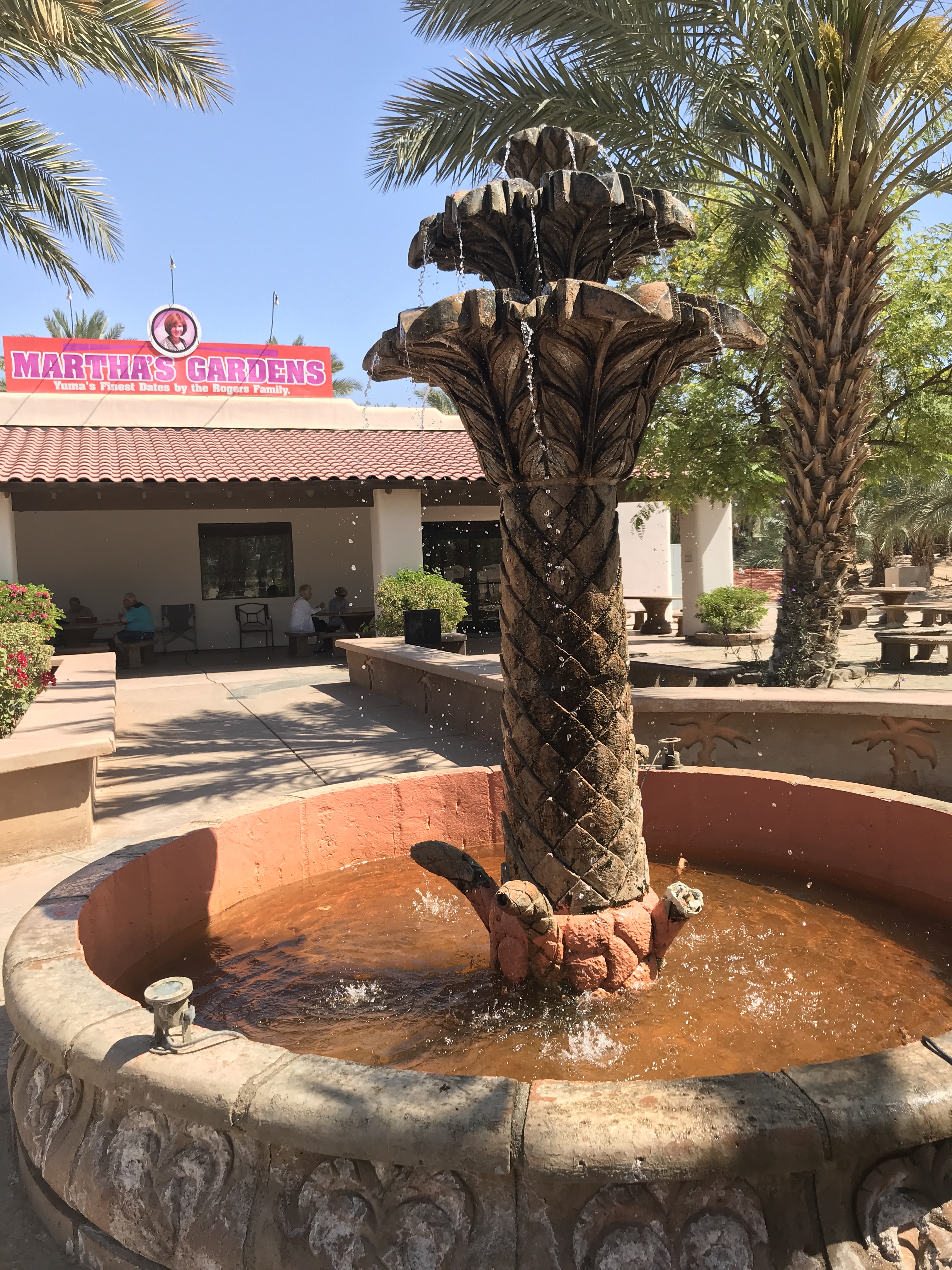
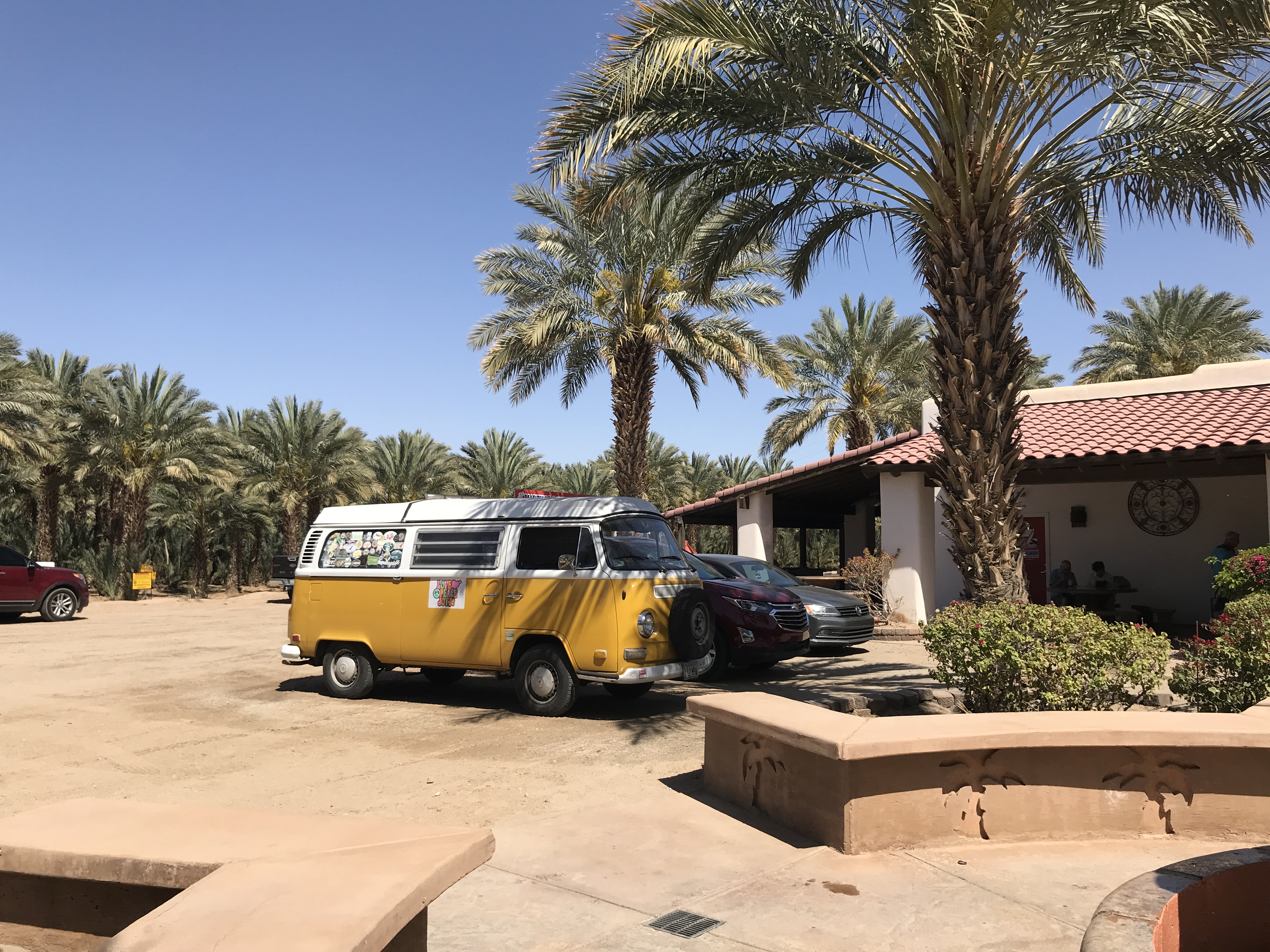
We learned all about date farming with a visit to Martha’s Gardens, here in Yuma. After sharing a delicious date shake by the courtyard fountain, we headed home taking the road less traveled.

After 1.5 miles of sketchy sandy trails, we determined the large CAT bulldozer parked on the trail was a good indicator that we were not on a sanctioned road! We carefully re-traced our tracks in the dust and made it back out to the secure pavement. Watch the video below of this adventure for Mike the van!

Off-roading with Mike!
Categories: agritourism, arizona, desert hiking, epic road trip, responsible tourism, retirement travel, snowbirds | Tags: , , , , , , , , | 2 Comments

Florida’s First Lavender Farm

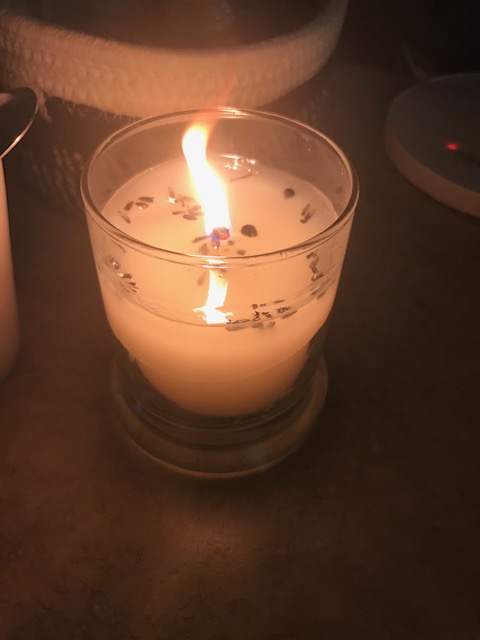
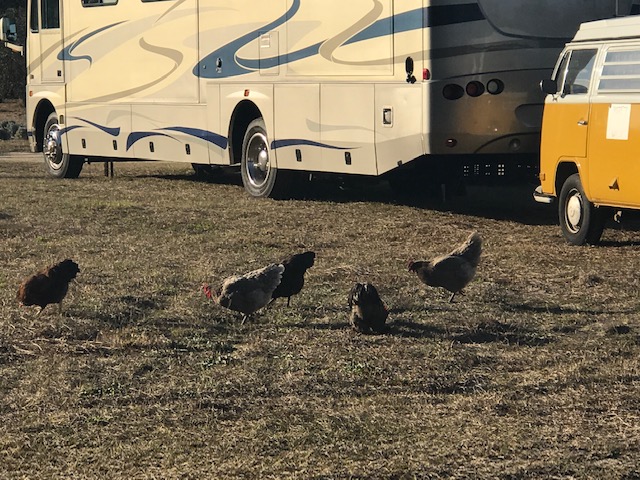
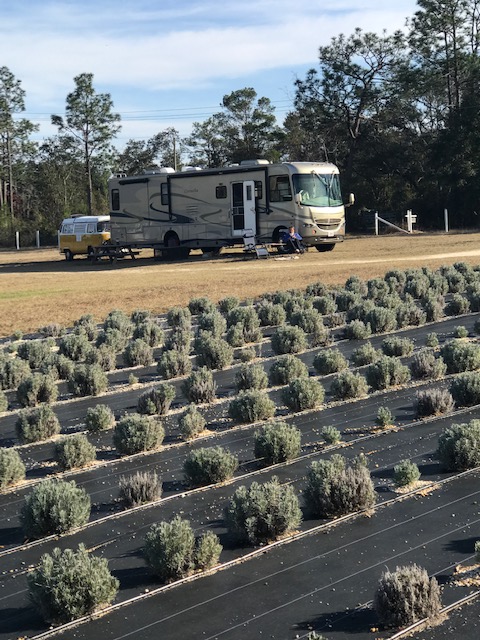
We stayed overnight at Southern Grace Lavender Farm through the Harvest Hosts program. Jason and Kari are building something very special on this farm. Sarah is a long-time user and connoisseur of all things lavender; their small-batch products are some of the best she has ever sampled, including trips to lavender farms in California, British Columbia, and France. Cornelia smells great this week as we enjoy their lavender-plumeria candle. Sarah has been wanting to try a shampoo bar to eliminate another source of plastic in our lives and her long curly locks are responding nicely to the heavenly-scented lavender-tea tree shampoo bar from Southern Grace Lavender Farm! And for two nights, we have slumbered like babies with the lavender-eucalyptus pillow mist on our curtains above our bed. With reasonable prices, environmentally responsible packaging, and absolutely gorgeous products invented and made at the farm by owners Jason and Kari, we recommend our friends check them out for online ordering. Did we mention the pastoral landscape? And the fresh eggs? And the bluebirds?

Categories: epic road trip, fulltime RV life, Harvest Hosts, nomads, retirement travel, RV living, snowbirds | Tags: , , , , , , , | 3 Comments

Musings of a farmer’s daughter

Driving through miles and miles of farmland, Sarah is reflecting on how farming has changed in her lifetime. Murray Lougheed (Sarah’s dad) left his family farm as a young adult but his rural roots drove his career in agricultural co-ops and the core values of a family farmer (environmental stewardship; caring for others; and faith in God) helped shaped Sarah and her siblings.

What is interesting in 2014 is the absence of farmhouses and the increase in corporate farming. What are the water implications of large-scale farming in the central valley of California? What does it mean to have huge circular fields in Oregon and Washington that rely on gigantic sprinkler systems? The contrast between the un-watered brown ditches and the irrigated verdant fields is stark.

On our first day of driving this trip, we saw a field of flat, spiky, deep green plants that we couldn’t identify. Up the road, a similar plant was spotted but was taller and seemed vaguely familiar, although the deep green seemed more diluted and more yellow. A third field solved the mystery: these were fields of GMO corn that have been engineered to grow like espaliered trees instead of bushy stalks. Presumably this allows a higher yield of corn per acre, since the plants are more closely packed together.

Last night, we slept by a mighty river that was explored by the famous Lewis & Clark over two hundred years ago. Did you know that only one member of the “Corps of Discovery Expedition” died? And his death was apparently caused by acute appendicitis. However, one of the hunters in the party accidentally shot Lewis in the thigh on the return trip, claiming that he thought Lewis was an elk! Really?!? How does one mistake Captain Lewis for an elk? Elk in the 19th century must have looked a lot different than the elk that we know today!

GEOQUIZ QUESTION: What is the name of the river by which we slept last night?

corn

Categories: Uncategorized | Tags: , , | 3 Comments

Blog at WordPress.com.