
We tend to use the word “desert” to describe emptiness. For example, “The old house was deserted, after the family moved out ten years ago.”
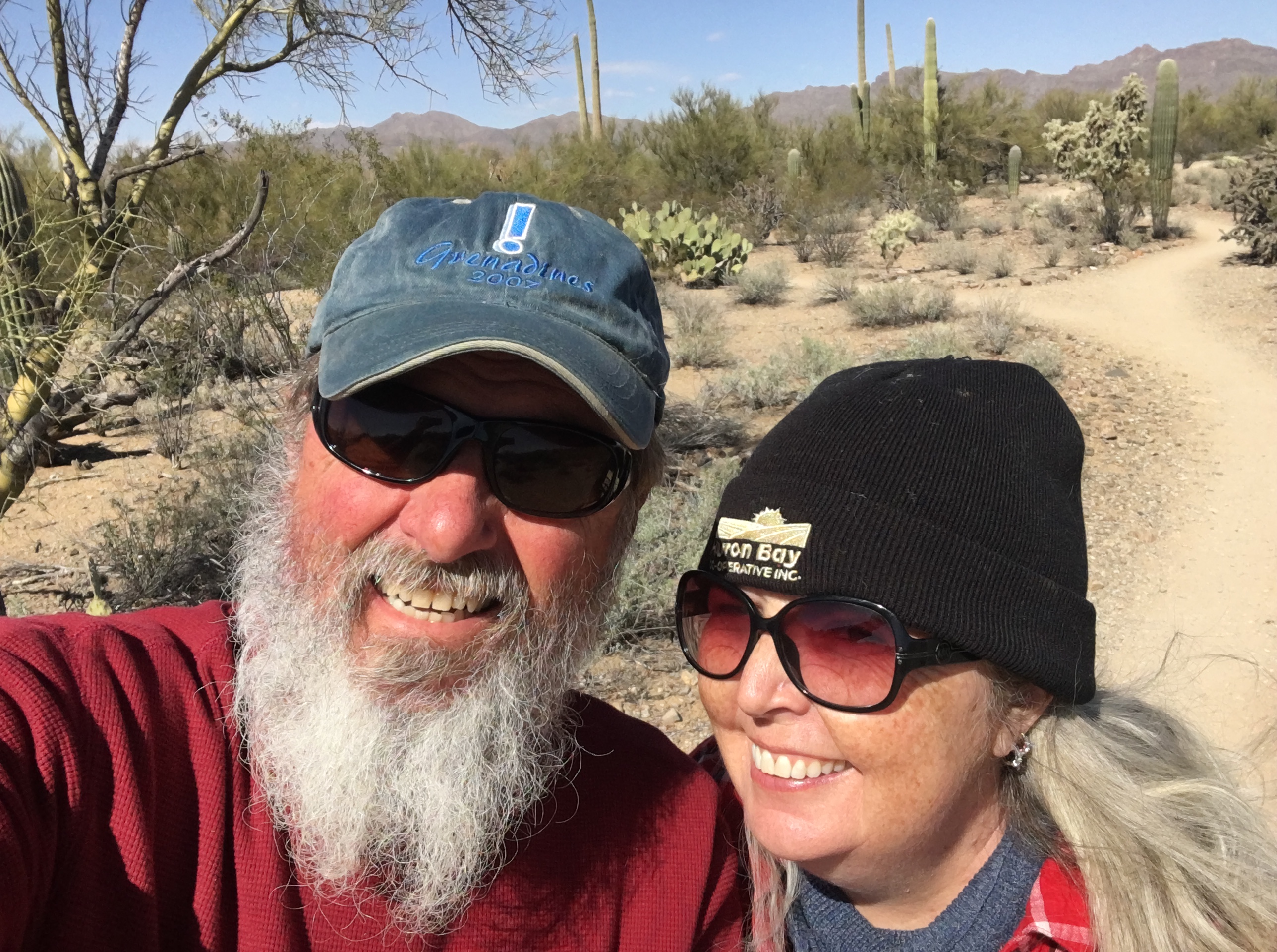
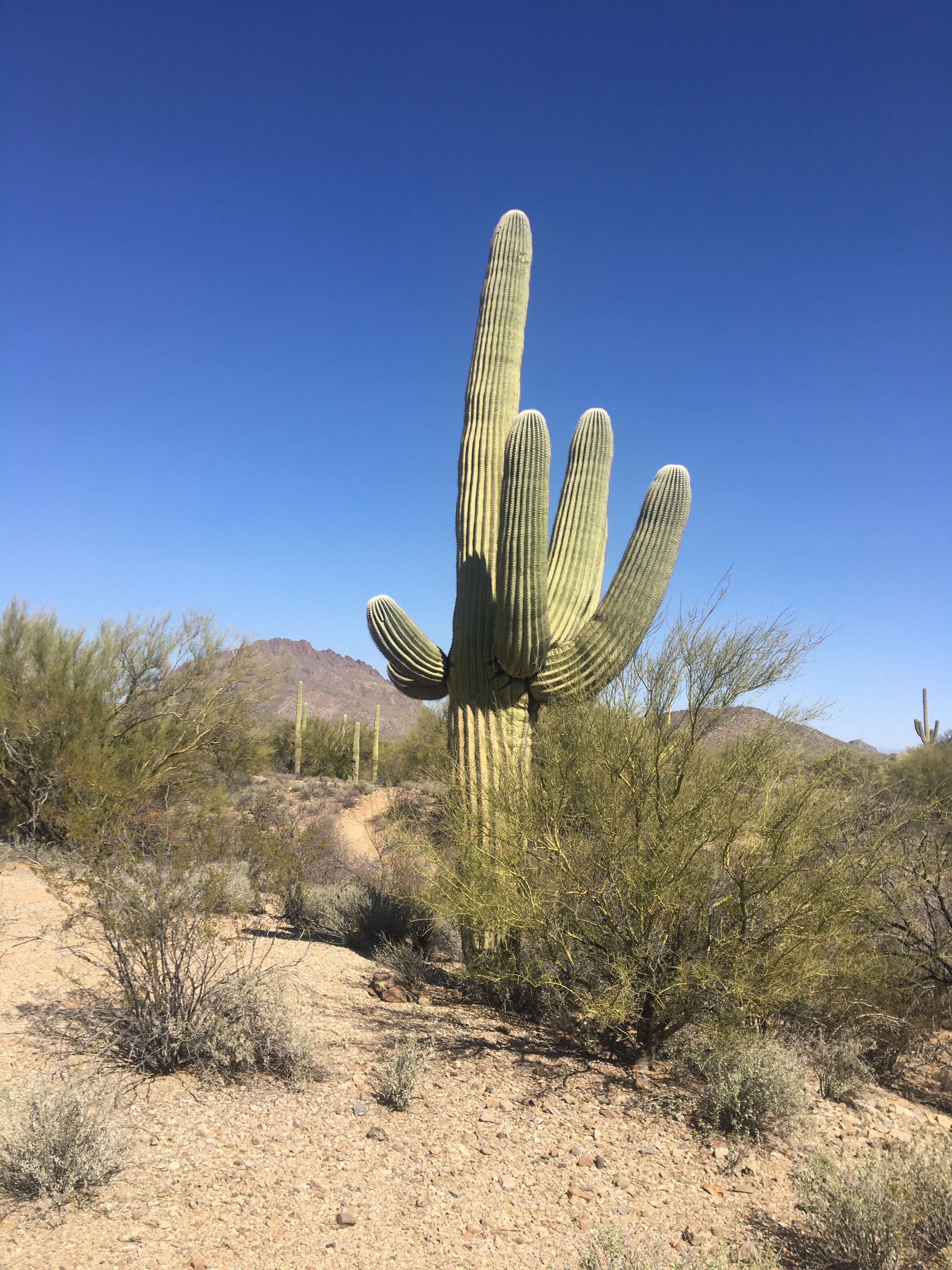
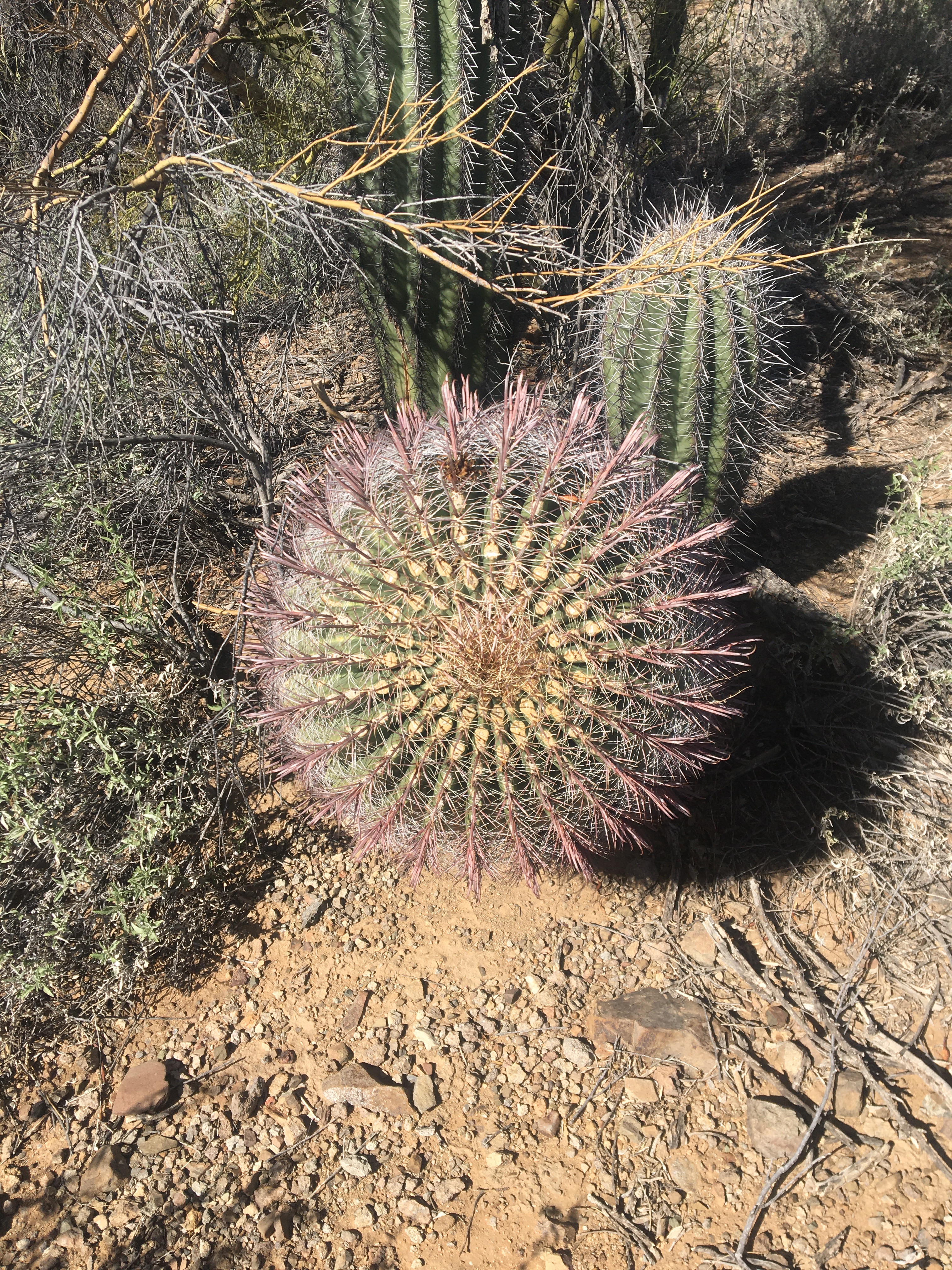
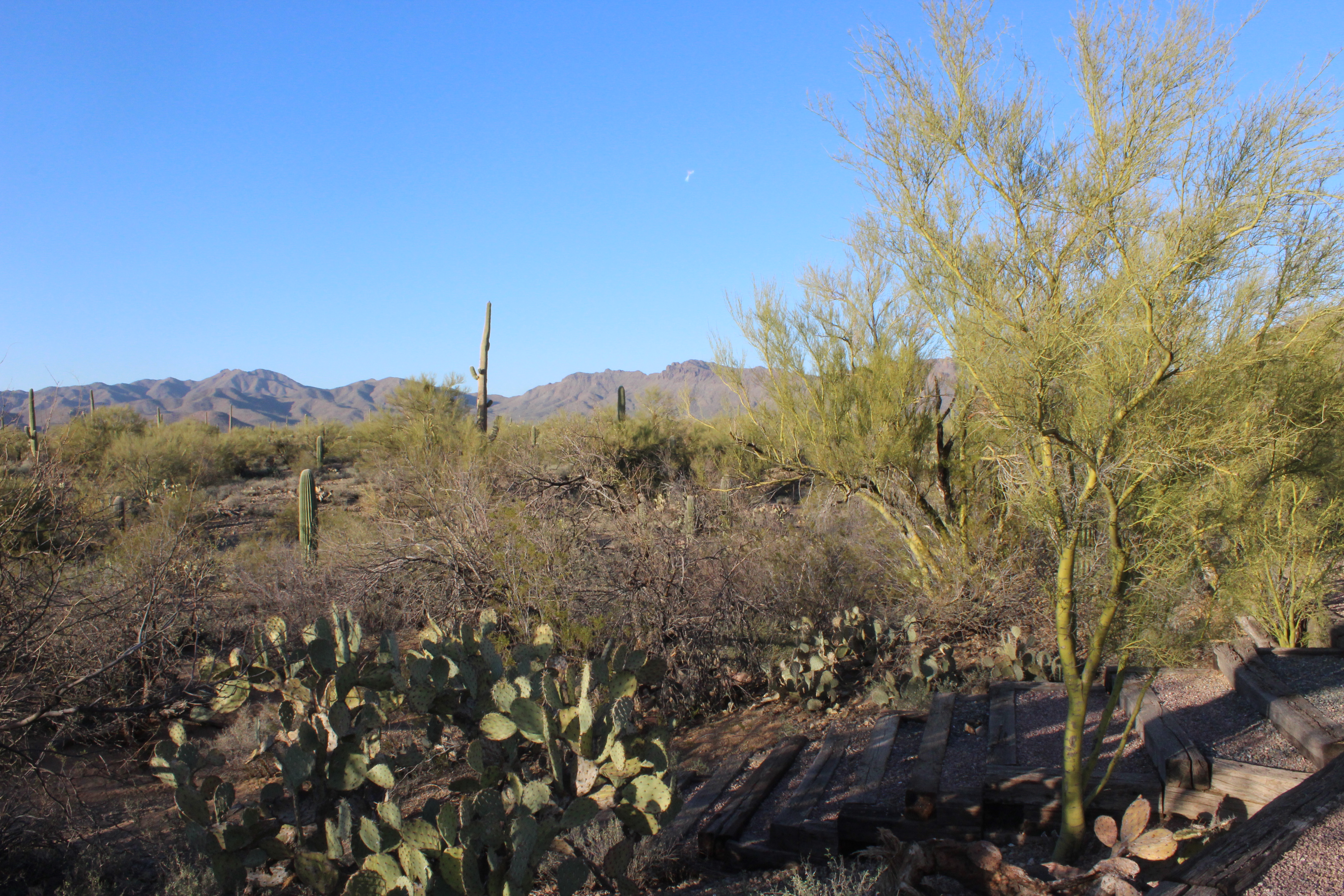
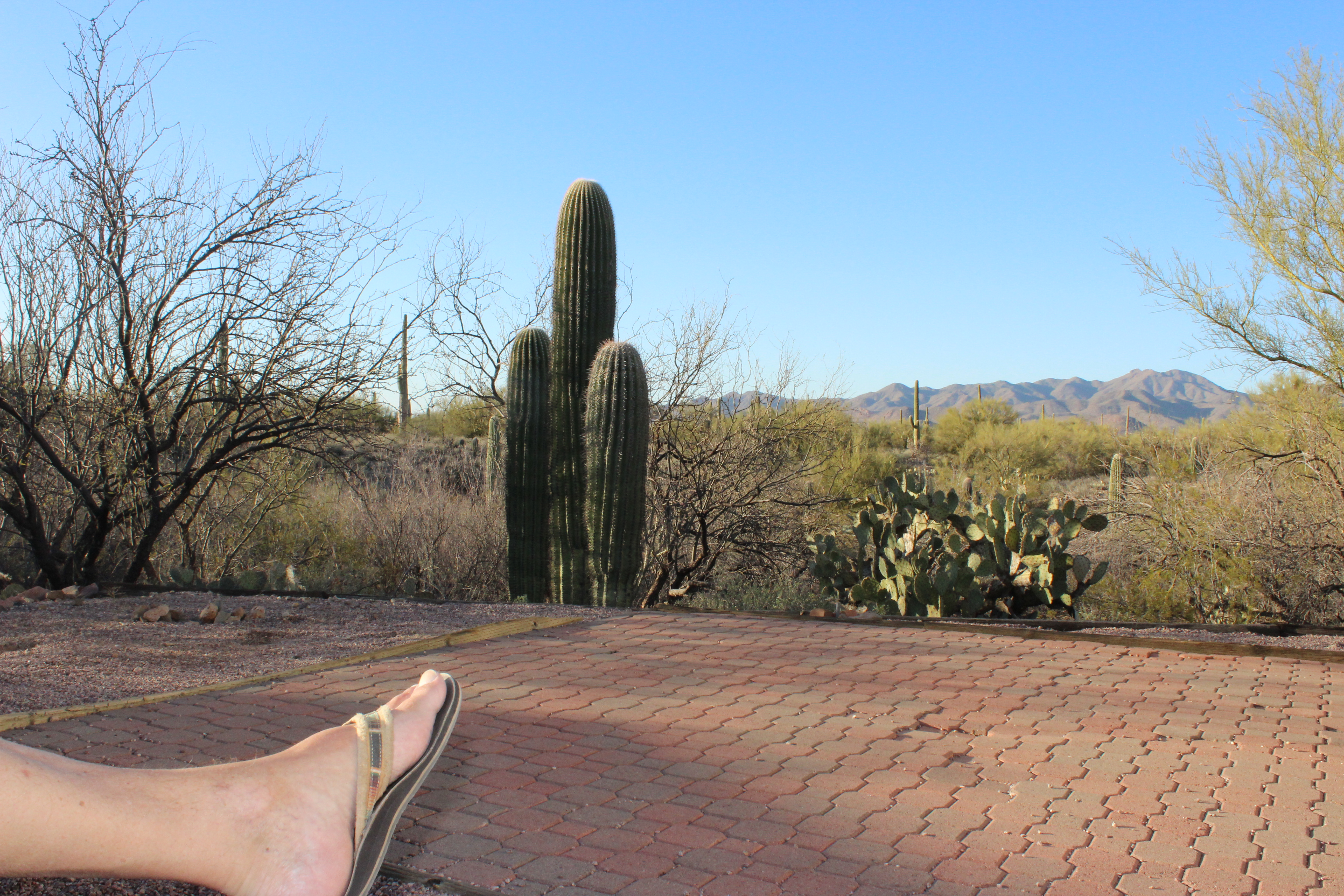
But our experience with living on the edge of the Sonoran Desert near Tucson, AZ confirms for us that the desert is teeming with a variety of plant and animal life. A pair of Great Horned Owls and singing coyotes serenaded us each night this week. At dawn and dusk, the bunnies and mourning doves were busy. One morning, a Gila woodpecker amused Sarah by tapping fruitlessly on a neighbor’s plastic TV antenna atop their trailer. And the Saguaro are endlessly fascinating in their assortment of sizes and shapes.
Saguaro grow slowly. Arms may appear when the cactus reaches 9-10 feet tall (around age 40+). This increases the water storage capacity of the plant and increases its procreation potential by producing more blooms. It might take 75 years before it first blooms. They are considered adults when they reach 125 years old and with optimal temperature and water conditions may live to be 200 years old.
Nan Burn, head of the Desert Foothills Land Trust’s Desert Awareness committee, says, “They’re pretty magical cacti. Against all odds they survive. Each root has about 2,000 seeds and the odds of them germinating are incredibly small. I have great respect for them.”
But not everyone has respect for them. The East Valley Tribune reported on a story of two dunderheads:
In 1982, two roommates who apparently were neither particularly conservation-minded nor of superior intelligence grabbed their shotguns and ventured out into the desert just west of Lake Pleasant.
One of them decided to blow up a cactus or two, and, finding the first, small one easy, took aim at a 26-foot-tall saguaro that was estimated to be 100 years old. He blasted away, severing a four-foot arm that fell on him and killed him.
Some would call that desert justice.
https://www.eastvalleytribune.com/get_out/the-mystical-giant-saguaro-is-not-to-be-trifled-with/article_6a86d5a1-bb2f-589e-afa2-5c04f54cc69d.html





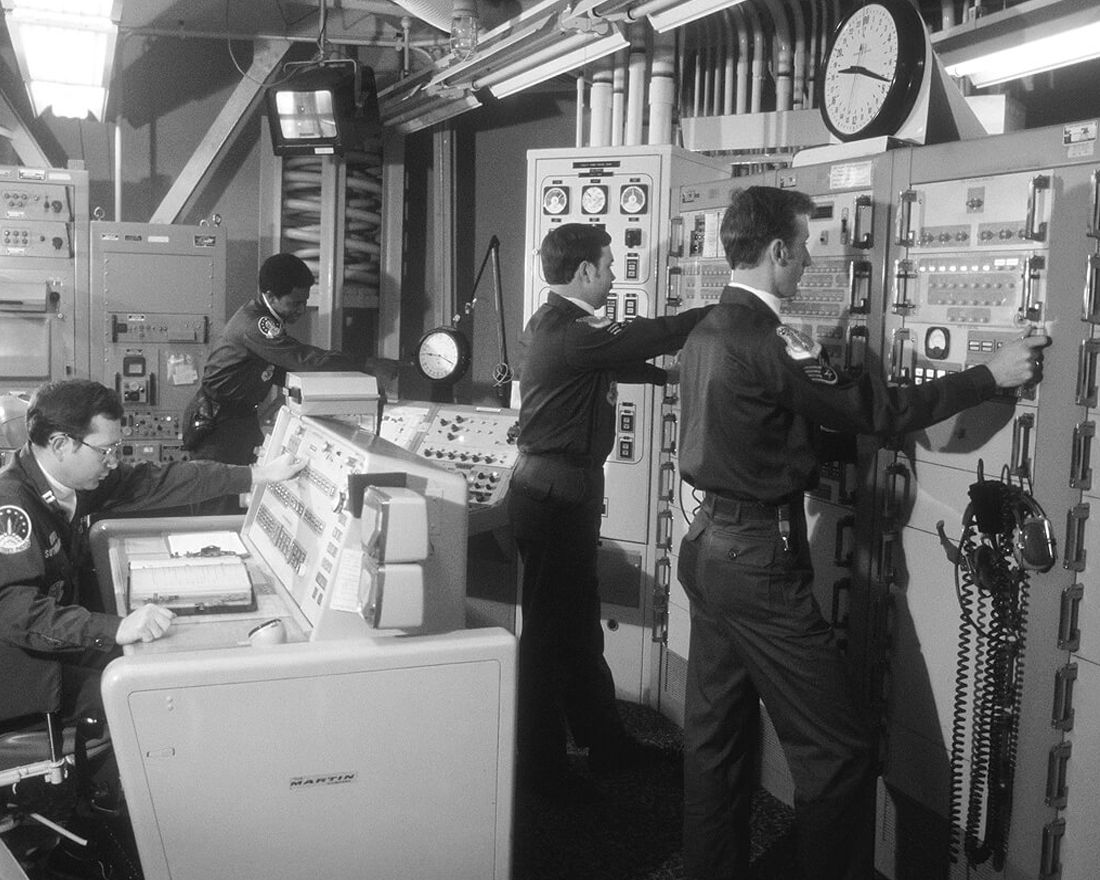
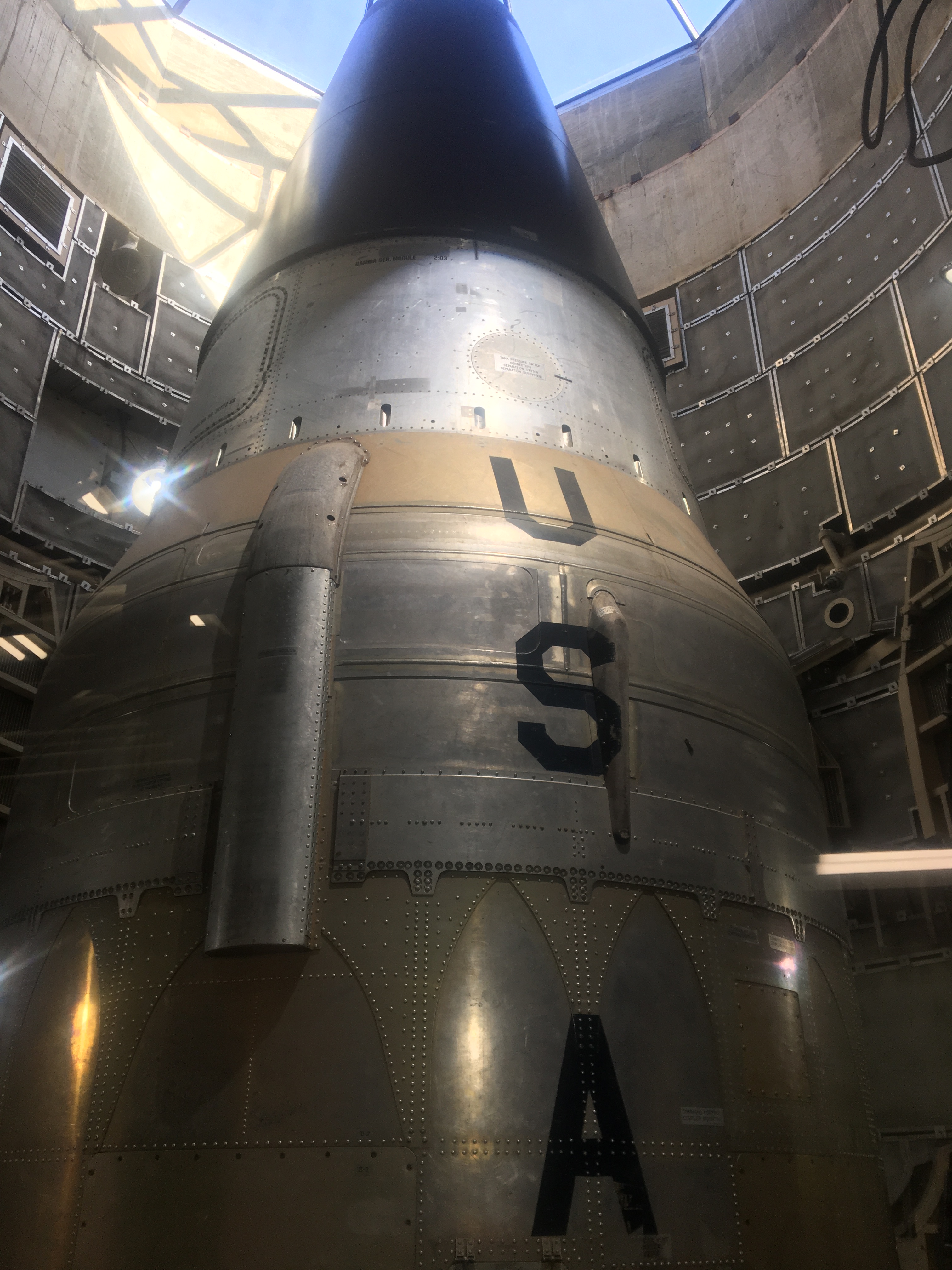
We spent an afternoon touring the Titan Missile Museum, which is the last of the 54 Titan II missile sites that were on alert across the United States from 1963 to 1987. Our guide, Dave, actually worked at the site for ten years in the 1970s. Originally from Worcester, MA, he joined the Air Force straight out of high school and was part of a team of four men from the 390th Strategic Missile Wing hosted by Davis-Monthan AFB. His team worked 24-hour shifts underground keeping the Titan II missile on alert as part of the ICBMs deployed around Arizona, Kansas, and Arkansas. When not on missile silo duty, Dave was training, problem-solving, and being evaluated weekly by psychiatrists.
As we toured the site, Dave told us specifically the safety measures and redundancies that were built into the missile silo and its maintenance. A red bucket hangs by the second telephone (after you give a code at the first telephone by the gate you have three minutes to reach the second phone by the door) which is where the team’s commander would burn his entry code after reciting it into the second telephone. As we descended 55 steps underground, we observed these huge tension coils and learned the whole silo was essentially suspended so it could withstand a Soviet attack and still be able to fire its rocket in retaliation.
Peace through deterrence is the theory that all nuclear-power governments promise only retaliatory annihilation; therefore no one will want to be the first to strike, because it would guarantee World War III and the mutual destruction of both countries (e.g. the Soviet Union and the United States). Listening to Dave, the feeling of finality, knowing that their mission was to kill the people of another country, and possibly end the world, is experienced by only the few men (and now women) who work with these nuclear weapons around the globe. We can never imagine the true burden that Dave and his colleagues have lived with. The juxtaposition of the way he alluded to the enormity of the responsibility of turning the key with the reality of his own certain death had a huge emotional impact on us. The psychological awareness and understanding of his role to complete his mission is unlike anything most of us will ever experience.
Dave walked us through the launch sequence, asking for two volunteers to sit at the command desk and work out the codes and turn the two keys. Sarah declined. But it was fascinating to hear Dave tell us what it felt like to work there for ten years. How every test alert was not known to be a test, because the drills were run as if they were real. For ten years, Dave and his crew-mates lived in a perpetual heightened state of readiness, not knowing if each day would be their last. They were consciously aware that the silo was a Soviet target and they would have only minutes to retaliate with their launch sequence, should incoming missiles be launched from a hostile nation. He says he still gets a funny feeling when he plays the alarm for tours.

 Where in the world are the Gills?