While the Danube is not exactly blue water, it was pretty great to take the ferry from Bratislava to Vienna. The weather cooperated so we could sit outside for the 90 minute journey. And we even waltzed a bit!
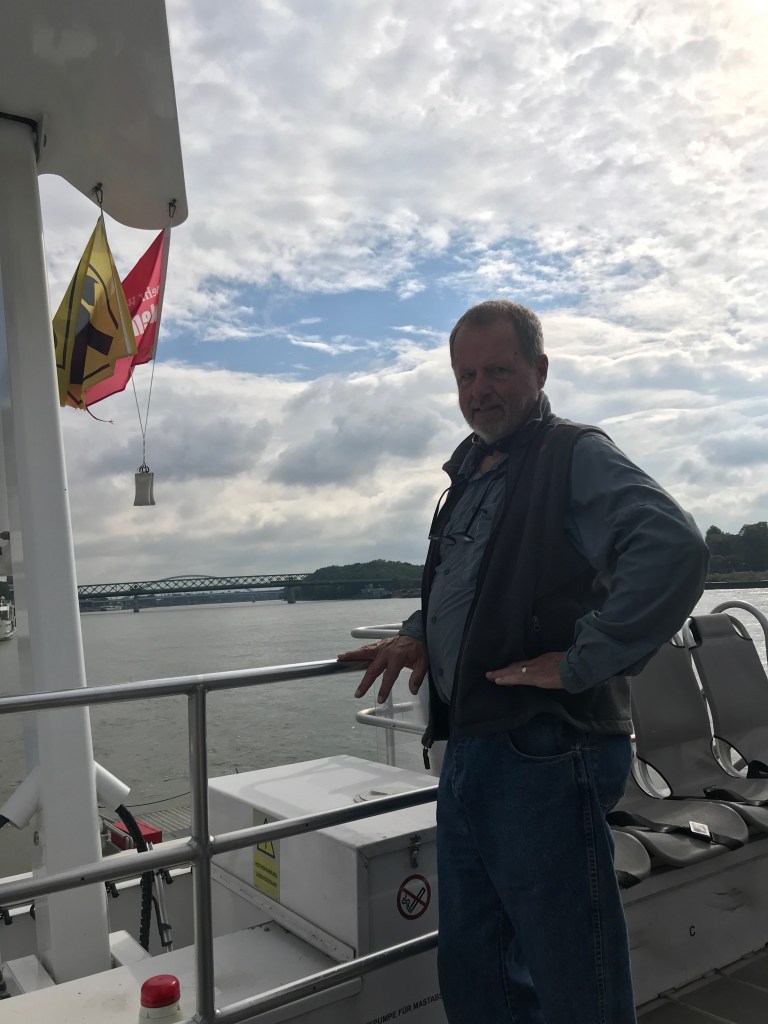
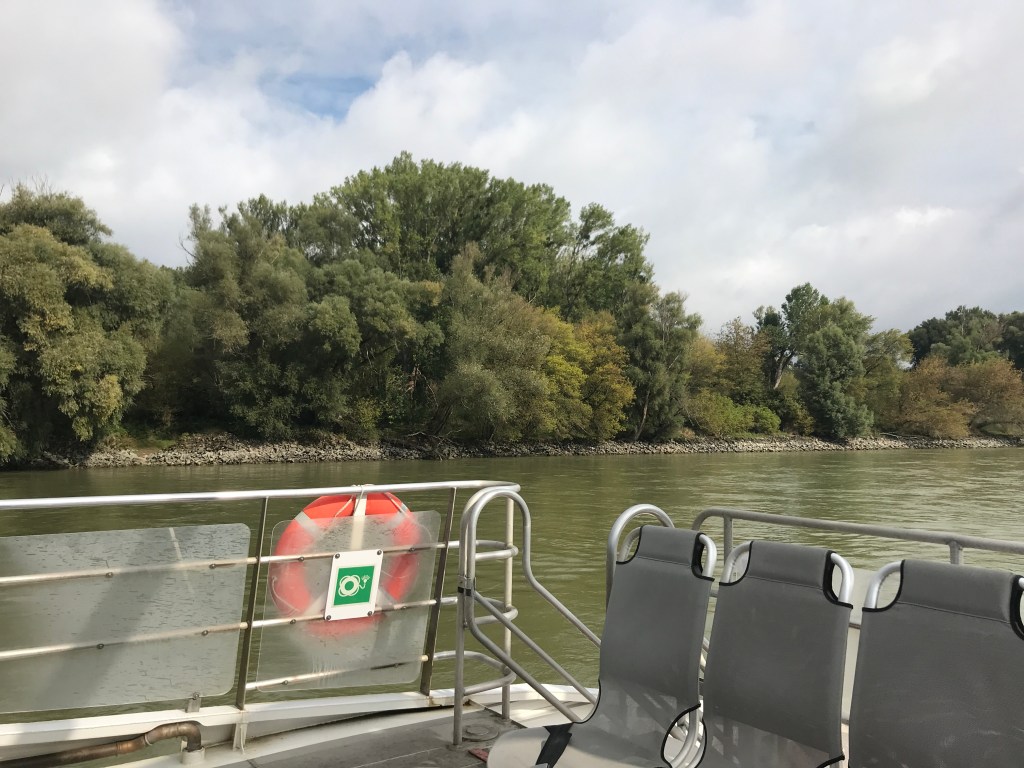

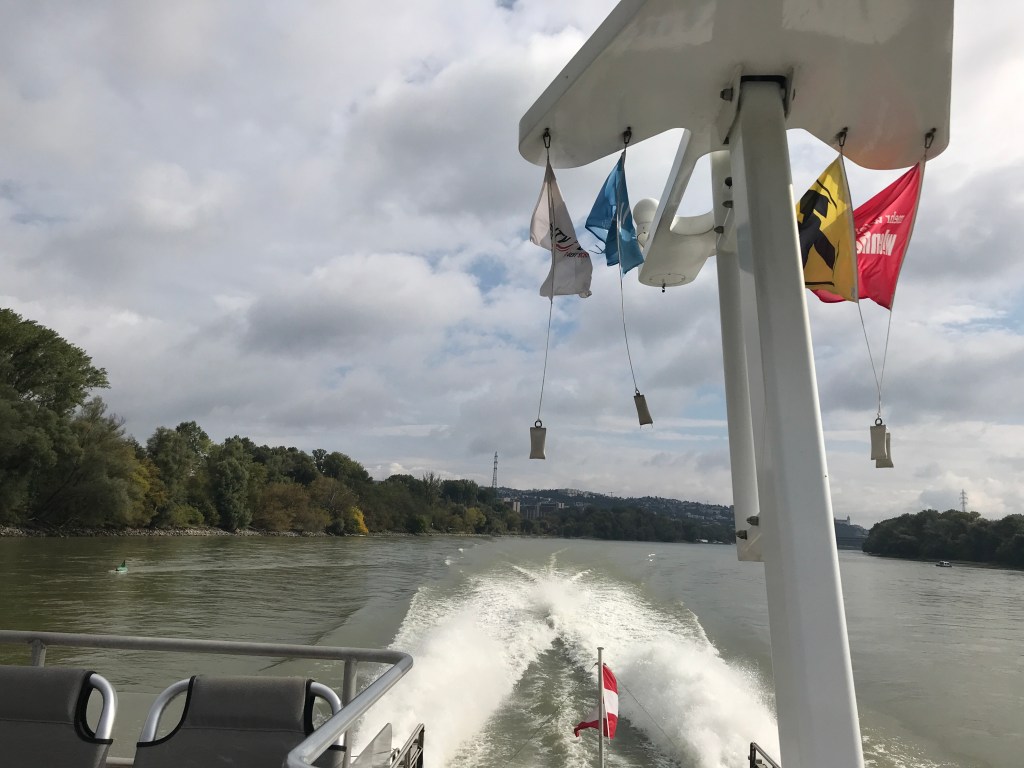
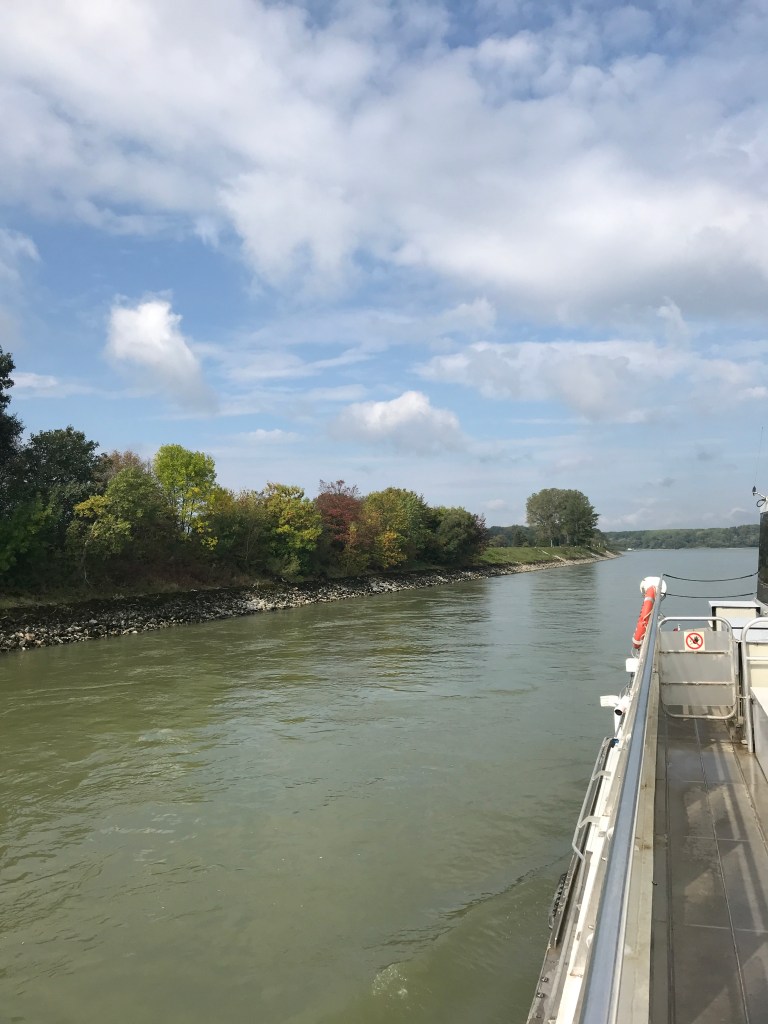
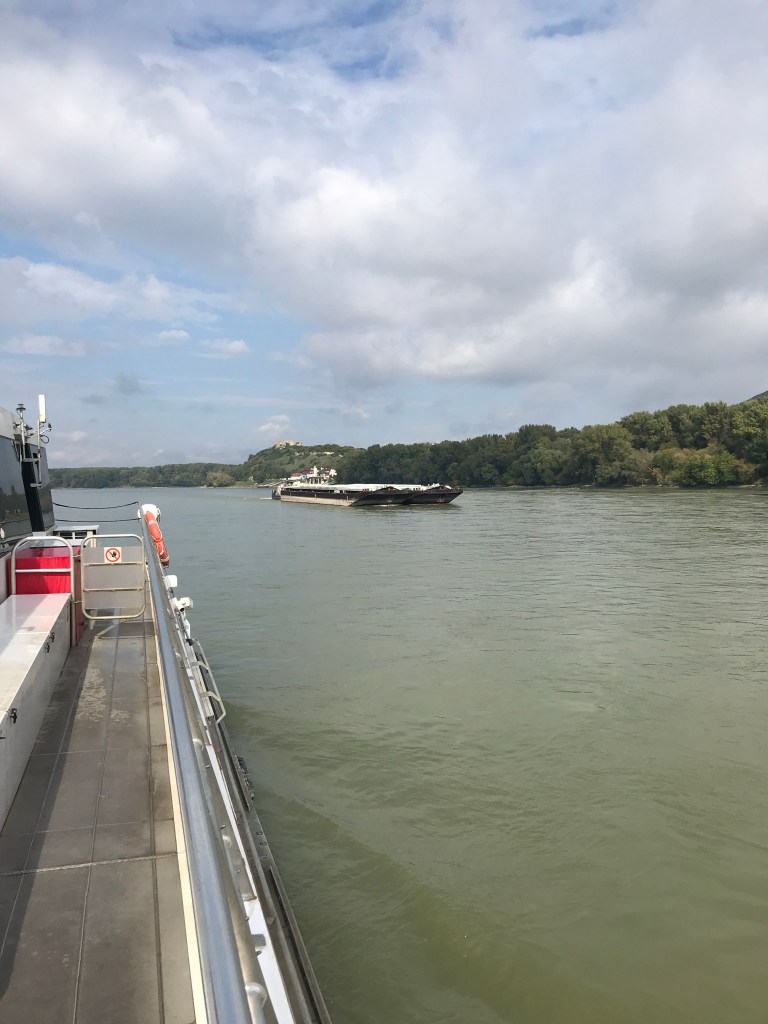
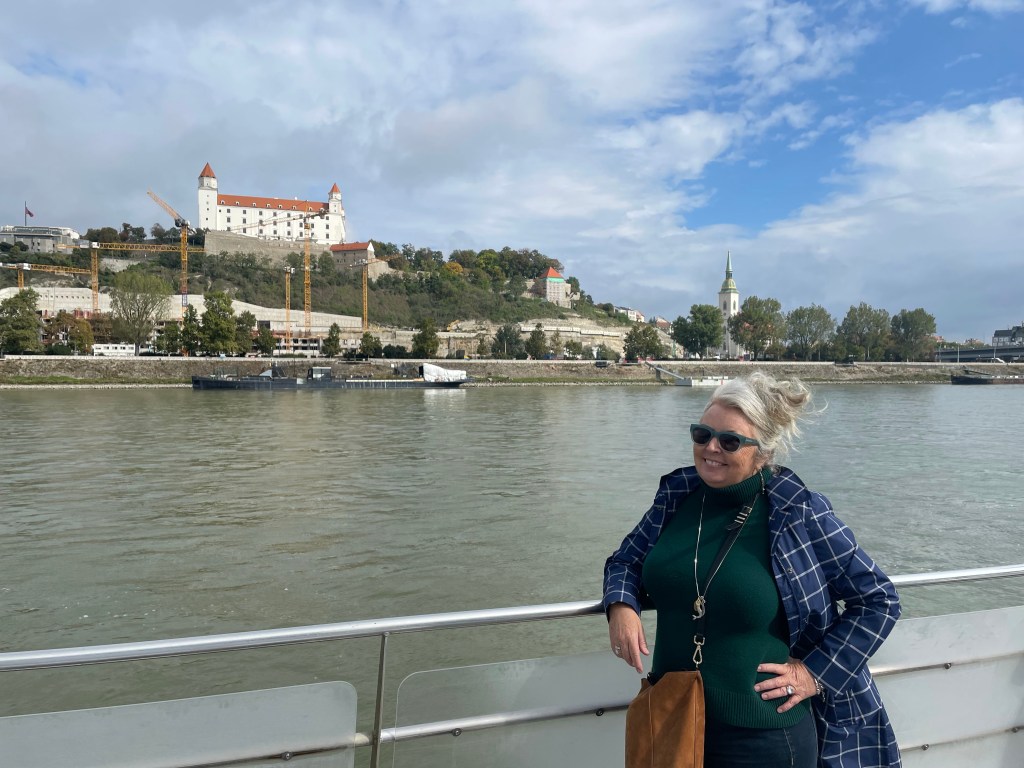
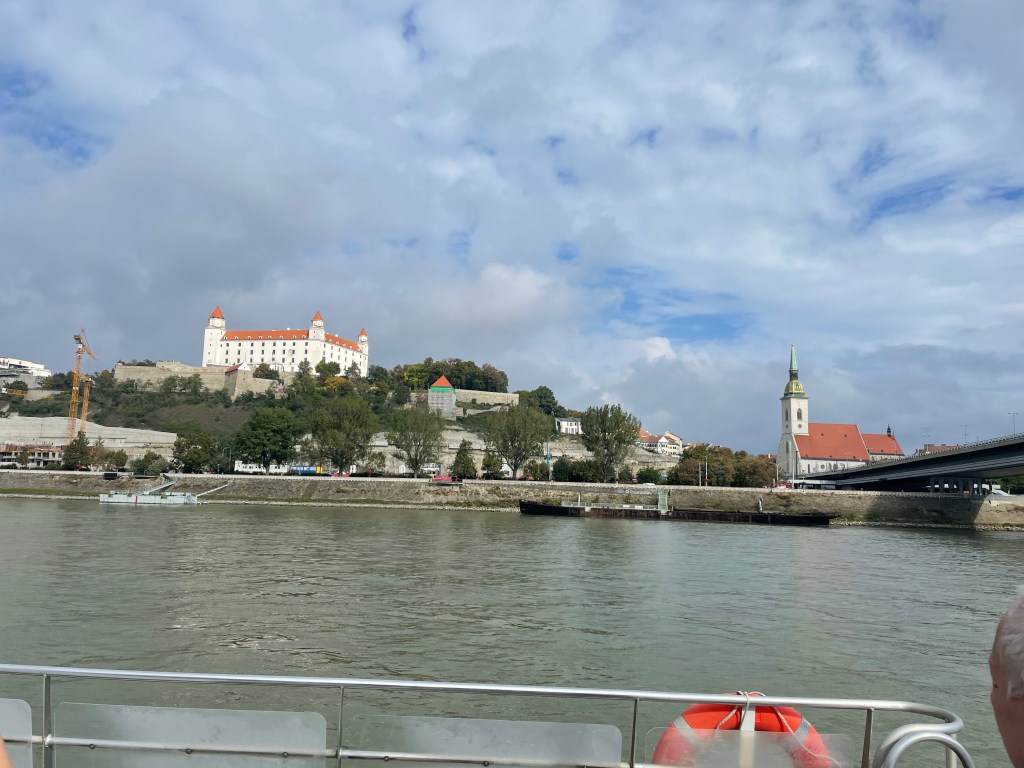
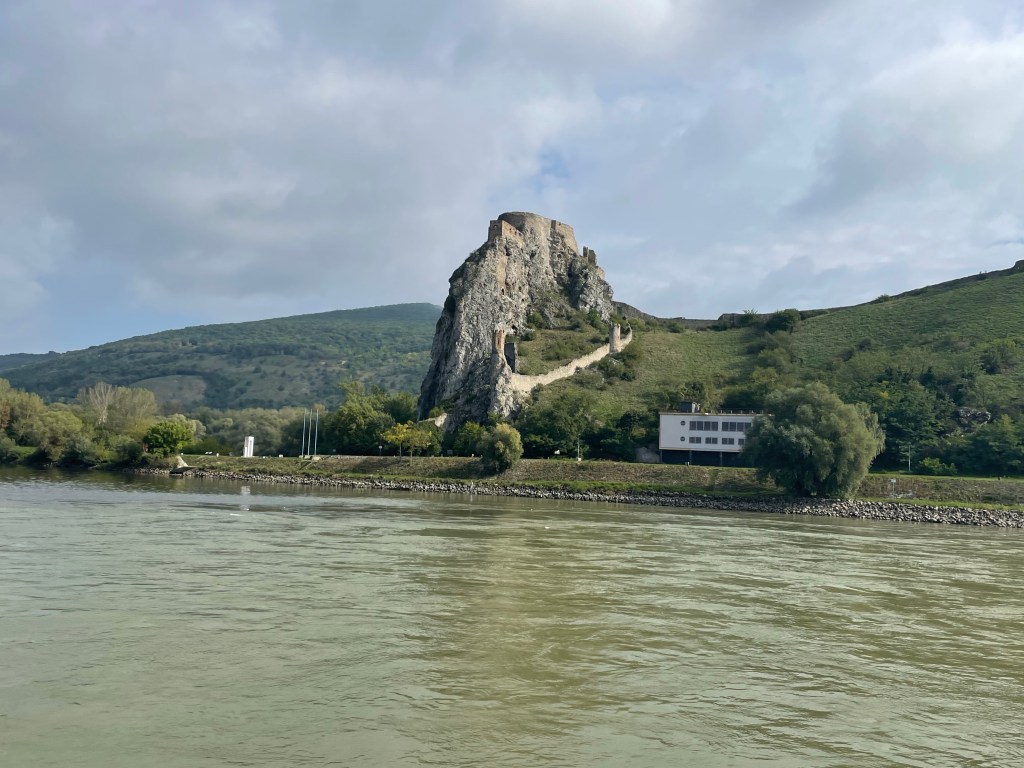
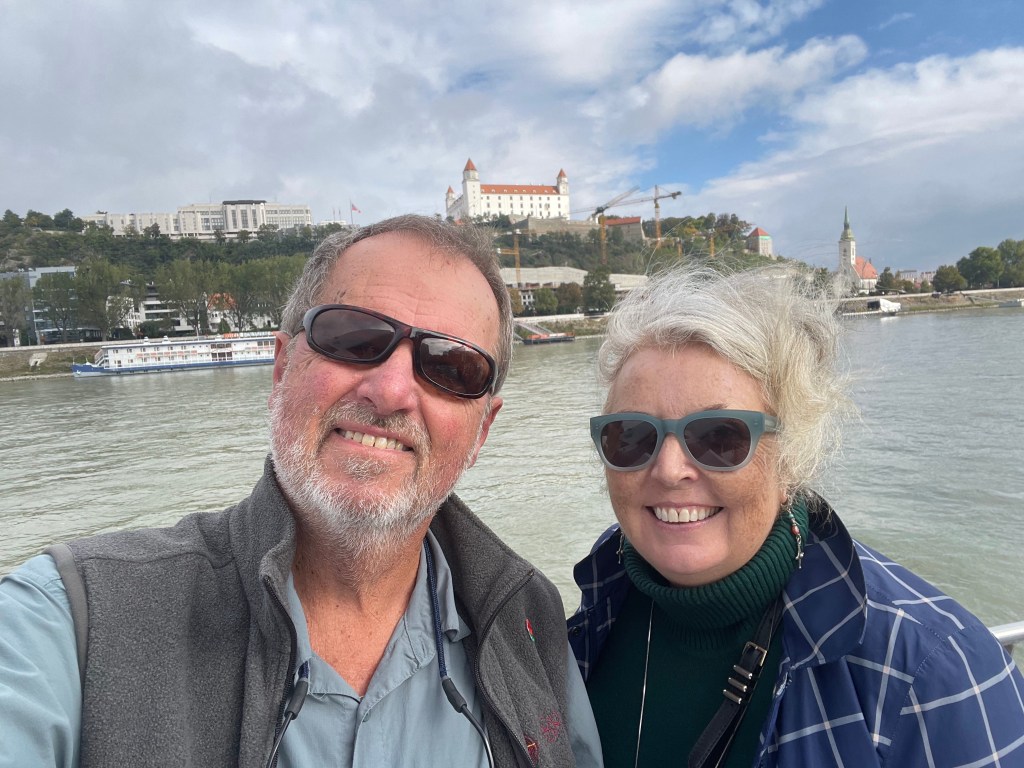

While the Danube is not exactly blue water, it was pretty great to take the ferry from Bratislava to Vienna. The weather cooperated so we could sit outside for the 90 minute journey. And we even waltzed a bit!
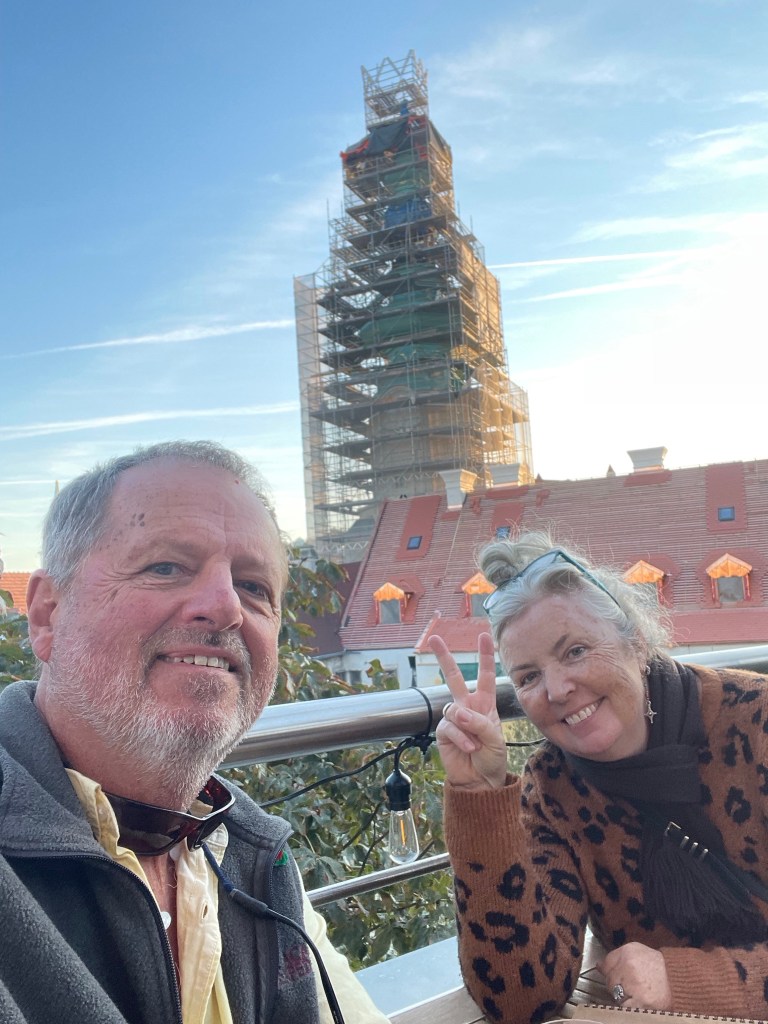
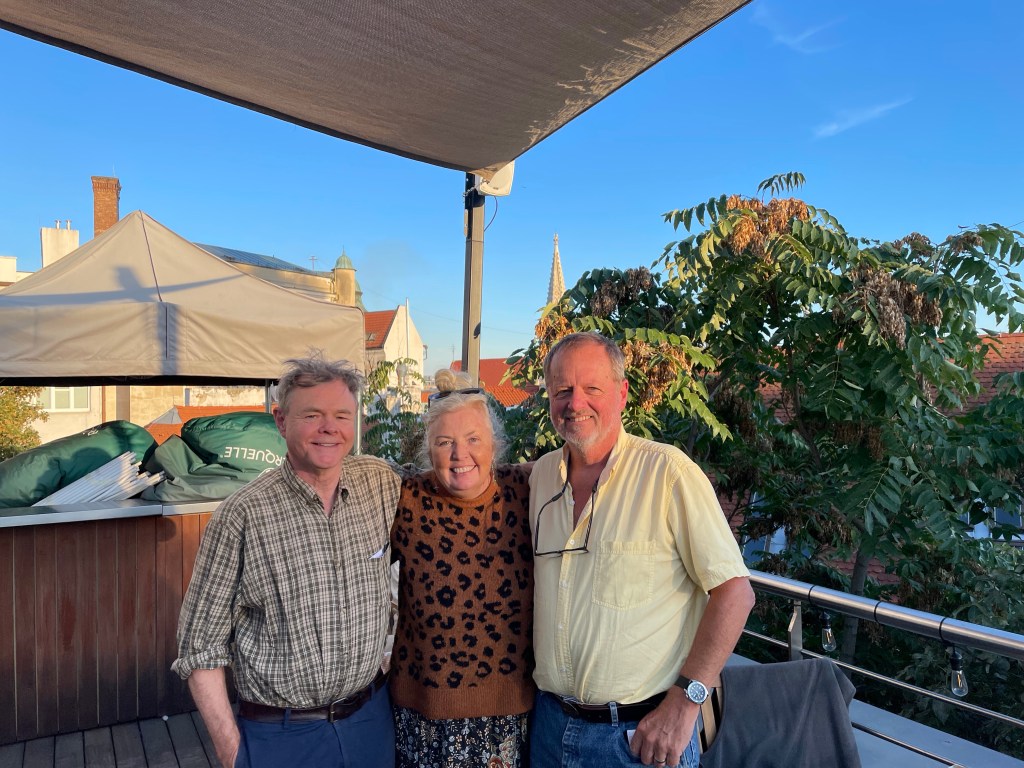
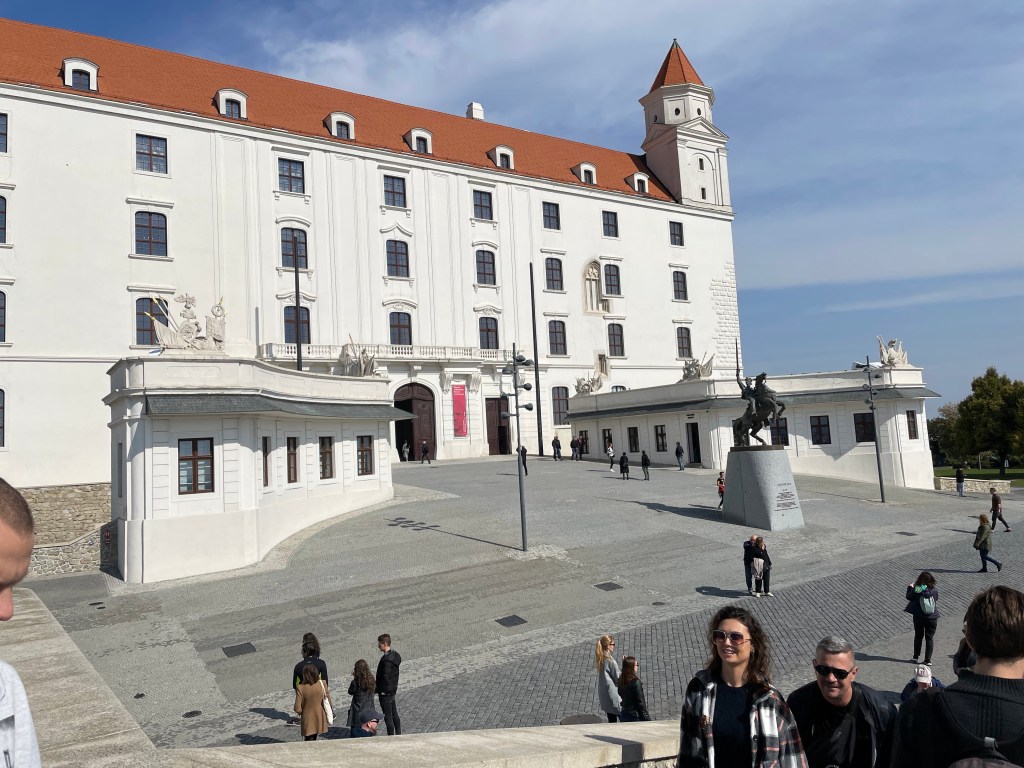
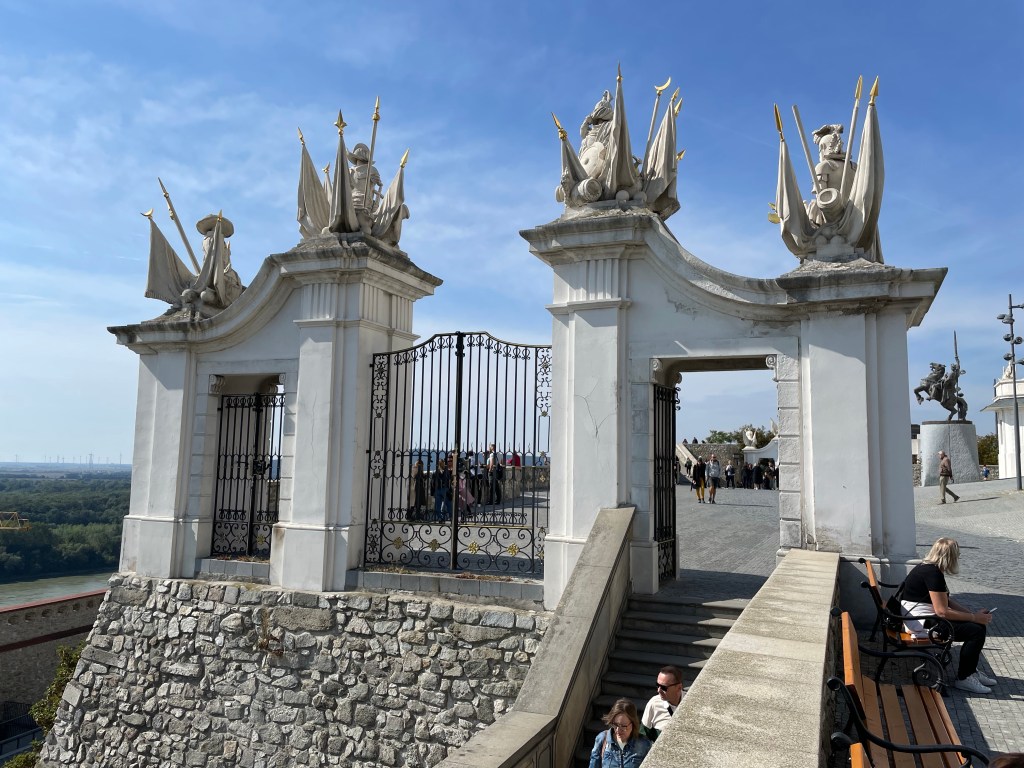
Cousin Bobby took an overnight train from Warsaw to meet us for a weekend in Bratislava. We did a 90 minute guided bus tour on Saturday morning, which is the best way to see a medieval town with its fortified castle built on a tall hill!

This region has evidence of human settlements going back 7, 000 years. Located on the Danube River, the city has a multi-cultural history with various influences and languages dominating different eras. In the early twentieth century, Slavic national identity was emphasized and the city was re-named Bratislava and became part of the newly established Czechoslovakia. Nazi occupation gave way to Soviet occupation and eventual independence was achieved after the Velvet Divorce. Bratislava is now the capital of Slovakia and is the wealthiest region in the country.
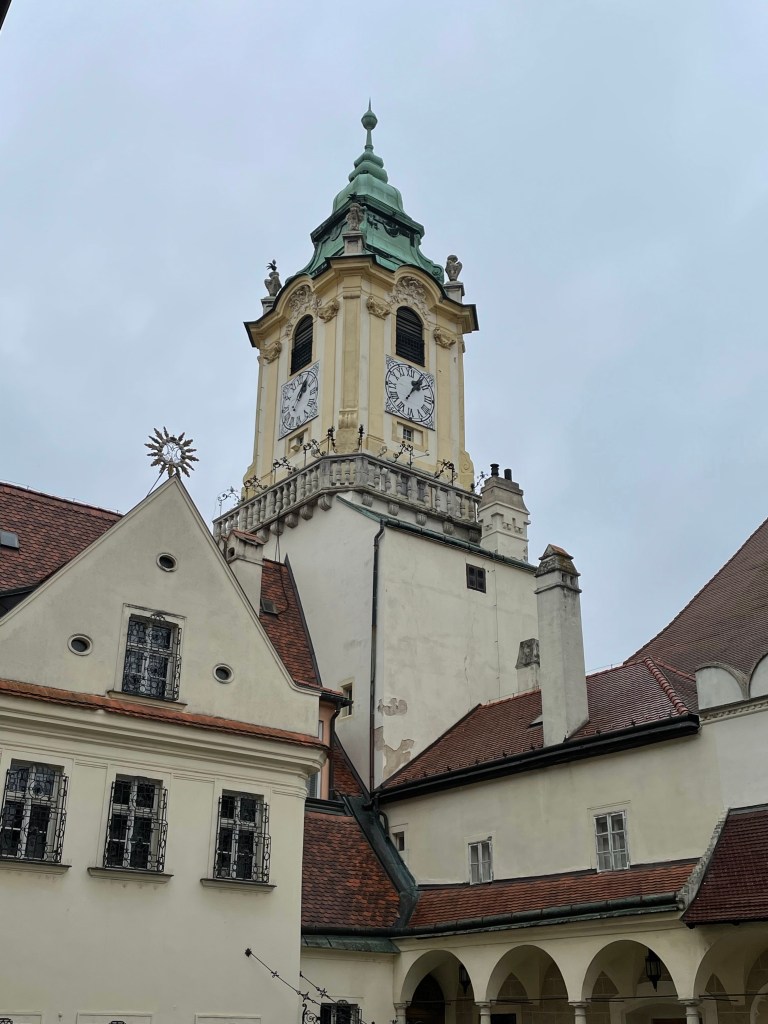

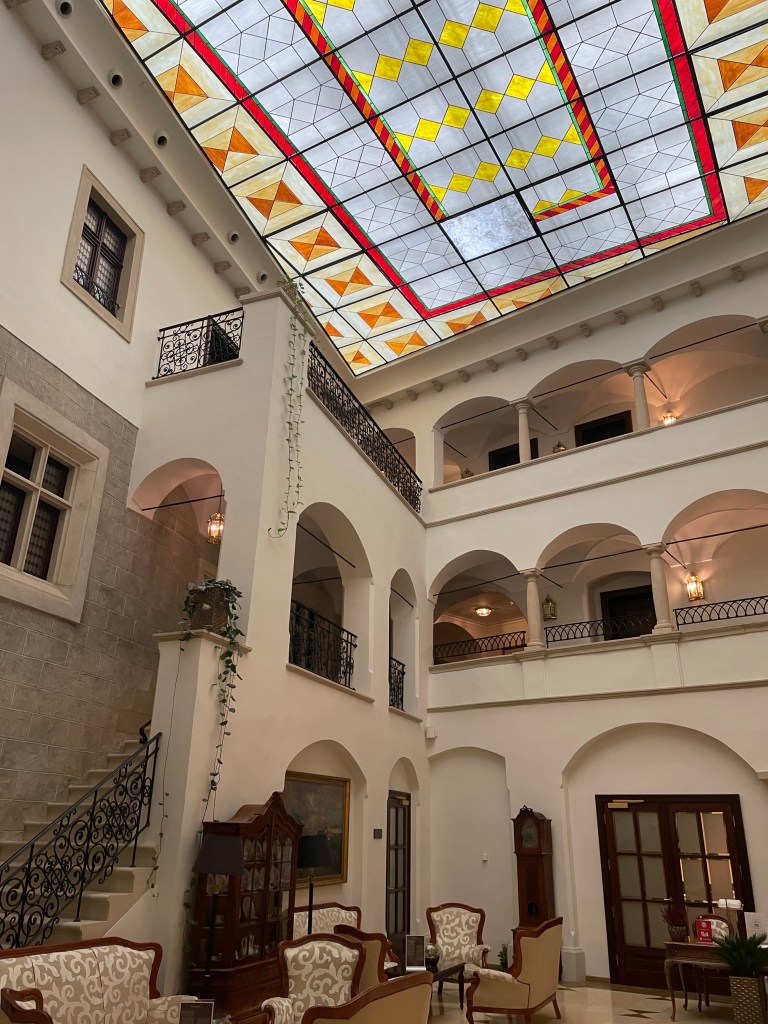
Our hotel was in Old Town and was originally built as a monastery in the thirteenth century. Gorgeously appointed, the central atrium is capped with beautiful stained glass panels. And the buffet breakfast here came with champagne (Sarah added a drop of fresh orange juice for vitamin C benefits).


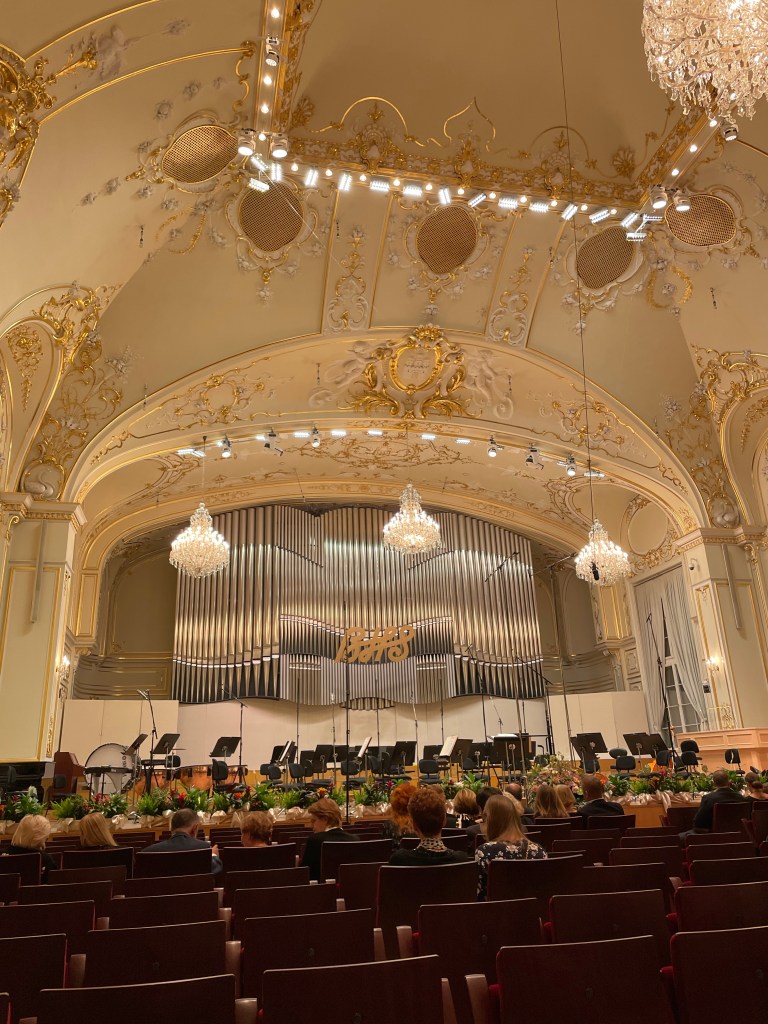
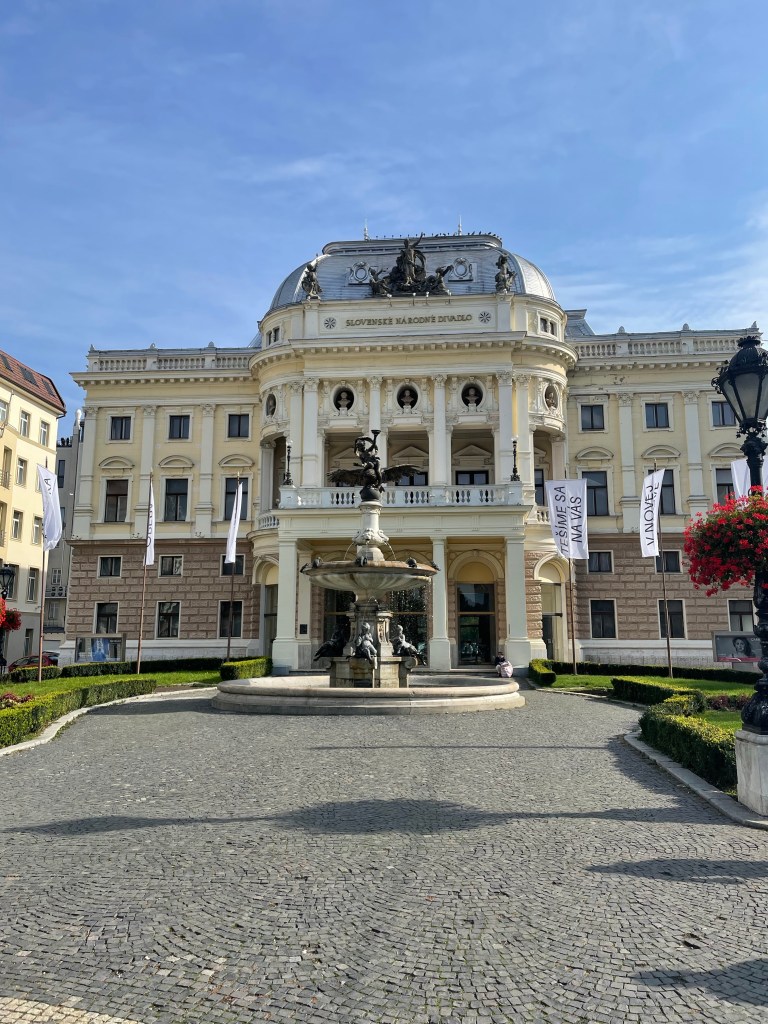
On Saturday night, we attended a concert of Slovakian chamber music by the Štátny komorný orchester Žilina. The program concluded with Mikuláš Moyzes’ Mass in C Major sung by the Lúčnica Choir. It was a beautiful evening in a neo-baroque building.
Since high school, i have been attracted to the “bohemian” fashions of the 1960s and have styled myself as an artist born in the wrong decade! i like to decorate with bold colors and an eclectic mix of elements. For our second date, i invited Joe to attend Baz Lurhmann’s San Francisco Opera production of “La Boheme.” I had a vague understanding there was a region somewhere in central Europe that used to be called Bohemia and imagined fairytale castles decorated with lots of lace, macrame, and colorful tapestries and rugs; in other words, boho chic.

My ignorance has now been exposed and as i write this, i am traveling by train through Czech Republic, thinking about the ancient Celtic Boii tribe pushed north by the conquering Roman armies. When the Roman Empire engulfed these lands thousands of years ago, they named it “Boiohaemum” by blending the name of the Celtic tribe (boii) with the proto-German word for home (haimaz) and then latinizing the new portmanteau.
Sometime in the sixth century, Slavic tribes began arriving from the east and Christian monks showed up in the ninth century. From decade to decade, century to century, borders and allegiances continued to shift as the people of the Middle Ages tried to build power over their neighbors, but the name “Bohemia” stuck to the region.

After WWI, the region of Bohemia was the geographic core of the newly formed Czechoslovakia. Tragically, Hitler fooled the world with the Munich Agreement, and Czechoslovakia was sacrificed to the Nazi regime. Following WWII, a new republic was declared but was soon absorbed by the eastern bloc and occupied by Soviet forces. It wasn’t until the Velvet Revolution in 1989, that Czechs once again strove for a pluralistic democracy.
In the nineteenth century, Parisian writers started using the word “bohemian” to describe the painters, sculptors, intellectuals, musicians, and actors living unconventional artistic lives in Europe’s major cities. It evoked a sense of wandering with no fixed address – not unlike the nomadic Celtic tribe of the Boii – and an appreciation of art over money, friendship over privilege and the camaraderie of living with like-minded outsiders. Even Mark Twain described himself as bohemian!

There is so much to learn about the history of Central Europe and how the ripples of influence from the events and legends of Bohemia have spread across the world. Madeline Albright’s book “Prague Winter” is an excellent place to begin. I am just beginning to comprehend how complex and intricate are the stories of this region.


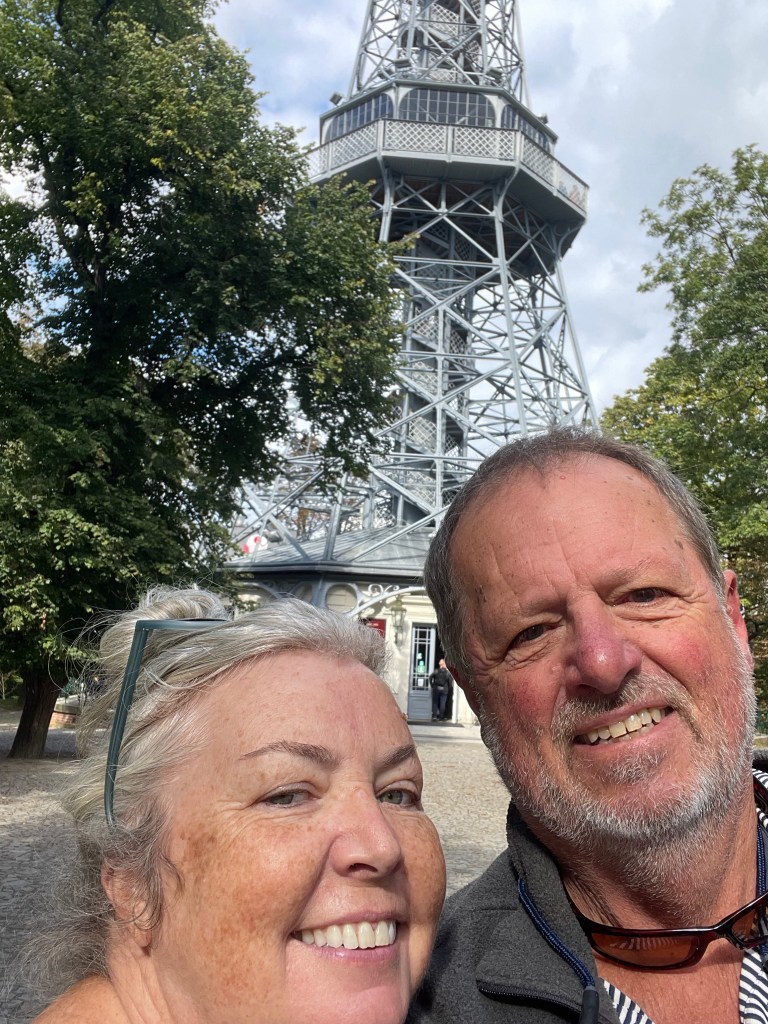


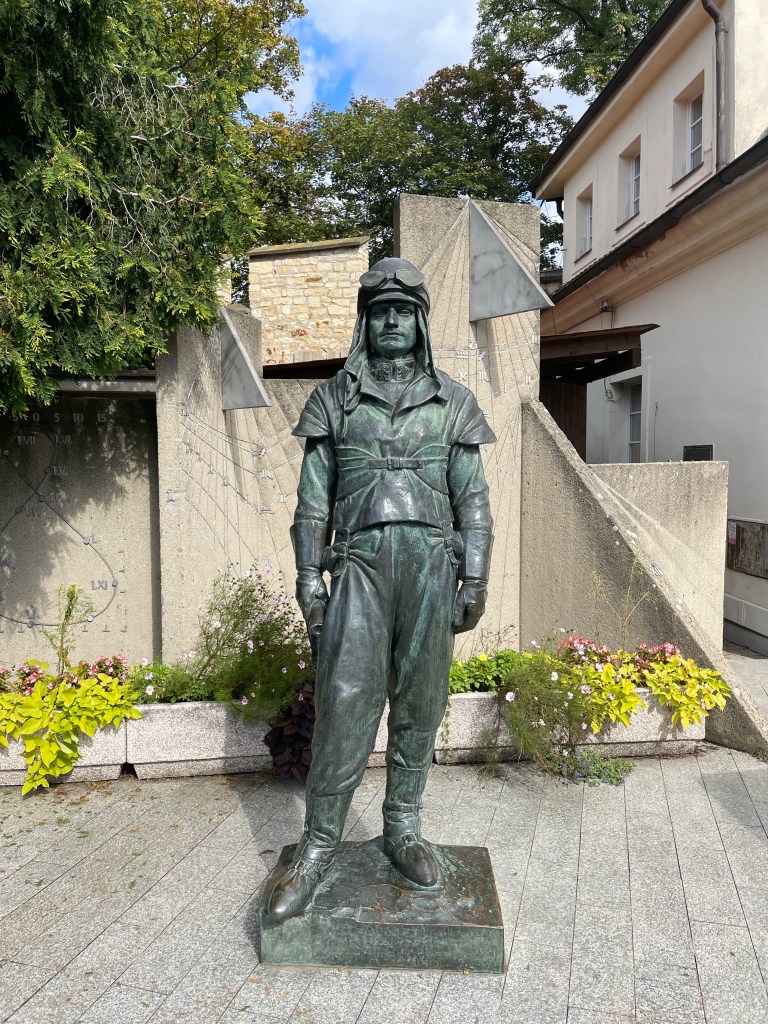


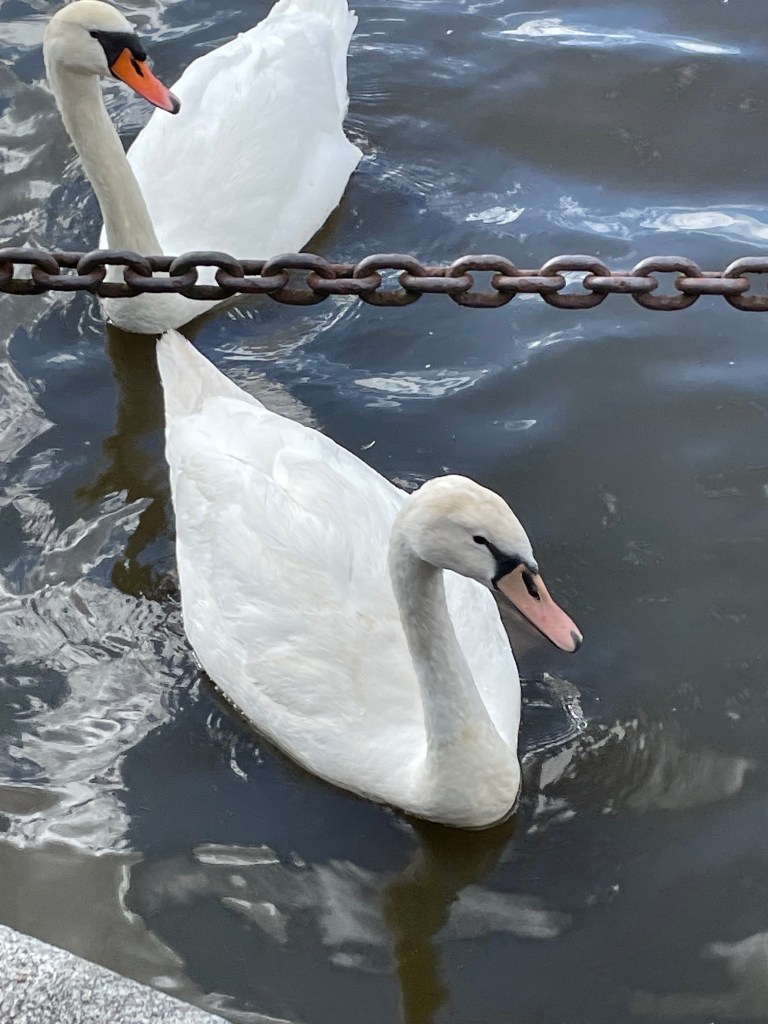


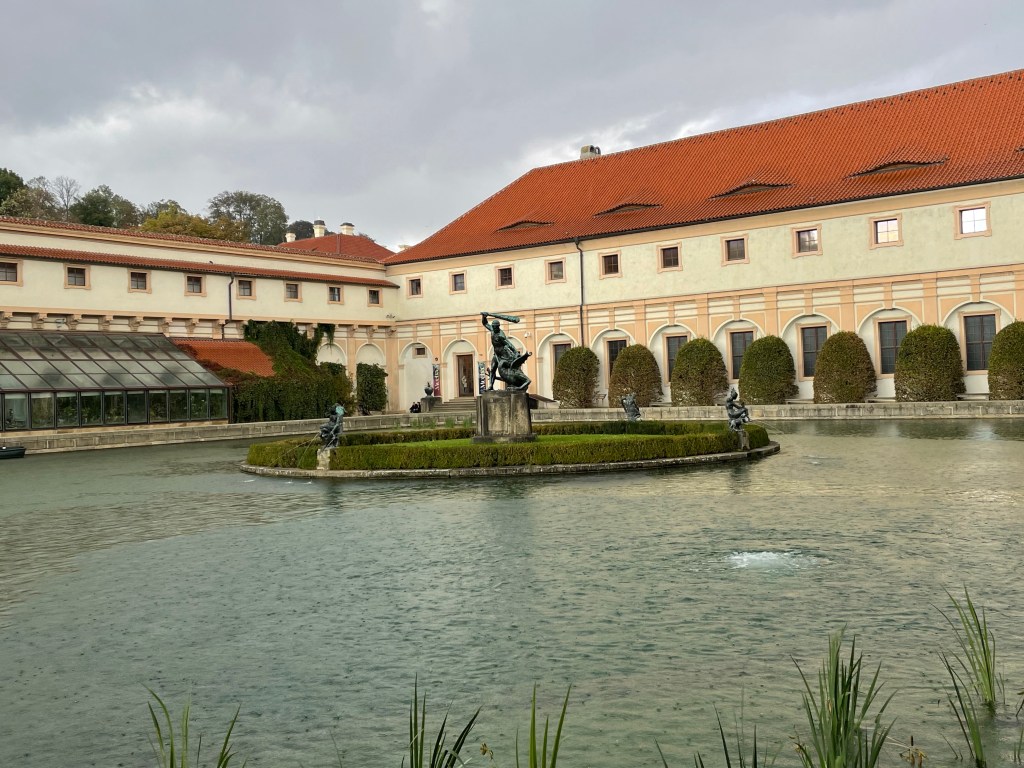


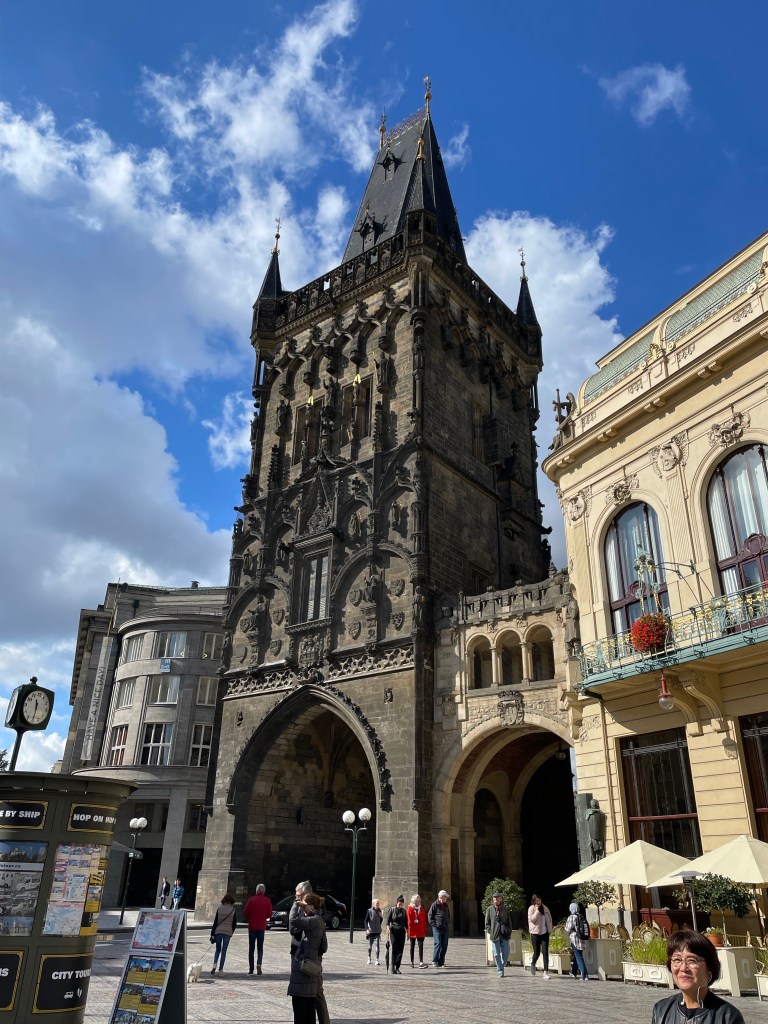
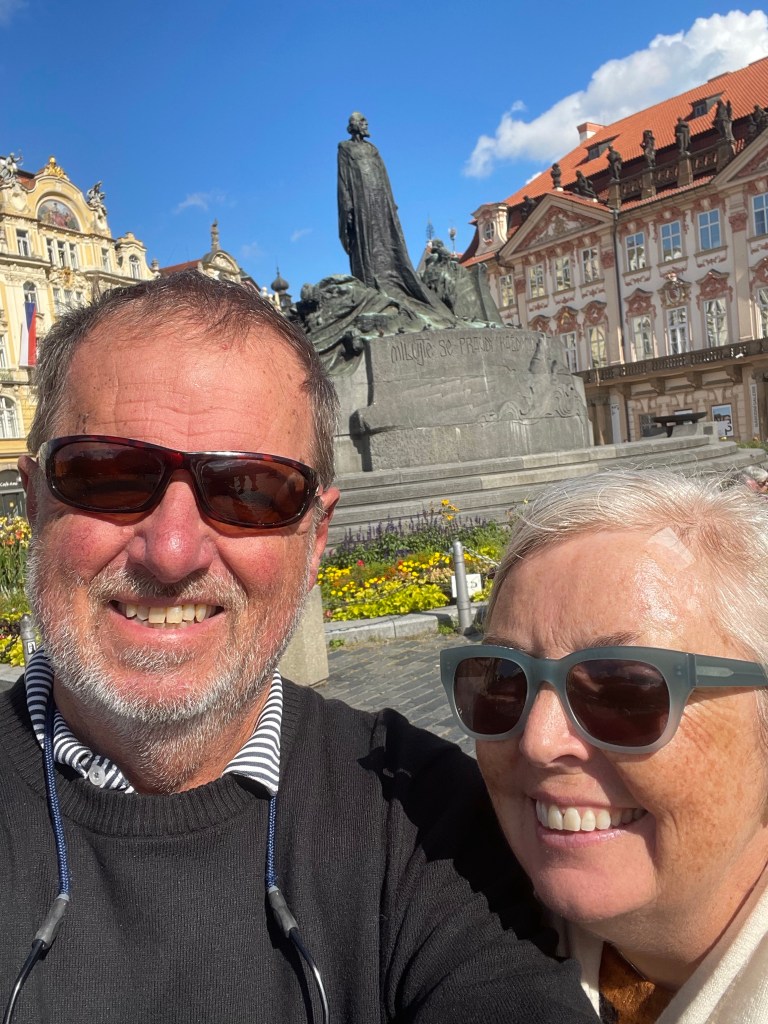


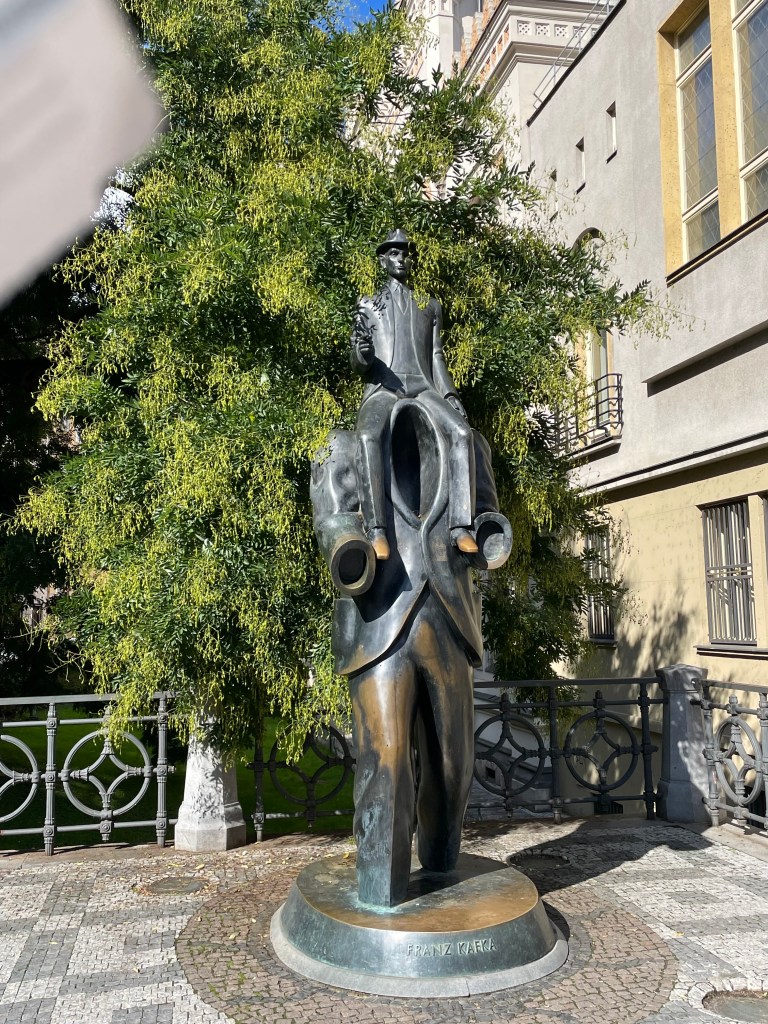


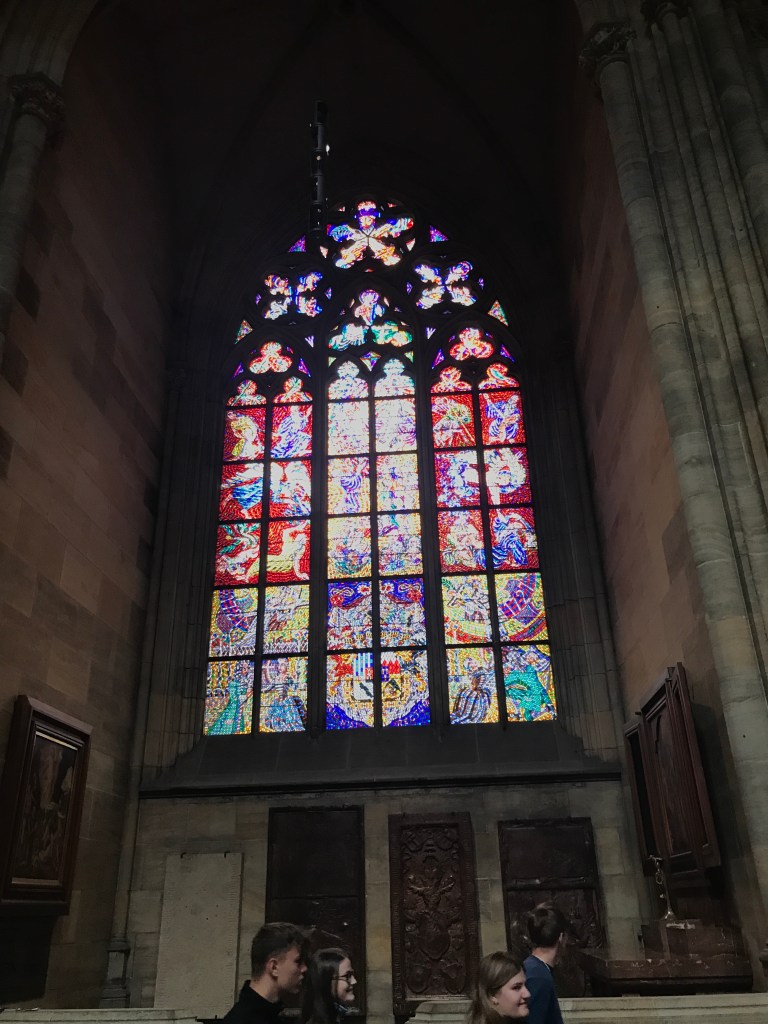

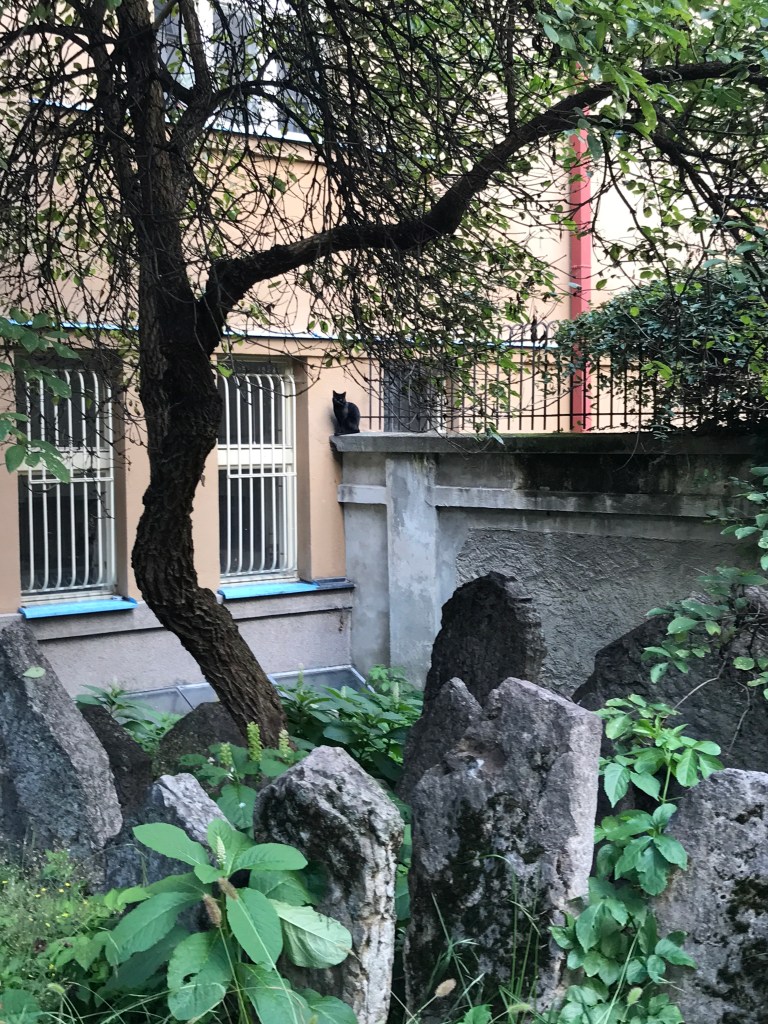

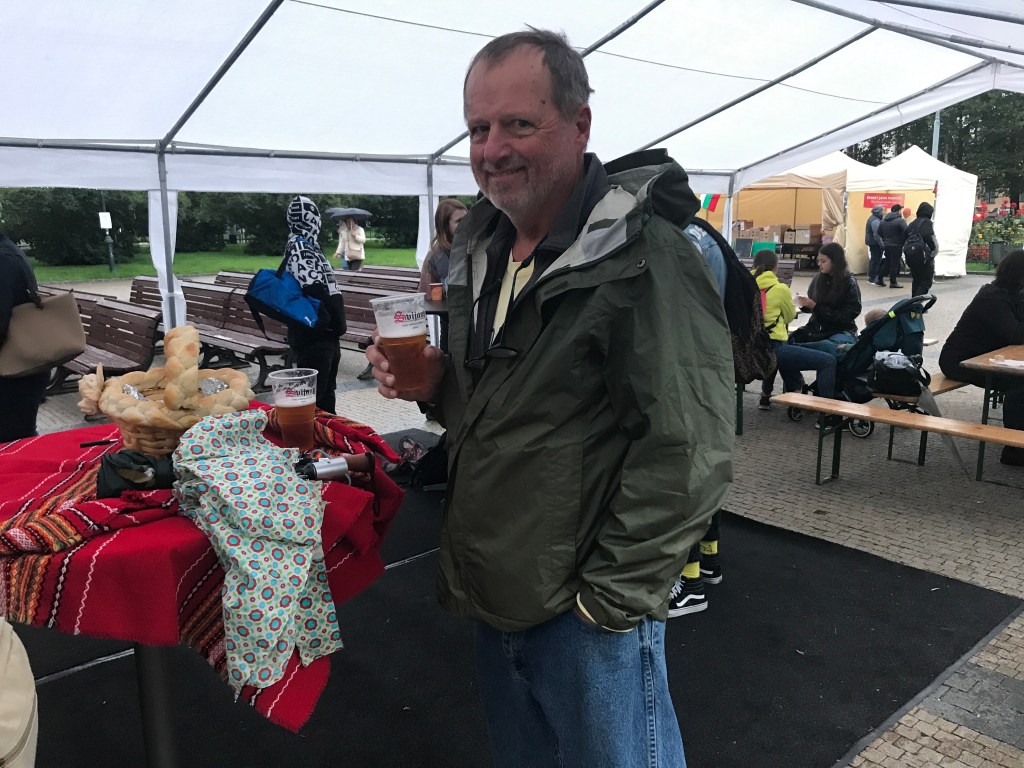
Joe Gill has a gift: finding free live music and beer! After eighteen (!) hours of travel, including a stop in London to pay our respects to QEII, we took a short nap in our Prague lodgings and then set out to find dinner. We had only walked a few blocks in light drizzle when we stumbled upon a park hosting a free concert! We think it was a Christian rock band fronted by women. A priest came out to thank them before beginning 7 pm Mass at the church behind the outdoor stage. We enjoyed our first Czech beer (pivo) while dancing with locals!
Dinner was delicious at a neighborhood restaurant. Our waiter and the bartender were patient teaching us proper pronunciation and etiquette in Czech hospitality. We both loved the warm, filling flavors of český guláš and svíčková.
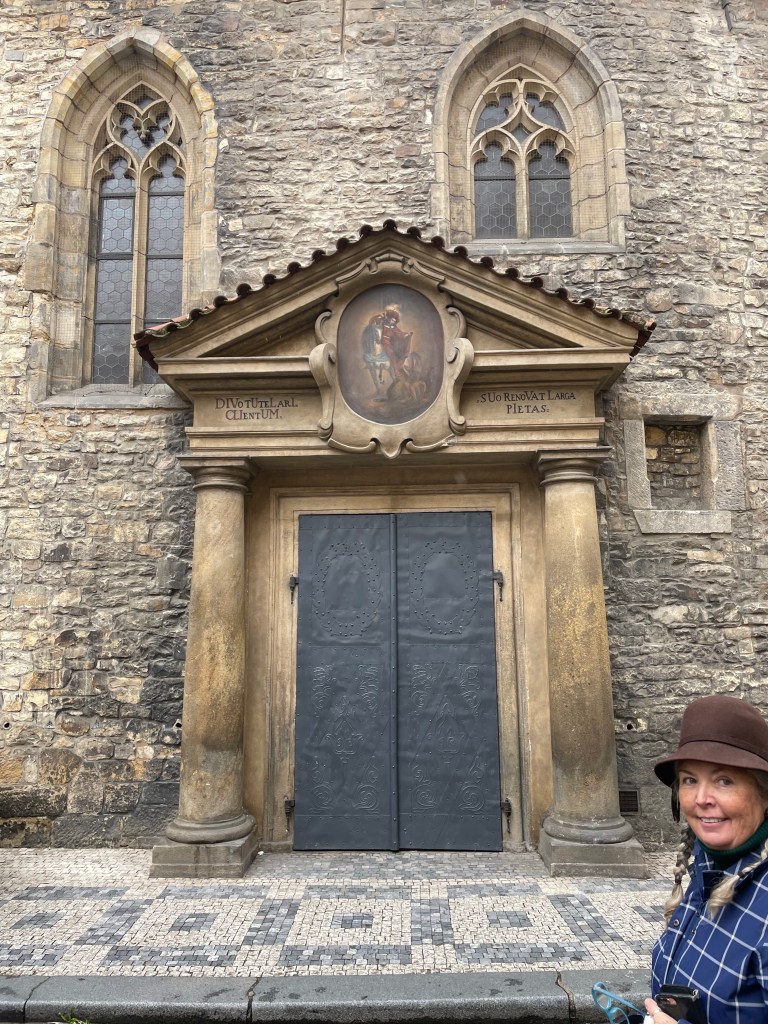
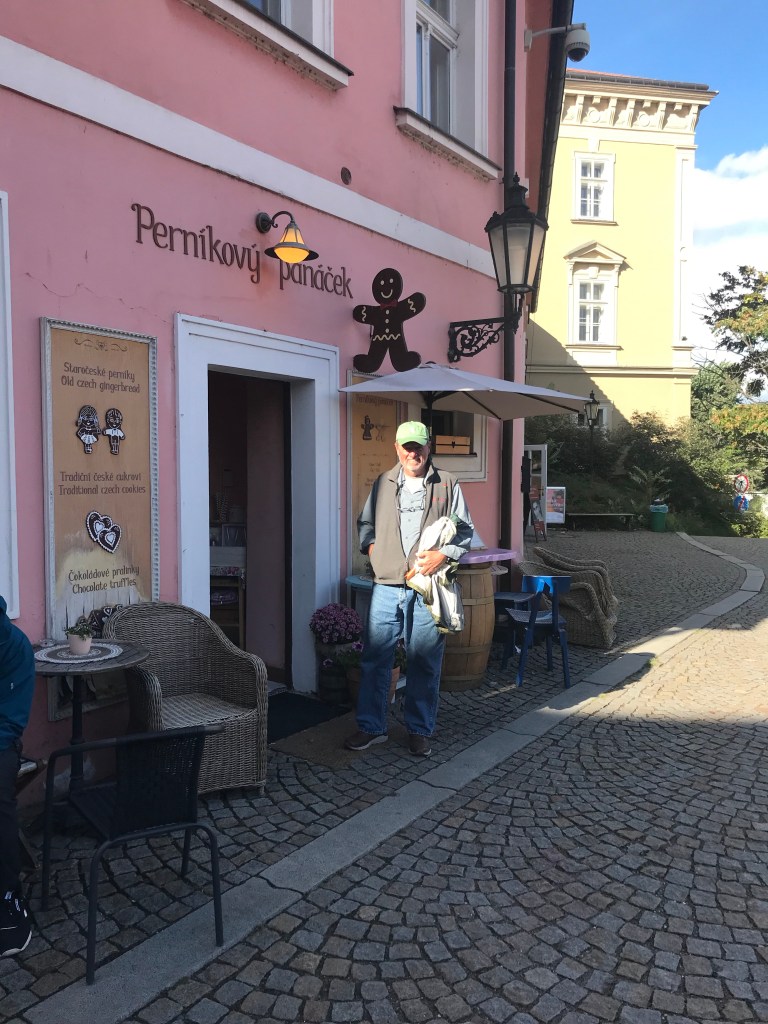
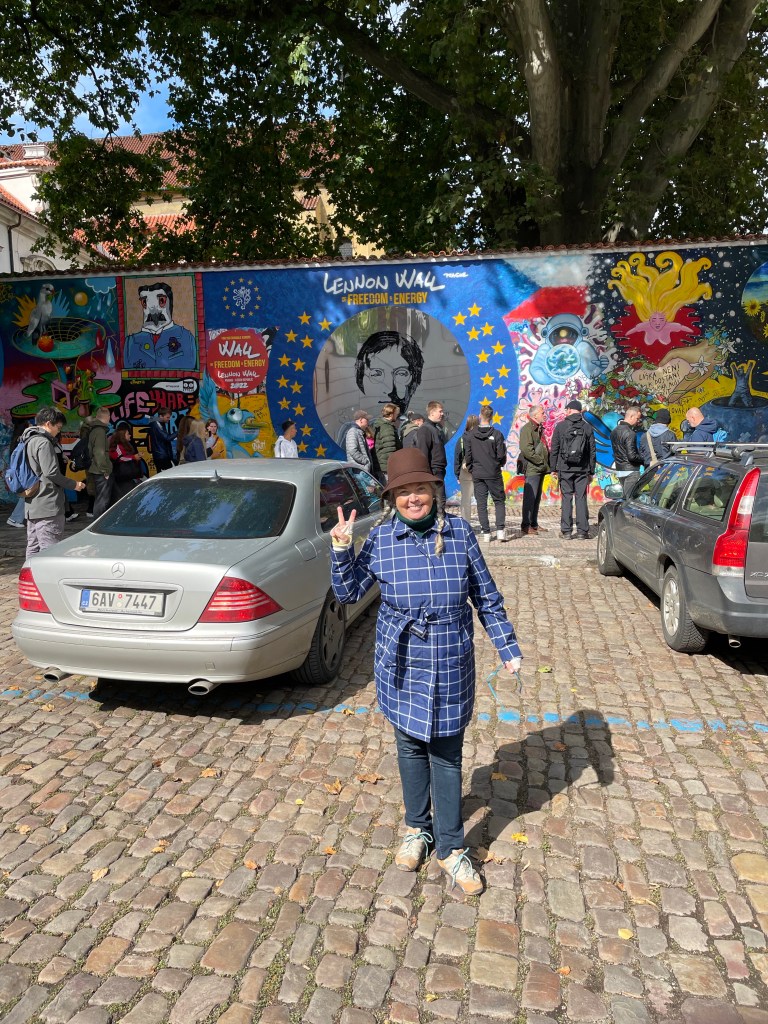
After twelve hours of sleep, we woke up to a lovely buffet breakfast at our hotel and then set out to meet our tour guide, Ivitsa. Starting at the National Museum on top of the hill, we walked down through New Town (established In the 14th century!) and across the medieval stone arch Charles Bridge to the Lennon Wall. Our archaeologist guide was super-knowledgeable and is a great storyteller!
In addition to learning about the history of Czech people, we were treated to modern art sculptures by David Černý located throughout the city. This particular artist has been active since 1991, when he was briefly jailed for a controversial piece involving a former Soviet tank painted bright pink and a sculpted obscene gesture protruding from it. He has made a reputation in Prague with his provocative large-scale sculptures that walk a thin line between controversy and obscenity. We both appreciate an artist with a point of view and the audacity to display art in accessible public spaces. Viewers are free to discern their own interpretations.
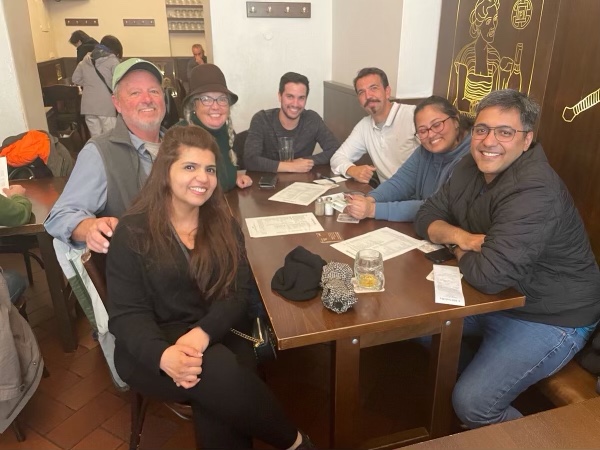
Our tour group included folks from India, Macedonia, Mexico, and Pakistan. Part of our motivation to travel is to meet people from other parts of the planet and to learn more about our commonalities and differences. This diverse tour group signed up for an english-language walking tour of Prague and ended up spending the day together, concluding with beers at an Old Town restaurant. Joe and I enjoyed hearing about our fellow travelers’ adventures and motivations. What a great day!





Historians and biblical scholars now believe that the honey referenced in the Book of Exodus refers not to bees’ honey but to the syrup prepared from dates. Turns out that the best way to preserve this highly nutritious fruit is to soak, cook, extract and reduce its syrup. As one of the oldest foods cultivated in the Mediterranean region, it makes complete sense that a reference to abundance would include good date production.
Medjool (Arabic majhūl) dates are known as the king’s fruit, once reserved only for royalty. These dates are large and sweet. Almost a century ago, California growers imported eleven medjool date palms from Morocco and nine survived, spawning the spread of date farming in the southwest United States.
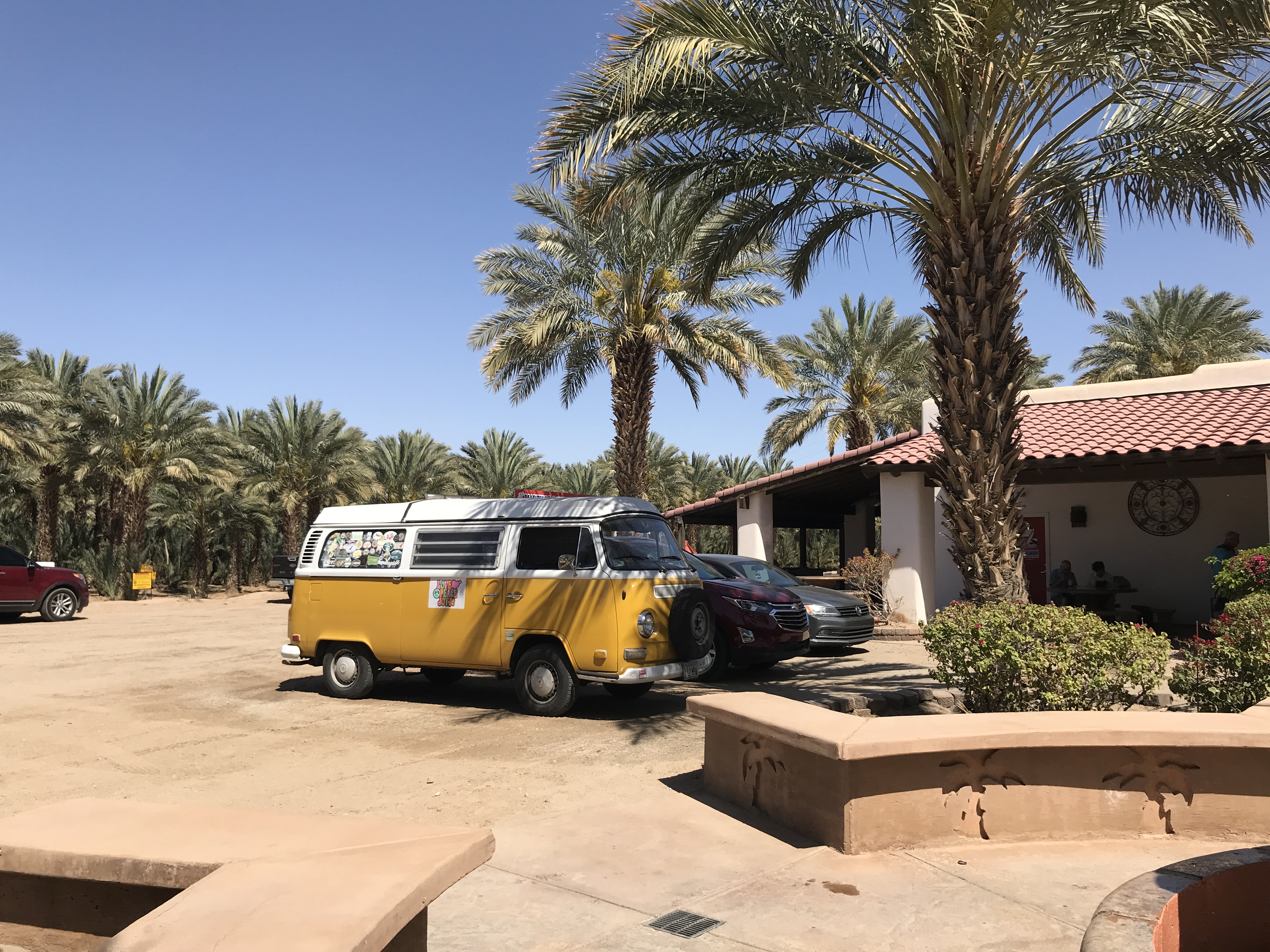
Why are dates so expensive? It is a labor-intensive commercial crop, with farmers devoting most of their land to female date palms (which produce the edible fruit) and keeping just a few males or even purchasing the pollen when it is time to pollinate the female flowers. After the fruit buds form, each strand is thinned to allow better air circulation and bigger fruit. By August, the fruit bundles are bagged to protect from birds, insects, and dust. Dates are harvested by hand in the fall, sorted, graded, and sent to cold storage.
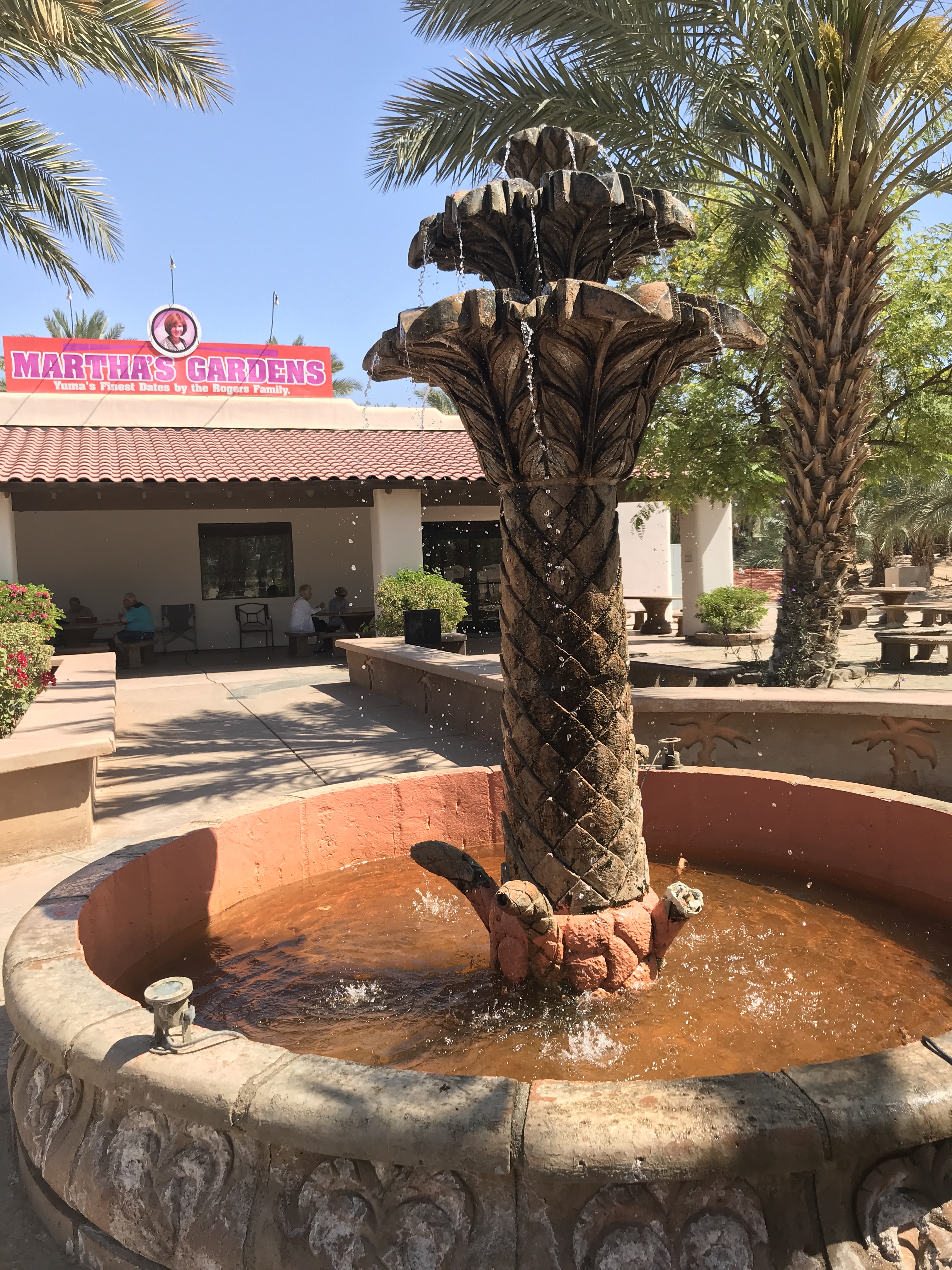
We learned all about date farming with a visit to Martha’s Gardens, here in Yuma. After sharing a delicious date shake by the courtyard fountain, we headed home taking the road less traveled.

After 1.5 miles of sketchy sandy trails, we determined the large CAT bulldozer parked on the trail was a good indicator that we were not on a sanctioned road! We carefully re-traced our tracks in the dust and made it back out to the secure pavement. Watch the video below of this adventure for Mike the van!

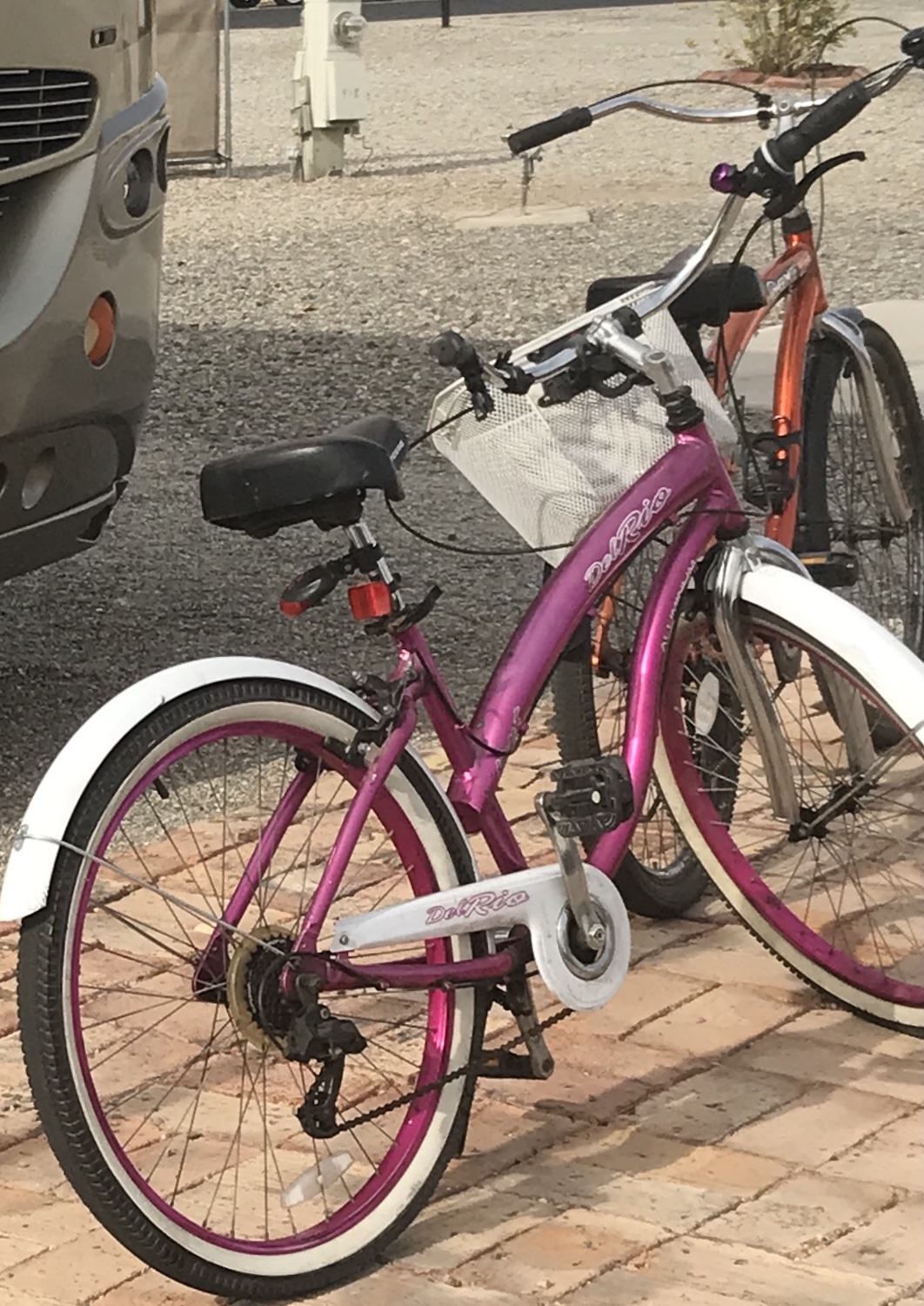
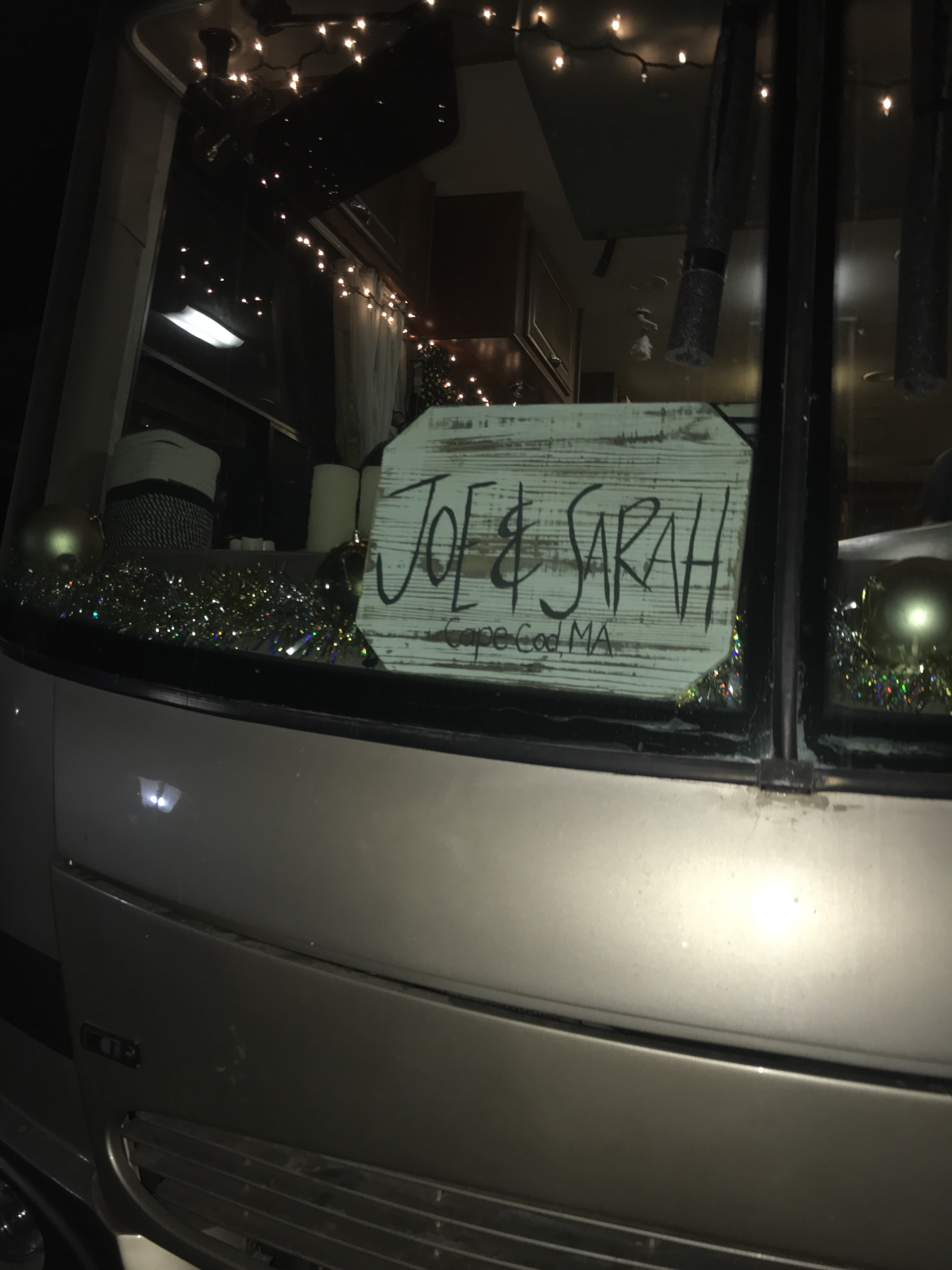
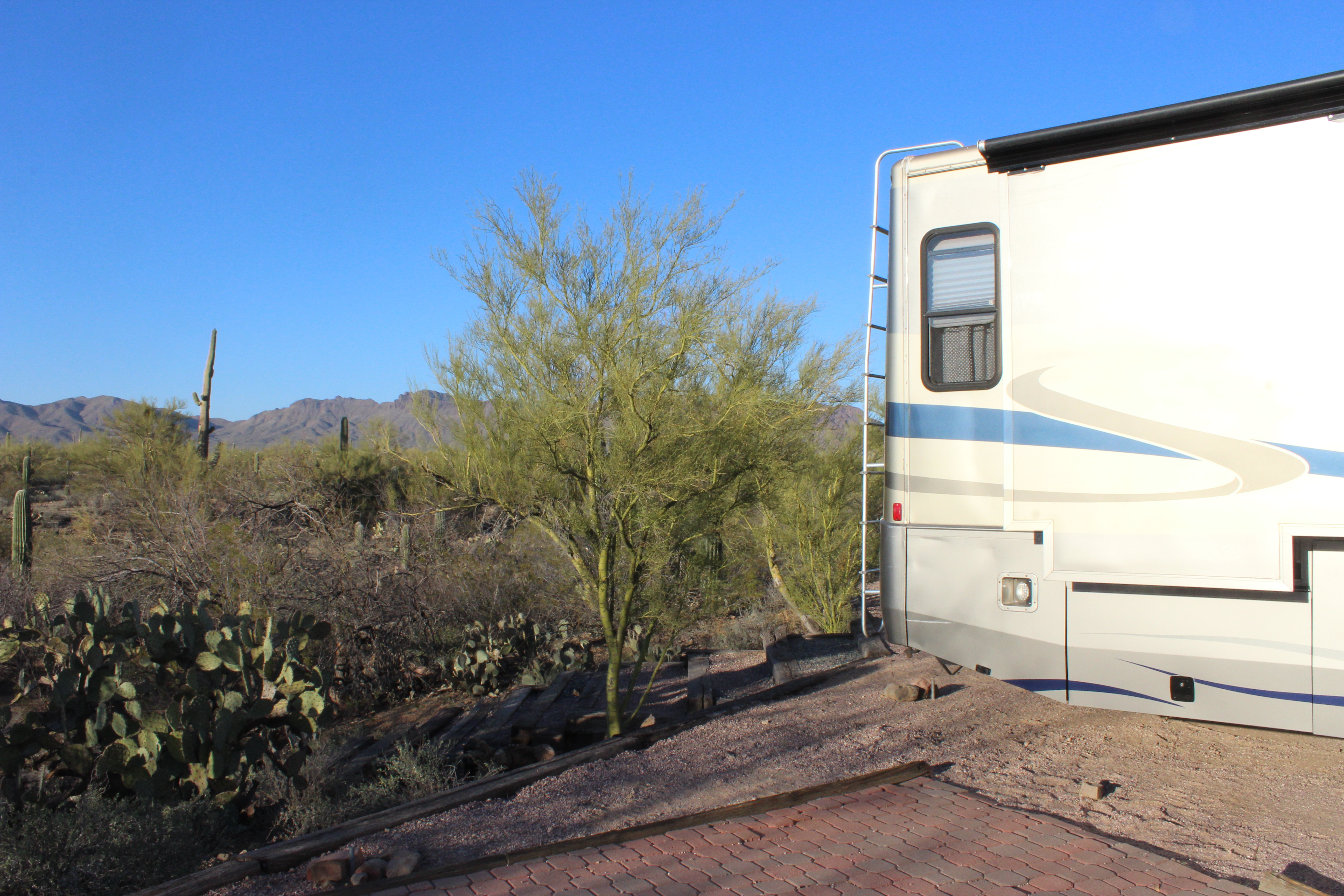
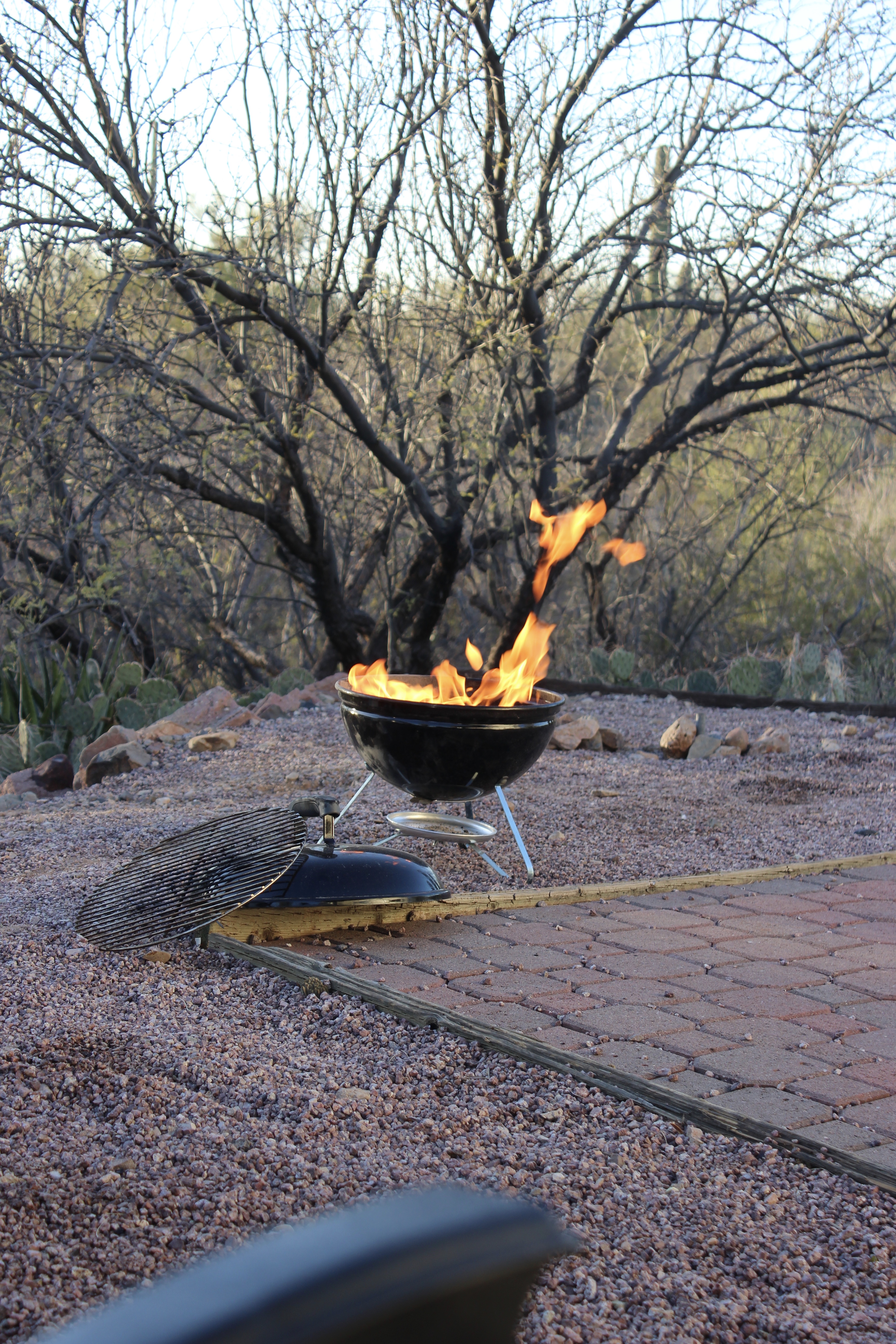
We welcomed 2022 in Yuma, Arizona. Santa brought us some bikes and a new portable propane firepit for us to enjoy outdoor living in the desert. We got our porch set up (photo above) with twinkly lights so we can read outside in the evenings. Sarah will likely add some more artistic touches as the winter goes on!

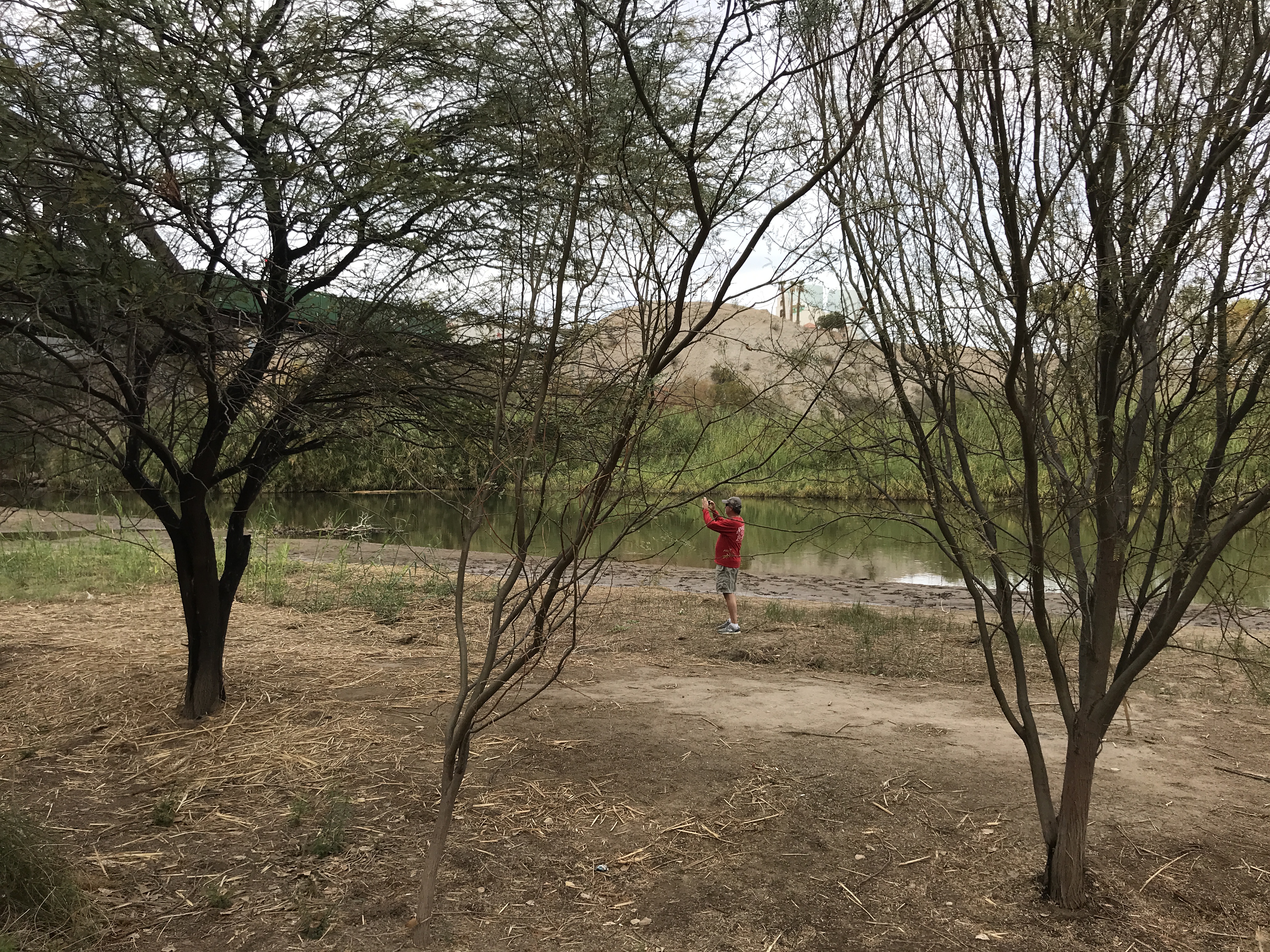


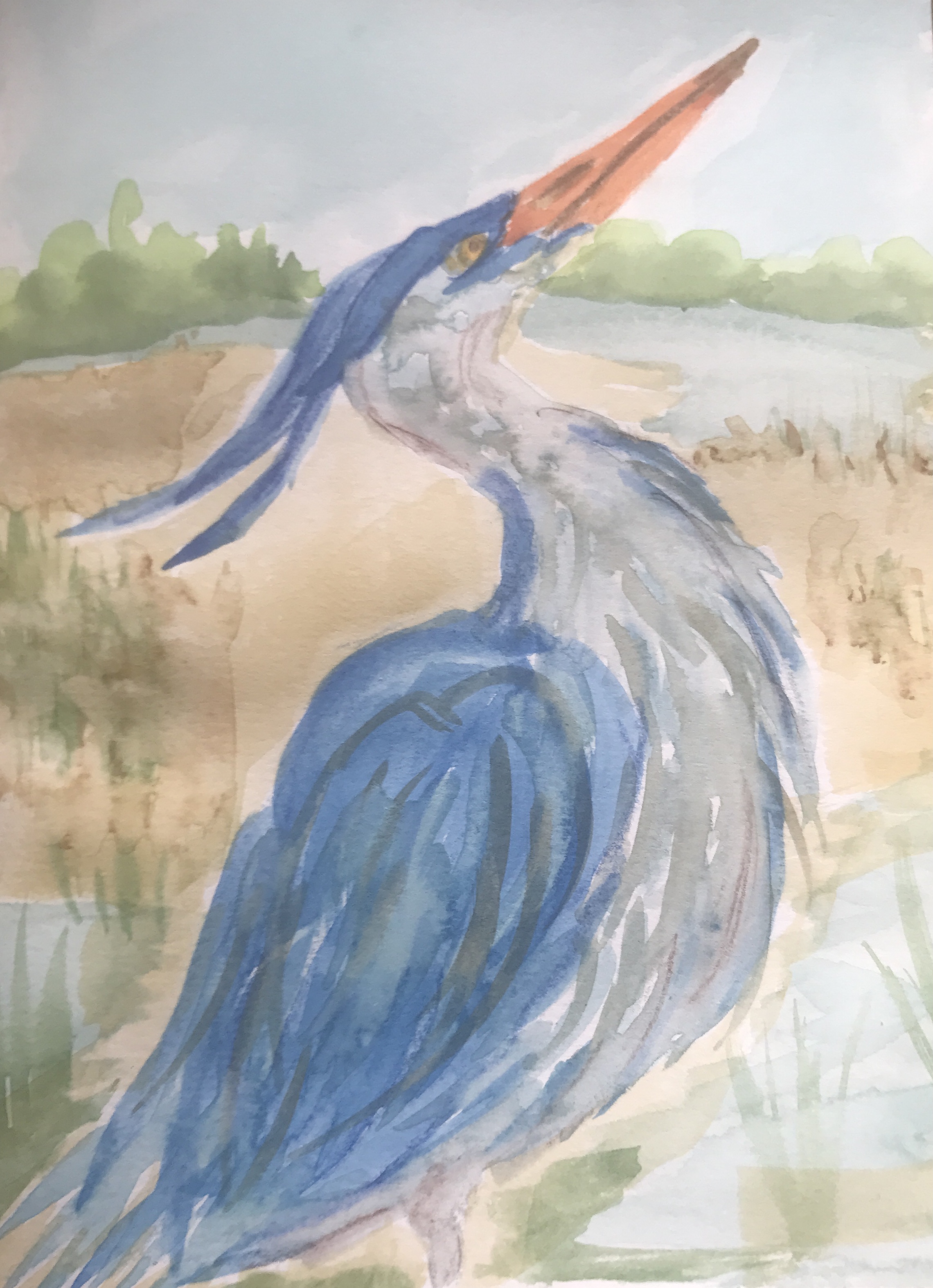
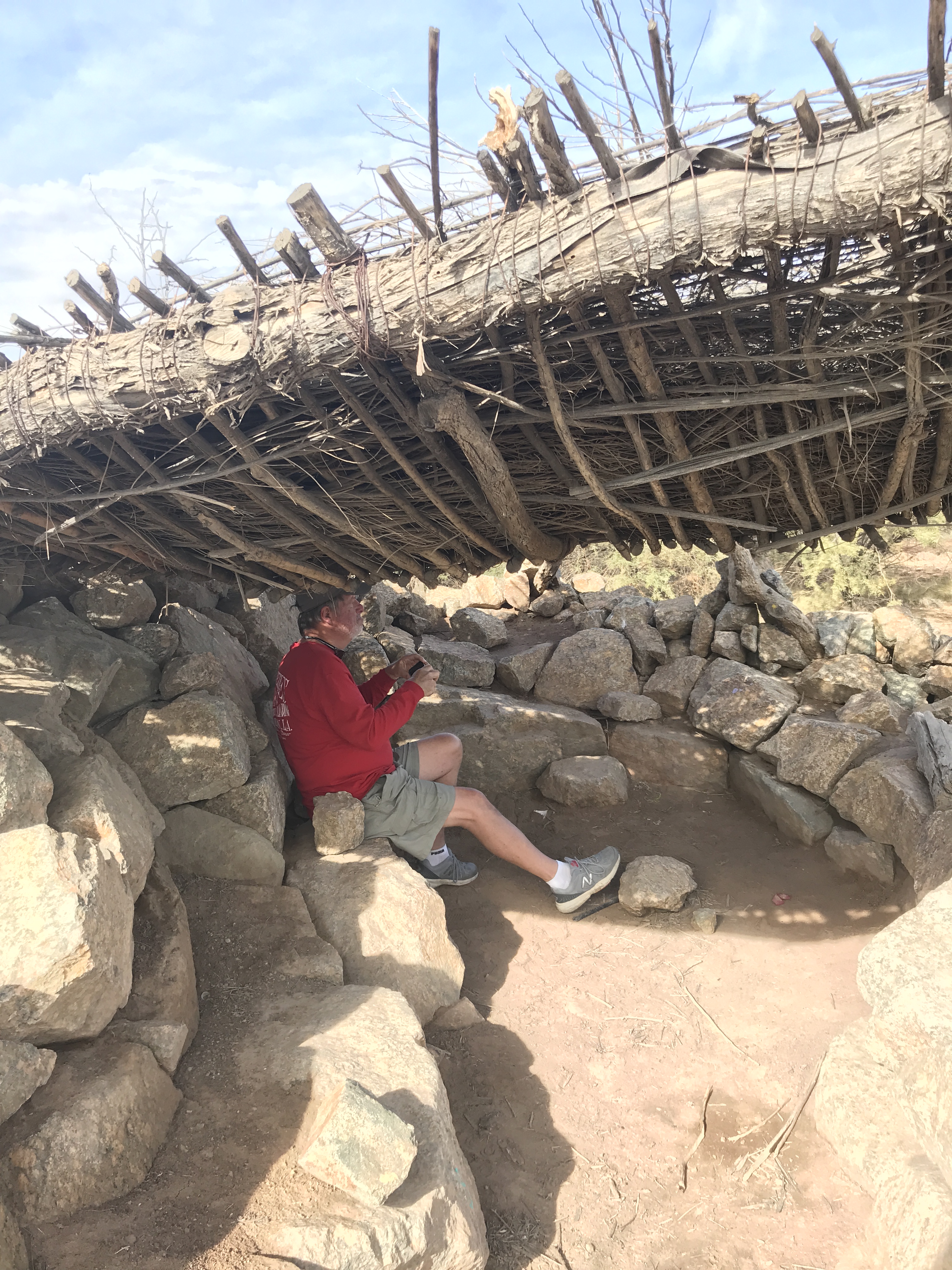
GEO-QUIZ: Name the bridge where Joe is trainspotting.
We tend to use the word “desert” to describe emptiness. For example, “The old house was deserted, after the family moved out ten years ago.”
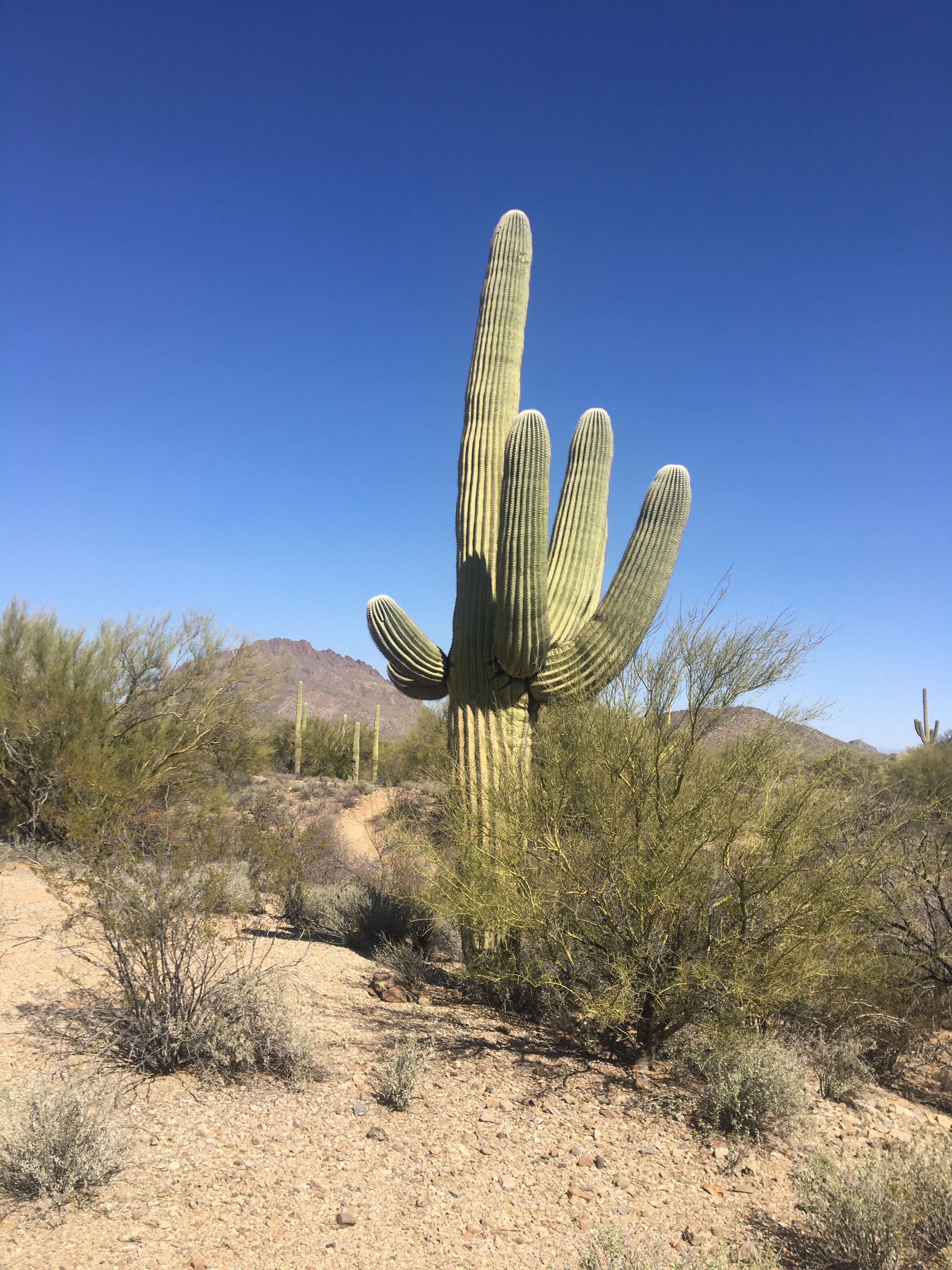
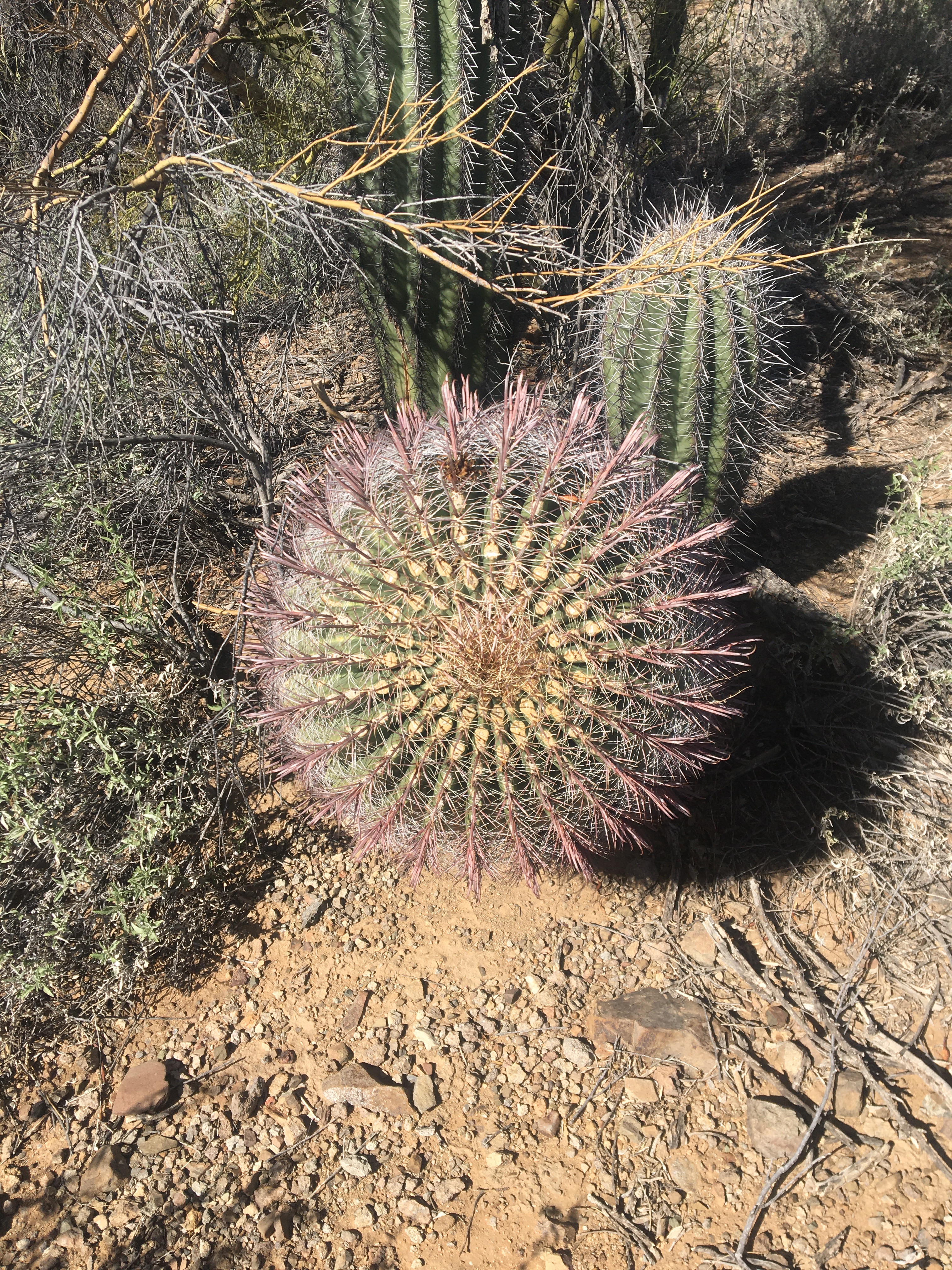
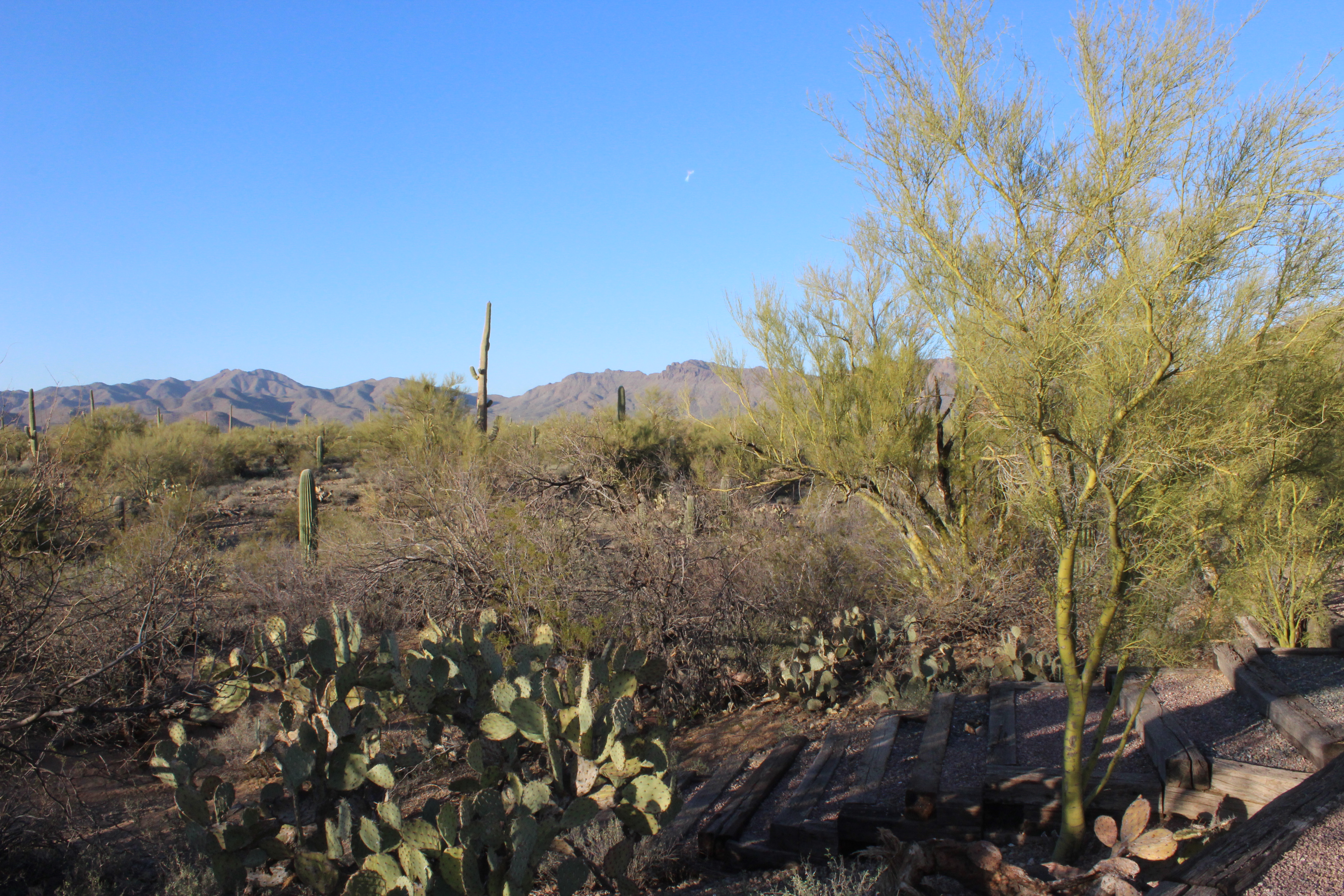
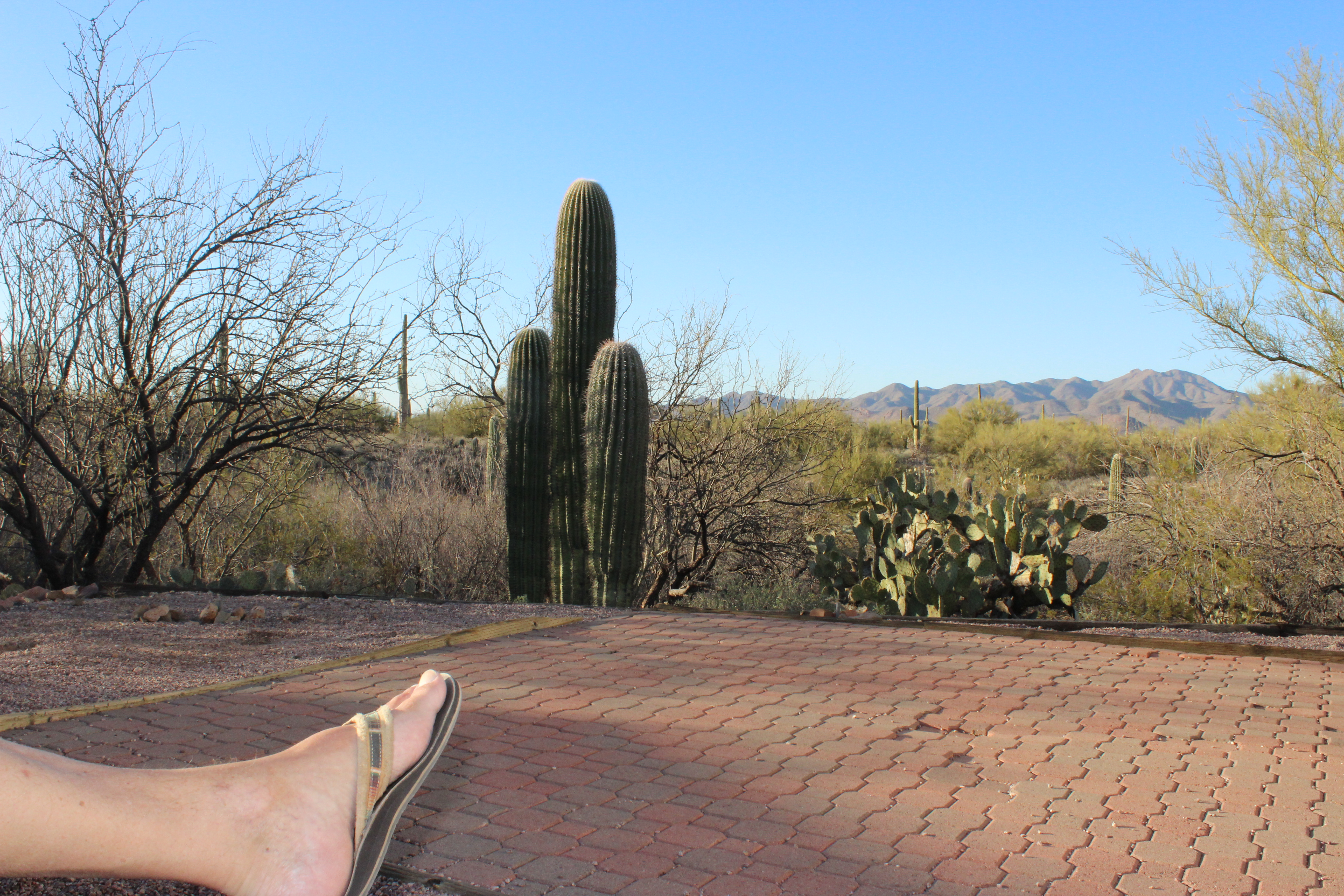
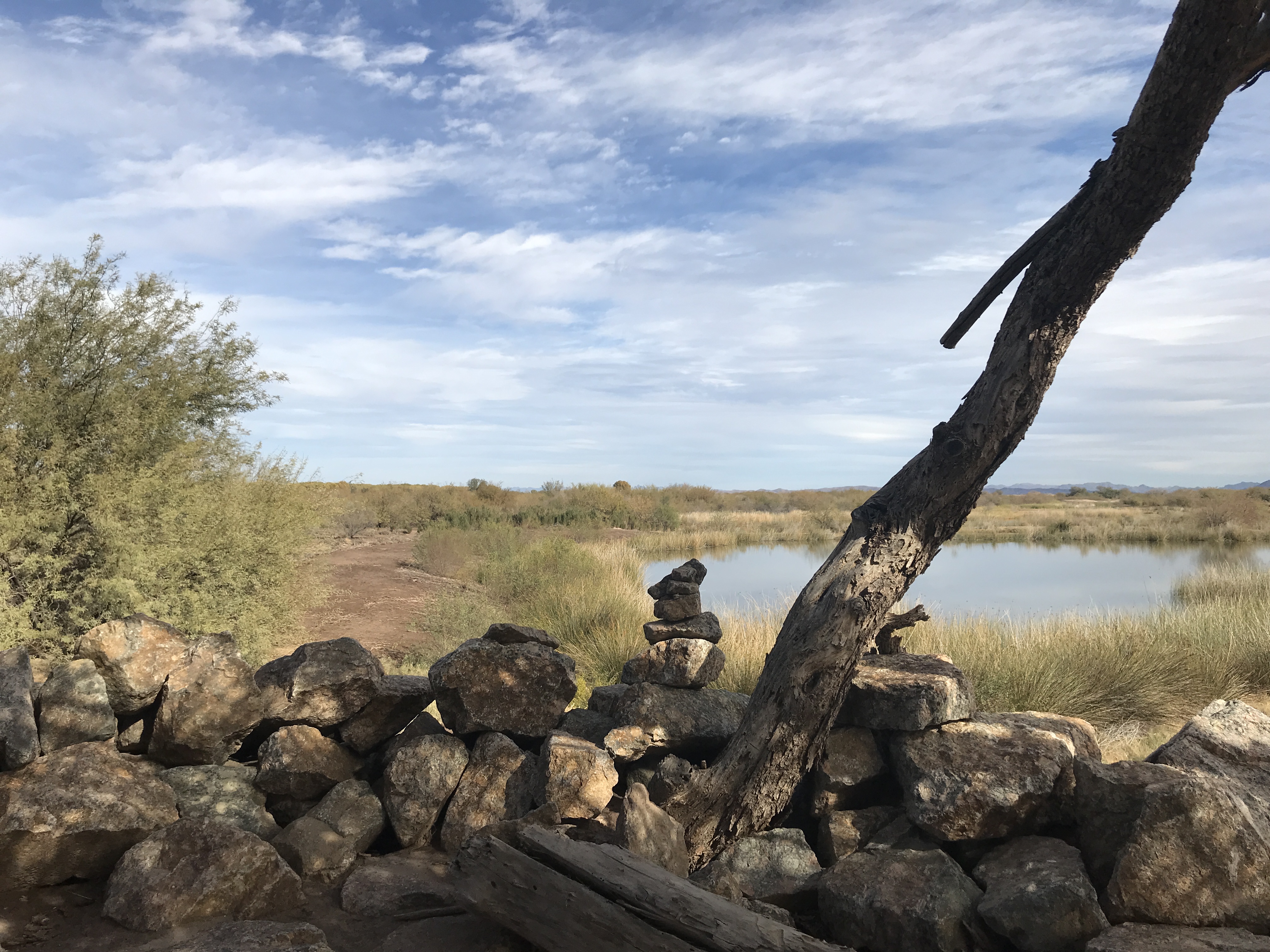
But our experience with living on the edge of the Sonoran Desert near Tucson, AZ confirms for us that the desert is teeming with a variety of plant and animal life. A pair of Great Horned Owls and singing coyotes serenaded us each night this week. At dawn and dusk, the bunnies and mourning doves were busy. One morning, a Gila woodpecker amused Sarah by tapping fruitlessly on a neighbor’s plastic TV antenna atop their trailer. And the Saguaro are endlessly fascinating in their assortment of sizes and shapes.
Saguaro grow slowly. Arms may appear when the cactus reaches 9-10 feet tall (around age 40+). This increases the water storage capacity of the plant and increases its procreation potential by producing more blooms. It might take 75 years before it first blooms. They are considered adults when they reach 125 years old and with optimal temperature and water conditions may live to be 200 years old.
Nan Burn, head of the Desert Foothills Land Trust’s Desert Awareness committee, says, “They’re pretty magical cacti. Against all odds they survive. Each root has about 2,000 seeds and the odds of them germinating are incredibly small. I have great respect for them.”
But not everyone has respect for them. The East Valley Tribune reported on a story of two dunderheads:
In 1982, two roommates who apparently were neither particularly conservation-minded nor of superior intelligence grabbed their shotguns and ventured out into the desert just west of Lake Pleasant.
One of them decided to blow up a cactus or two, and, finding the first, small one easy, took aim at a 26-foot-tall saguaro that was estimated to be 100 years old. He blasted away, severing a four-foot arm that fell on him and killed him.
Some would call that desert justice.
https://www.eastvalleytribune.com/get_out/the-mystical-giant-saguaro-is-not-to-be-trifled-with/article_6a86d5a1-bb2f-589e-afa2-5c04f54cc69d.html





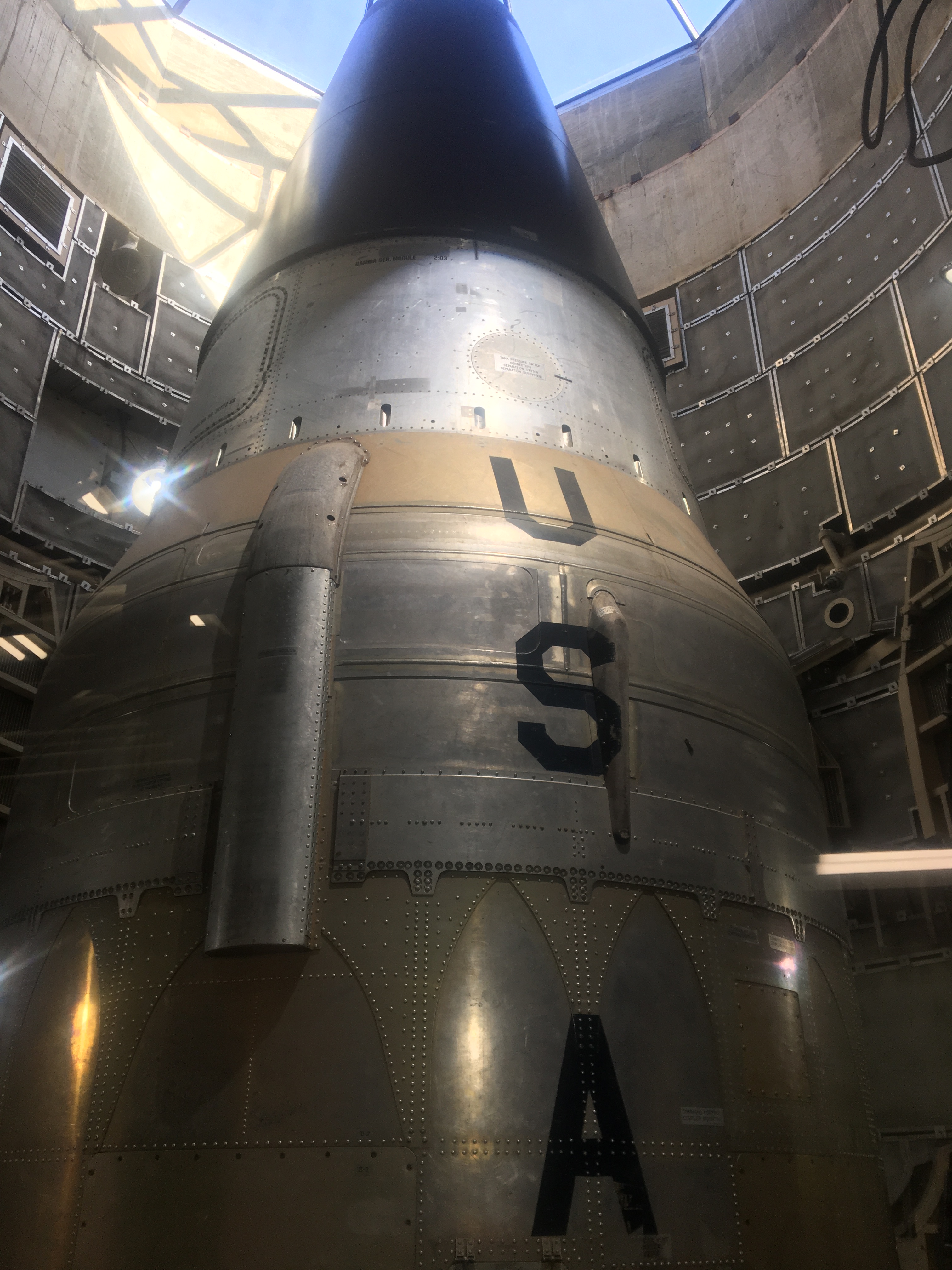
We spent an afternoon touring the Titan Missile Museum, which is the last of the 54 Titan II missile sites that were on alert across the United States from 1963 to 1987. Our guide, Dave, actually worked at the site for ten years in the 1970s. Originally from Worcester, MA, he joined the Air Force straight out of high school and was part of a team of four men from the 390th Strategic Missile Wing hosted by Davis-Monthan AFB. His team worked 24-hour shifts underground keeping the Titan II missile on alert as part of the ICBMs deployed around Arizona, Kansas, and Arkansas. When not on missile silo duty, Dave was training, problem-solving, and being evaluated weekly by psychiatrists.
As we toured the site, Dave told us specifically the safety measures and redundancies that were built into the missile silo and its maintenance. A red bucket hangs by the second telephone (after you give a code at the first telephone by the gate you have three minutes to reach the second phone by the door) which is where the team’s commander would burn his entry code after reciting it into the second telephone. As we descended 55 steps underground, we observed these huge tension coils and learned the whole silo was essentially suspended so it could withstand a Soviet attack and still be able to fire its rocket in retaliation.
Peace through deterrence is the theory that all nuclear-power governments promise only retaliatory annihilation; therefore no one will want to be the first to strike, because it would guarantee World War III and the mutual destruction of both countries (e.g. the Soviet Union and the United States). Listening to Dave, the feeling of finality, knowing that their mission was to kill the people of another country, and possibly end the world, is experienced by only the few men (and now women) who work with these nuclear weapons around the globe. We can never imagine the true burden that Dave and his colleagues have lived with. The juxtaposition of the way he alluded to the enormity of the responsibility of turning the key with the reality of his own certain death had a huge emotional impact on us. The psychological awareness and understanding of his role to complete his mission is unlike anything most of us will ever experience.
Dave walked us through the launch sequence, asking for two volunteers to sit at the command desk and work out the codes and turn the two keys. Sarah declined. But it was fascinating to hear Dave tell us what it felt like to work there for ten years. How every test alert was not known to be a test, because the drills were run as if they were real. For ten years, Dave and his crew-mates lived in a perpetual heightened state of readiness, not knowing if each day would be their last. They were consciously aware that the silo was a Soviet target and they would have only minutes to retaliate with their launch sequence, should incoming missiles be launched from a hostile nation. He says he still gets a funny feeling when he plays the alarm for tours.


“It’s because being American is more than a pride we inherit,
– excerpt from Amanda Gorman’s poem, “The Hill We Climb”
it’s the past we step into
and how we repair it.“
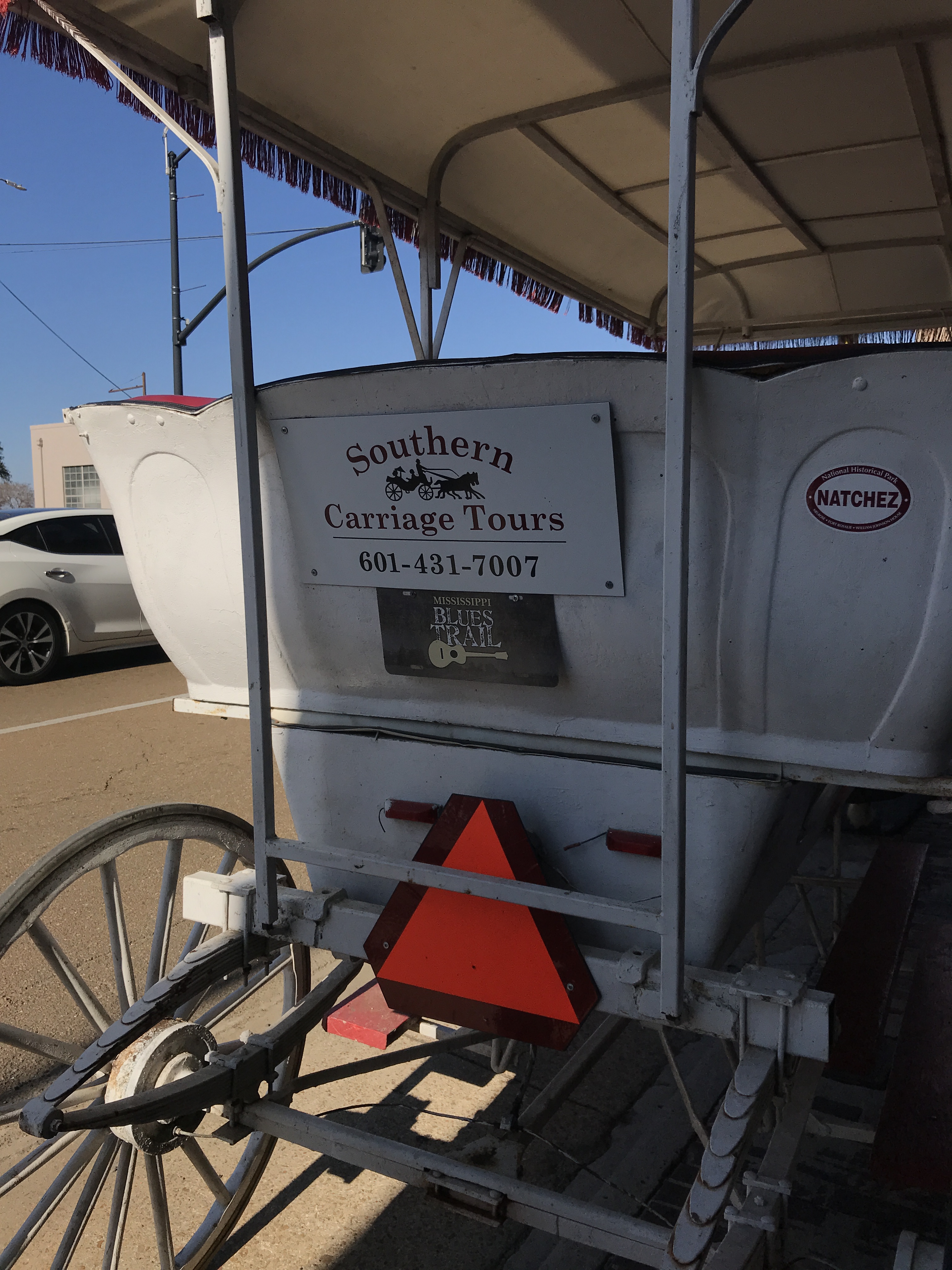
As we approached Natchez, Mississippi, we talked about our discomfort in touring antebellum homes with a history of glossing over the realities of the enslaved people who were forced to build and maintain through harsh work the lush lifestyles of the white slave owners. With some trepidation, we embarked on a horse-driven carriage ride tour of downtown historical Natchez.
Before we boarded the carriage, our tour driver let us know that he would not simply be pointing out pretty gardens and colorful homes. We were going to hear a historically accurate narrative about the people of this region, beginning with “our amazing Indigenous people who have lived here for thousands of years.” Randy went on to tell us that if we were sensitive or disinterested in a frank discussion about the history of colonialism and slavery and the contemporary challenges of systemic racism that continue in this country, this tour would not be for us.
This is a relatively new approach to responsible tourism in this country. We were grateful that a knowledgeable local guide was willing to delve deeper into the narrative of enslaved people and help us reckon with the fuller story of North American colonialism and the Atlantic slave trade. Many of us learned in school that slavery was mostly in the South and mostly in the agriculture industry (e.g. “Gone With The Wind” and other stereotypes of plantation living) but on this trip to Natchez we were reminded that slavery underpins the entire capitalist system, through French, British, Spanish, and eventually American rule of this area. Wealthy merchants in town used slave labor to build their mansions, and the privileged caste lived in these highly decorated homes that were meant to keep the classes separated. For the enslaved people, these “beautiful prisons” were designed to let the owners see and control them; there was no privacy for enslaved people.
History is incomplete without a discussion of the roots of colonialism and slavery. As painful as it is, we must acknowledge the complicated, fractured past of the American story. What texts written by Black and Indigenous authors are we reading about history? What sources are we learning from when we travel and explore historical sites? What non-white media are we consuming? How can we be a better ally for the BIPOC community?
A colleague of Sarah’s recommends signing up for 28 Days of Black History: https://28daysofblackhistory.us19.list-
 Where in the world are the Gills?