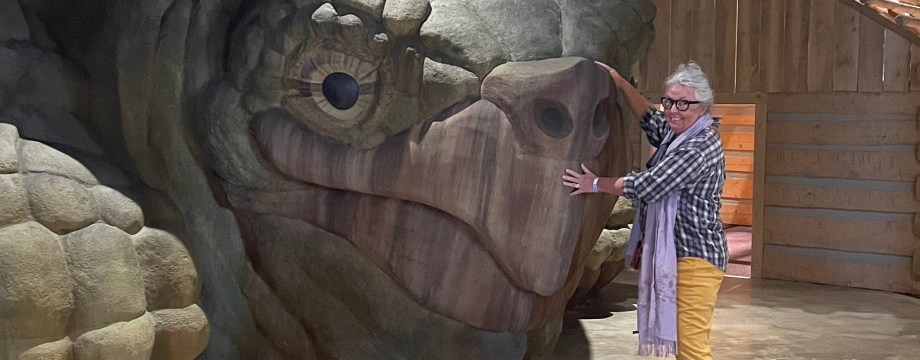
“Living out the Chahta spirit of faith, family and culture.“
Vision Statement of Choctaw Nation
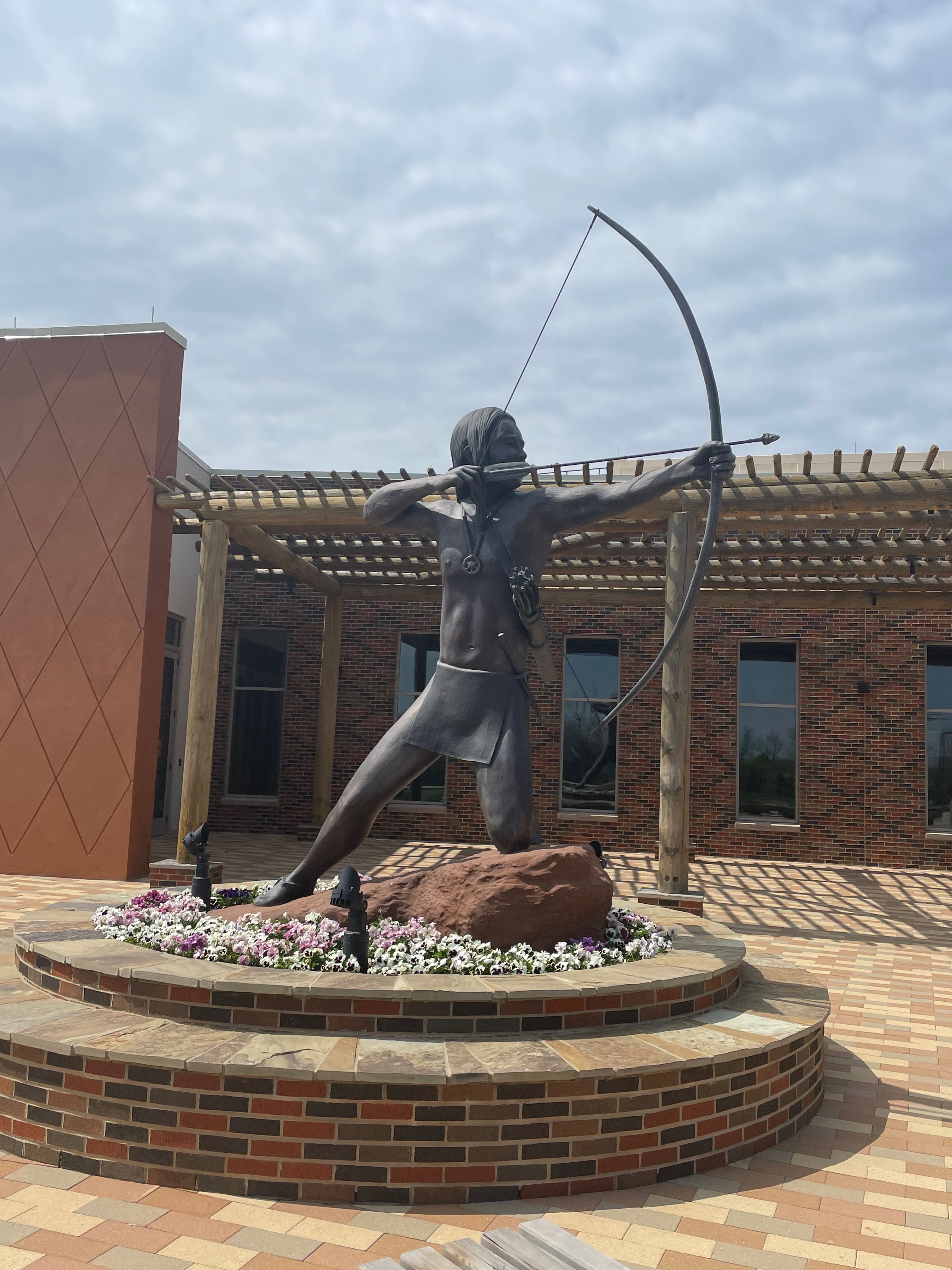
We spent the afternoon experiencing the Choctaw Cultural Center in Durant, Oklahoma, where we met a vibrant community of Choctaw passionate about sharing their culture with us. The beautiful building opens to a large concourse where visitors first meet twelve living people from the twelve different districts of Choctaw Nation.
So often, non-natives are introduced to this continent’s indigenous history as something in the far-distant past, or worse, we are fed harmful negative stereotypes and disparaging images in today’s mainstream media that perpetuate generational trauma and the erasure efforts of modern governments. It was incredible to be introduced to Choctaw people from across southeastern Oklahoma in the same way we meet people just living their lives wherever we travel.
Different language? Yes. Different history from our experiences? Yes. Proud of their culture? Yes.
Below are some photos from the first exhibit in the Orientation Gallery. **We were rushing to view the entire exhibition before heading to the social dancing and my phone battery was dying, so these photos do no justice to the complexity of this first exhibit.
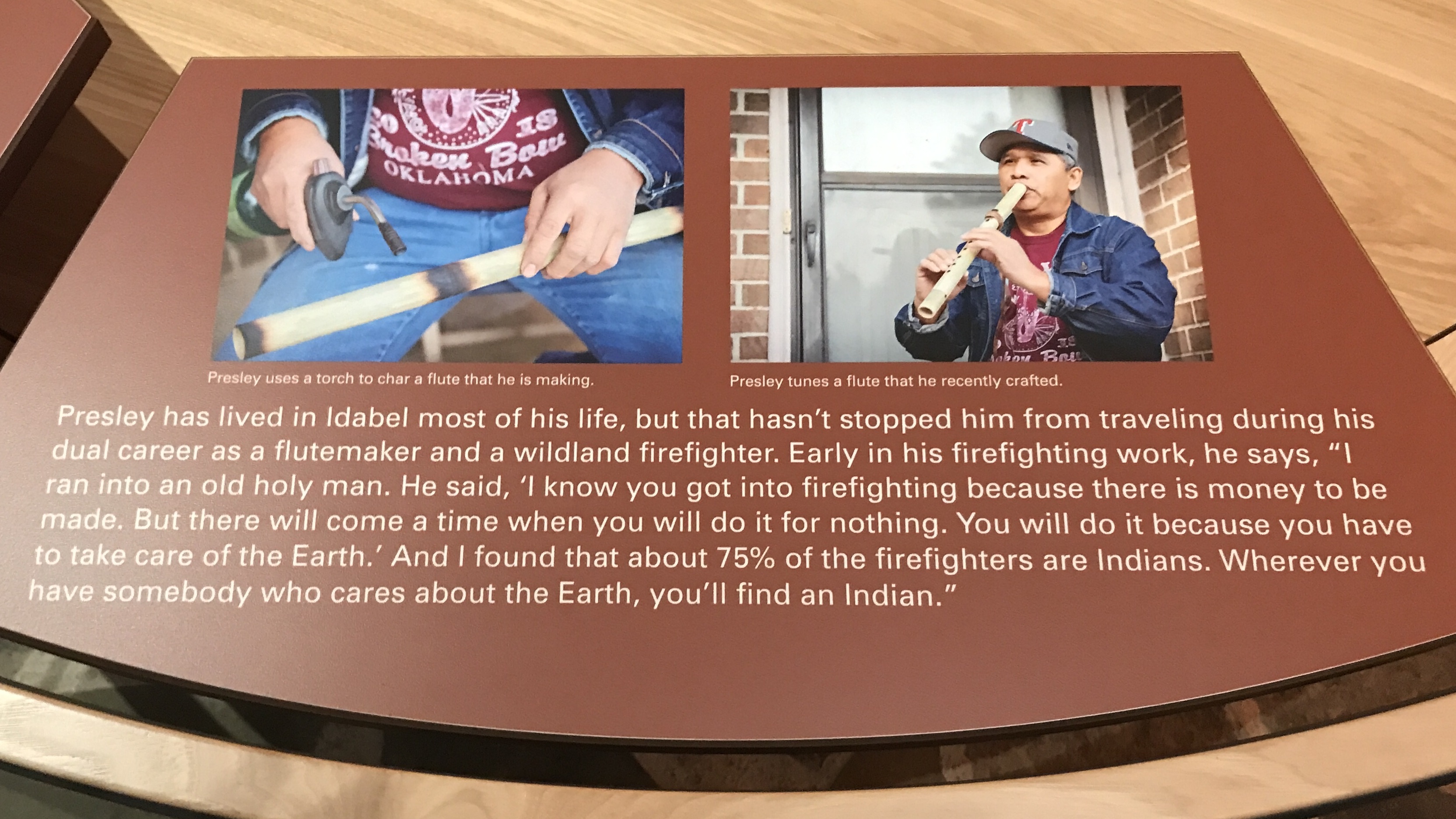
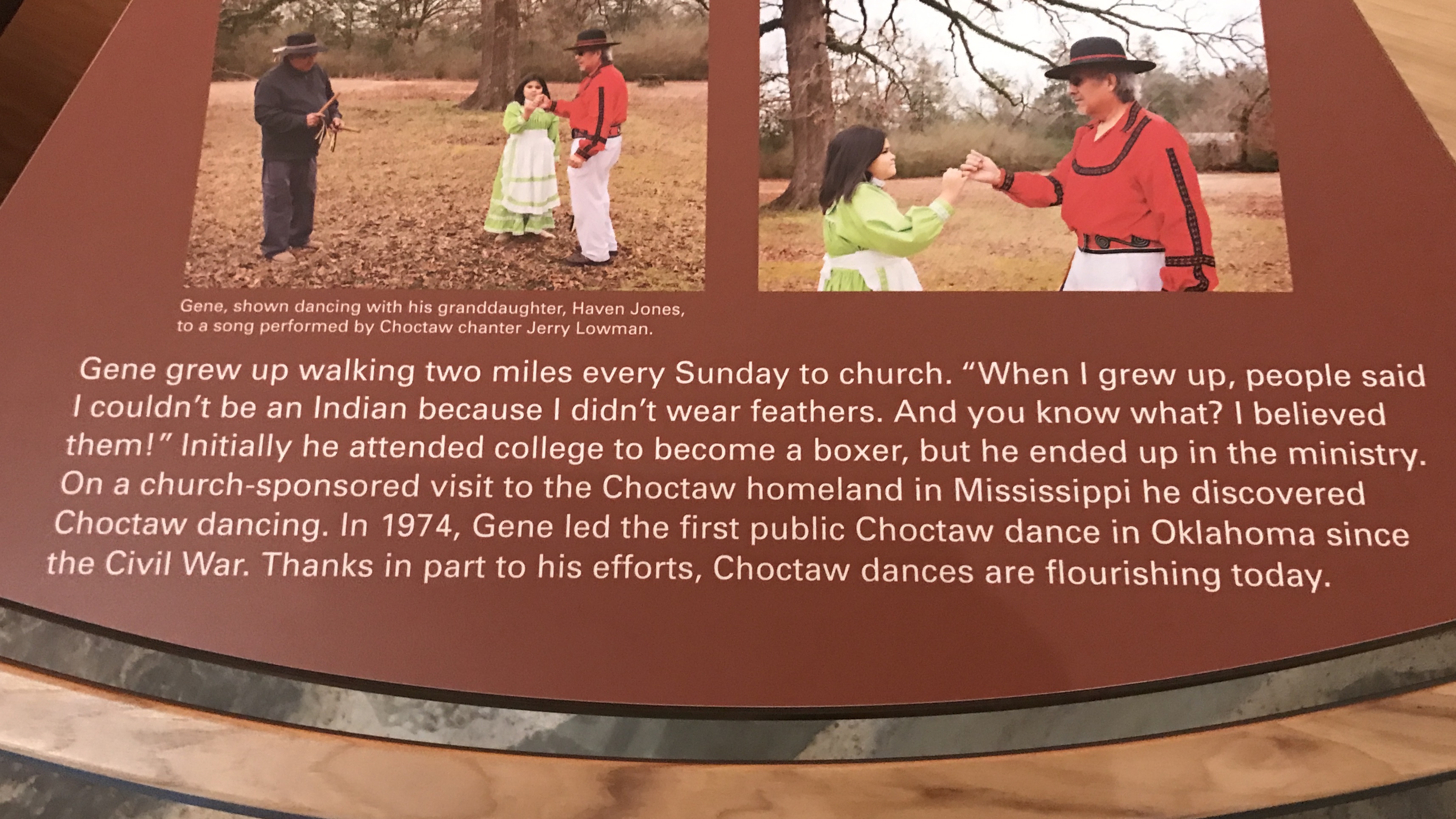
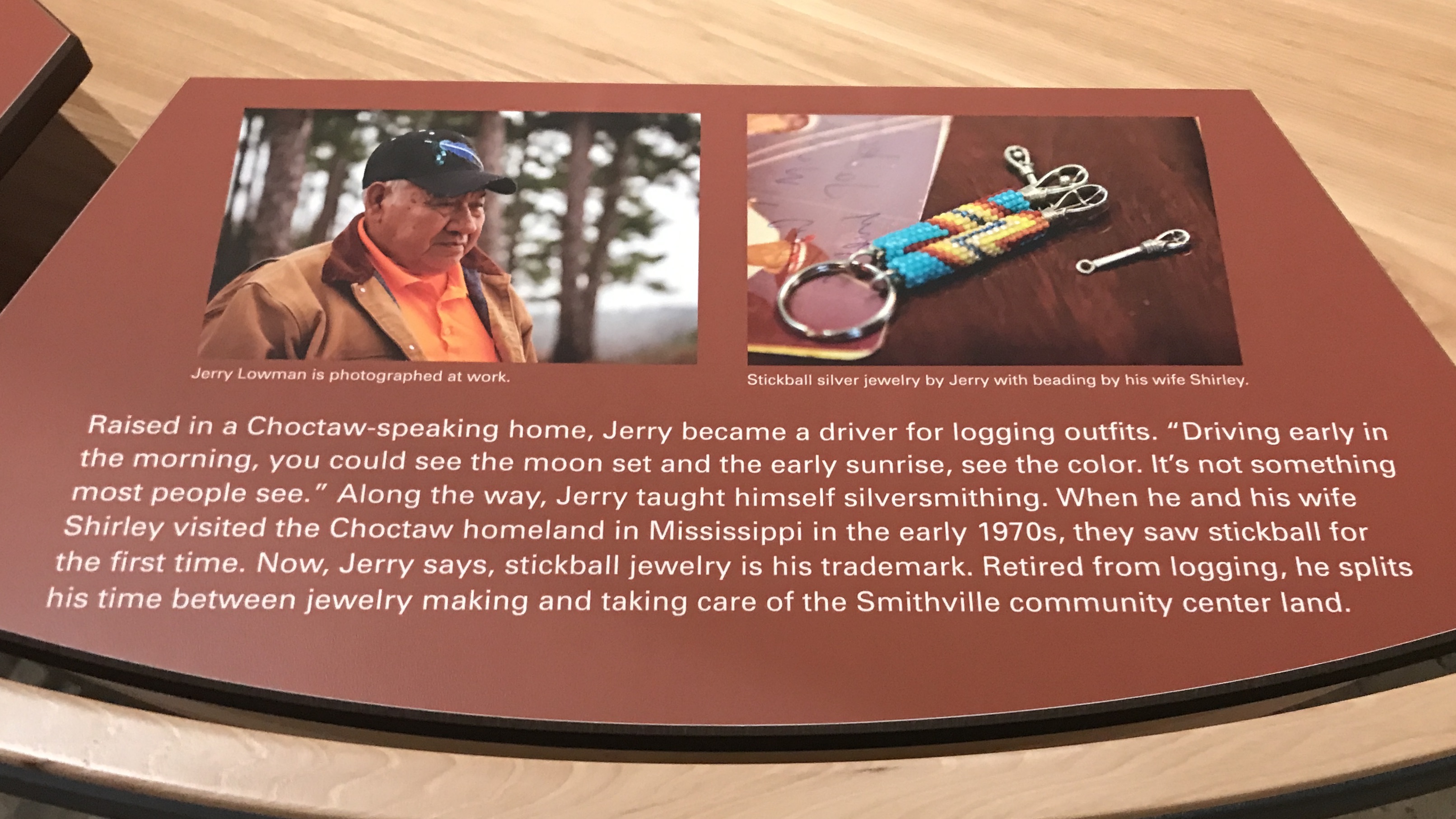


“We honor the past, live in the present and look to the future. We are resilient people, overcoming adversity with grace and dignity. Those who are Choctaw Proud work hard to be successful and give back to their communities.”
https://www.choctawnation.com/
We were invited to learn about Choctaw dancing in the auditorium. Five staff members stepped away from their desks and took turns explaining the significance of each dance. For millennia, Choctaw dances have been a way to reconnect with old friends from different clans and provide an opportunity to meet new people. Today, social dancing is still intended for participation and not performance. We were invited to join in and one need not be Choctaw to enjoy the dances.
One of the dancers told us that regalia is fun to wear for special occasions, in the same way we might dress up for a big wedding or gala event, But it is not necessary to wear every day! By dancing today in contemporary work wear, these Choctaw dancers are normalizing for themselves and for visitors the tradition of dance as a way to mingle and hang out with friends.
We learned that all ages dance and the dancers are accompanied by chanting. Rarely are words used – the chanter may be joined by the dancers for certain phrases and sometimes the chanter will use rhythm sticks to help mark the time or note a change in the steps. The Choctaw Nation is a matrilineal society and women dance in all three categories of dance: war dances, animal dances, and social dances.
A peaceful people, Choctaw historically would defend their territory when necessary. Eight days of dancing prepared the community for an impending battle. Upon the warriors’ return, more dancing would help re-assimilate them back into village life.
Choctaw have great respect for all living things and two of the dances today were inspired by animals. The turtle is an important animal to study and revere – by moving slowly and taking its time to move and make decisions, turtles are regarded as wise. Their long life demonstrates their success. The diamond-back rattlesnake teaches us to conserve our energy; a warning rattle alerts intruders. Taking a moment to look for escape before striking is a good lesson to us that encounters can end peacefully and violence is not always needed to co-exist.
Friendship, courtship, and marriage dances mark important social aspects of life. Today we learned the Friendship Dance.
The half-hour of dancing concluded with a short film detailing previously unknown stories about the last removal of Choctaw by train in 1903 from ancestral lands to present-day Oklahoma. You can watch it here online:
After the film, we headed to Champuli Cafe for fried bread and lavender lemonade before heading to the four permanent galleries depicting the journey of the Choctaw people from creation to the present day. Respect for nature and the interconnectedness of all living things is a core theme throughout the history of this nation.
We were both impressed with the quality and creative artistry of the first two exhibits. Sarah rushed through exhibits three and four and headed to the Gift Shop! Joe attempted to engage with all four exhibits but neither of us made it outside to the Living Village because the complex was closing. We gave ourselves only three hours to explore this facility and we easily could have spent two whole days immersing ourselves in all the things to see and do.



European contact brought devastating diseases and new weapons that decimated indigenous populations across the continent and left native survivors unable to physically defend their territory against Manifest Destiny. Less than 3% of the total US population today, many Native Americans still suffer from historical trauma, economic disparities, lack of access to healthcare and education, and exploitation of natural resources on their land.
The Choctaw Nation (215, 000 members*) has worked hard collectively to revive and pass on its cultural traditions, language, and values. By investing in themselves and teaching respect for shared values, this tribe has created economic opportunities and jobs for its members. With a focus on education and pride in cultural traditions, young people are connecting to their heritage. We can learn a lot from the resiliency of the Choctaw people. We encourage you to make a trip to Oklahoma and learn about Choctaw history and culture for yourself.
*to contextualize population numbers, there are 45 countries in the world that have smaller populations than Choctaw Nation.
 Where in the world are the Gills?