
Yesterday, we rented a car and first drove to the Hermitage – Le Carceri above Assisi. The local travel agent is on holiday, so her bi-lingual (italian and french) parents met us at the office to rent the car. Mama asked “Tu parles Francais?” and between my rusty Canadian french and our printed reservations we managed to get the car and a GPS rental!
The silence enforced at the Hermitage brings a timeless energy of universality to the experience of walking through the forest paths and open buildings. The oak trees and other foliage is not unlike our hills in California. At once we felt familiar.
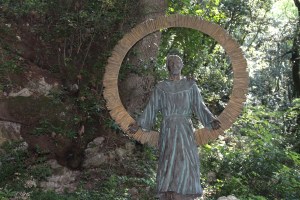 Francis of Assisi believed that no religious should rely on the handouts of the people being served. Instead, he advocated that all men (and eventually women) who followed his religious lifestyle of poverty, travel, and preaching should practice a useful craft in community (carpenter, stone mason, ironworker, etc.). Evidence of the altars and buildings constructed by early Franciscans inspires awe and admiration for their belief in the value of manual labor. Joe noted the craftsmanship of the railings along the woodland paths and the rock retaining walls. An excellent value to exhort for all of us!
At the Chapel of Love, visitors are invited to write a message of love and leave it to share with the world. The carceri was worn smooth and we read that the site was used since the 6th century and Benedictines gave it to Francis and his companions after Francis had already been using it regularly for solo retreats.
A sign near the rock wall of an outdoor altar area requested visitors to NOT write/etch crosses on the rock. Closer inspection revealed hundreds of small Christian crosses scratched into the rocks. Probably inspired by Francis’ practice of marking everything with the Tau – but we found it curious that people etched the Christian symbol and not the Tau. Probably it was easier to scratch two intersecting straight lines into the rock.
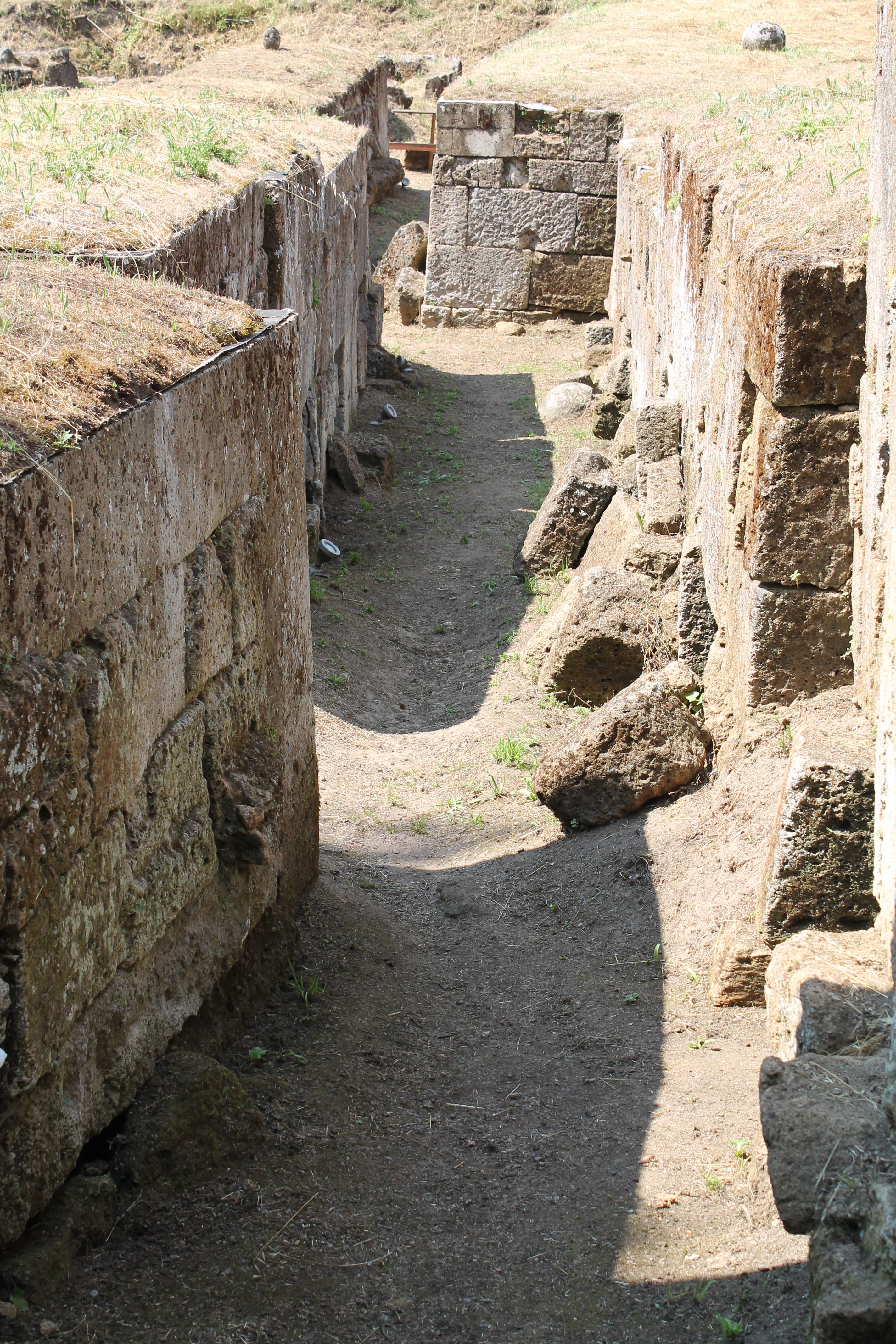
We drove down the mountain and headed across the Umbrian plain to visit Todi, Orvieto, and Deruta. Outside Orvieto, we explored an ancient Etruscan burial site. Sarah was dumbstruck to be walking through an archaeological site that she studied way back in highschool!

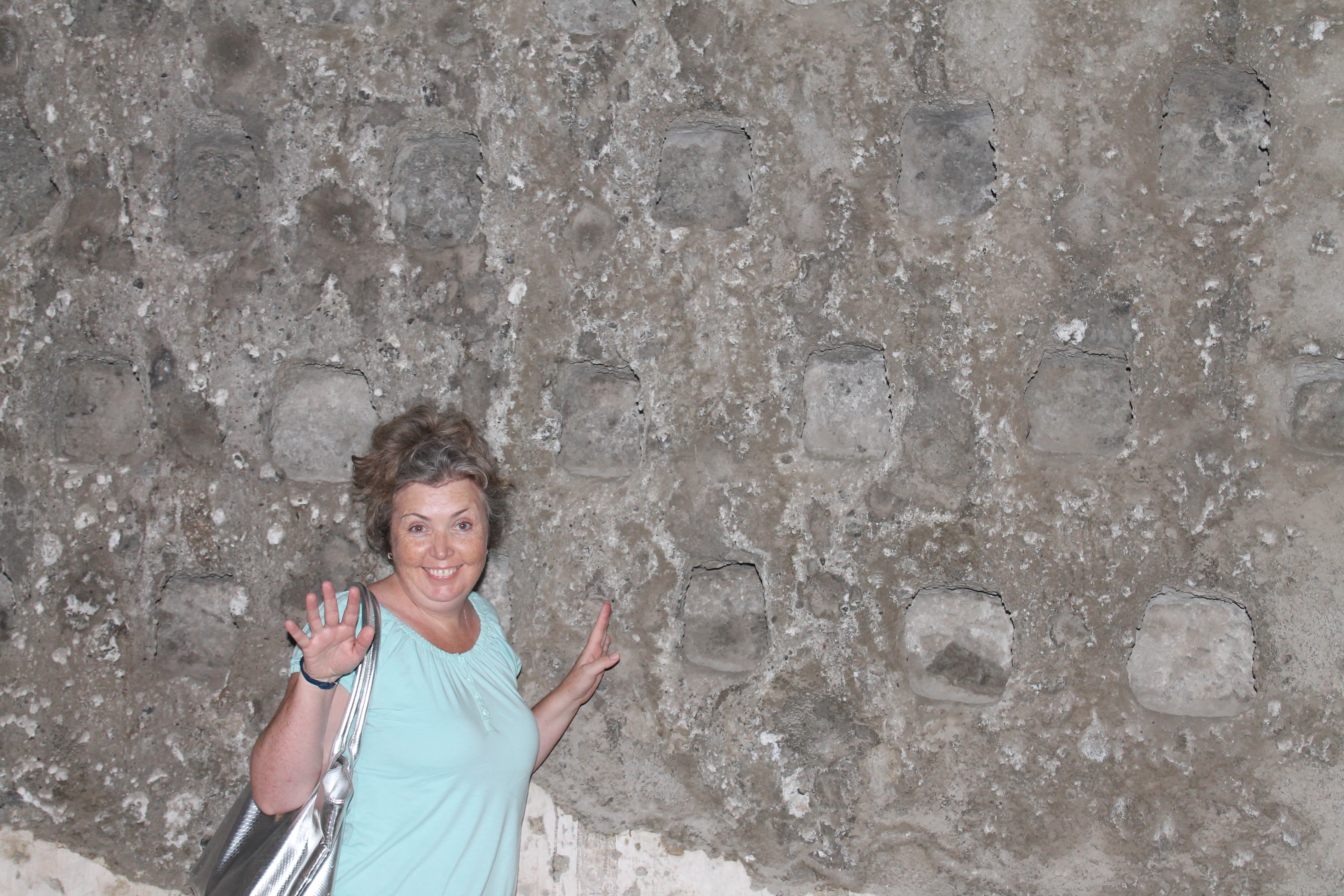
Before our afternoon prosecco e bierra, we took an underground tour of the caves carved out underneath the hilltop city of Orvieto. During sieges, this fortified walled city was able to hold out against many armies, in part because of their clever use of the caves. Can you guess what the holes in the cave photo below were used for?
 Where in the world are the Gills?